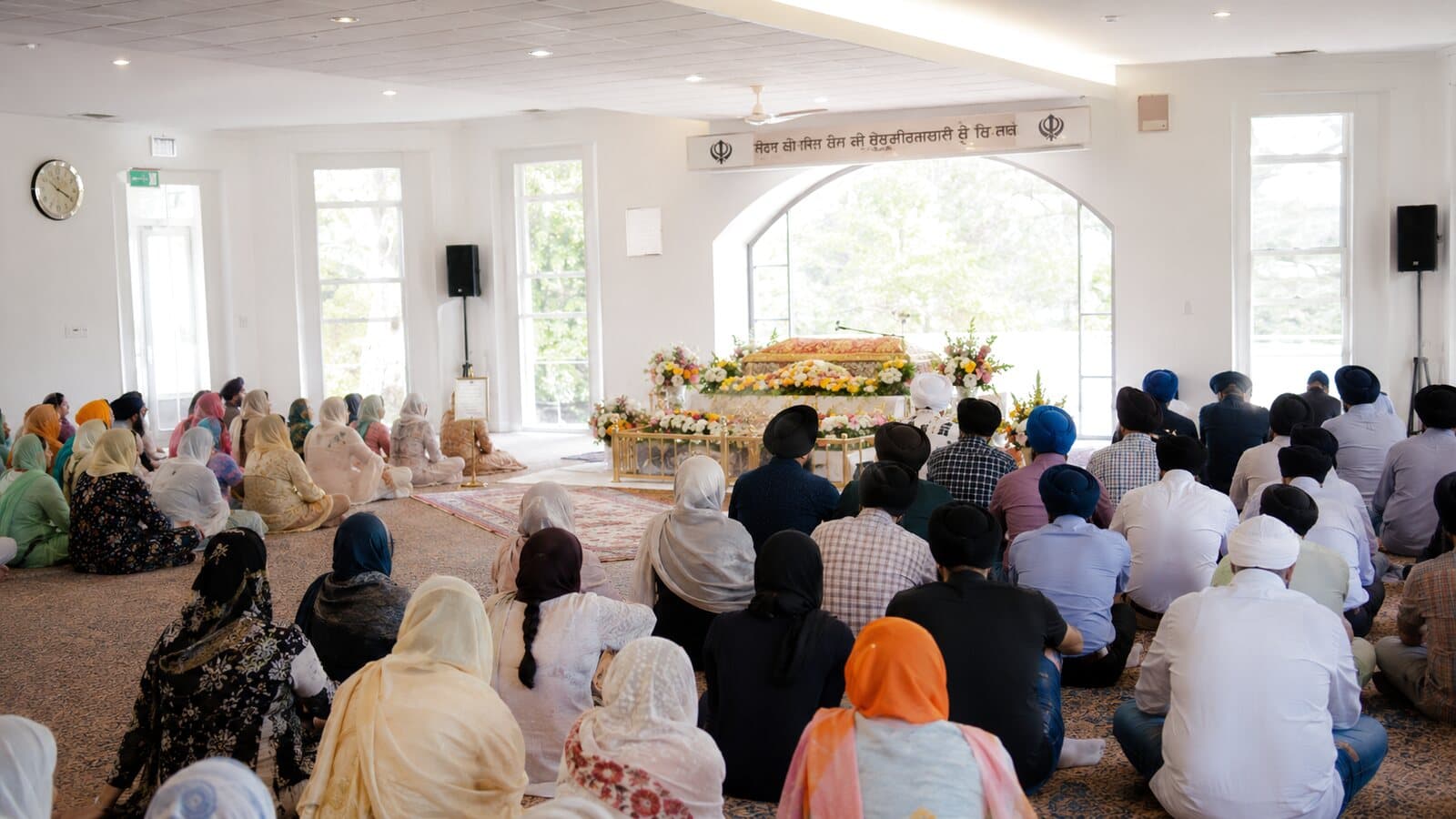
What happens at a Sikh funeral in Australia?
A Sikh funeral is known as Antam Sanskar, meaning the final rites. The focus is on prayer, remembering the person who has died and accepting Hukam, the Sikh understanding of God's will or the natural order of life.
Cremation is the usual practice. In Australia, prayers and gatherings may take place at the family home, a funeral chapel, the crematorium or a gurdwara, the Sikh place of worship. The family should contact its gurdwara, granthi or Sikh funeral provider early so they can help guide the religious arrangements.
What should be arranged early?
Contact the family's gurdwara, granthi or preferred Sikh funeral provider as soon as possible. A granthi is someone trained to read from and care for the Guru Granth Sahib, Sikhism's sacred scripture, and may help lead the prayers and advise the family on the funeral rites.
Tell the funeral director if the person was an initiated, or Amritdhari, Sikh. Initiated Sikhs keep five articles of faith, commonly known as the Five Ks: kesh, uncut hair; kangha, a small wooden comb; kara, a steel bracelet; kachera, a particular form of undergarment; and kirpan, a ceremonial blade.
These articles will generally remain with the body during preparation and cremation. If the kirpan or another item raises a safety concern at the crematorium, the funeral director should discuss an appropriate arrangement with the family and gurdwara before anything is removed.
The family should also decide where the prayers and gatherings will take place. This may include the family home, funeral chapel, crematorium and gurdwara.
Some families may want a close relative to witness the committal or begin the cremation process. Crematorium policies differ, so any request of this kind should be discussed with the funeral director in advance.
Preparing the body
The body is usually washed and dressed in clean clothing. Family members may help with the preparation, although the arrangements can differ depending on the family, gurdwara and funeral provider.
For an initiated Sikh, the Five Ks generally remain with the body. The person's hair should be treated respectfully and should not be cut.
Family members may recite prayers or passages from Gurbani, the sacred compositions contained in Sikh scripture, while the body is being prepared or before the coffin leaves for the funeral.
The cremation service
The funeral service may include Gurbani, Sikh hymns, Kirtan Sohila and Ardas. Kirtan Sohila is an evening prayer that is also commonly recited near the end of life and during Sikh funeral rites. Ardas is a formal prayer offered by the congregation.
Family members may also speak about the person who has died. The service generally focuses on prayer, remembrance and acceptance of Hukam rather than elaborate ceremony. Customs can still differ between families and Sikh communities.
In Australia, cremation generally takes place at a licensed crematorium. Some families may ask to include symbolic actions reflecting traditional family responsibilities, where the crematorium allows them.
After the cremation
The ashes are commonly immersed in flowing water, like a river or the ocean. This reflects the Sikh practice of returning the physical remains to nature rather than creating a permanent memorial for the body.
Some families may follow cultural or regional customs involving milk or ghee when the ashes are collected, prepared or taken for immersion. These practices are not followed by every Sikh family and should not be treated as a required part of the funeral. The family, gurdwara or Sikh funeral provider can explain what is appropriate in the particular circumstances.
Families may choose a suitable river or coastal location in Australia, while others may take the ashes overseas. Before scattering or immersing ashes, check whether permission is needed from the local council, landowner, park authority or other organisation responsible for the location. Requirements can differ depending on where the ashes will be placed.
When taking ashes overseas, families should check the airline's requirements and contact the relevant embassy or consulate. They may need a sealed container, a death certificate and documentation from the crematorium.
Prayers or religious readings may continue at the gurdwara or family home after the cremation. A langar, the free community meal served at a gurdwara, may also form part of the gathering.
What guests should know
Non-Sikh guests are generally welcome to attend a Sikh funeral. You are not expected to understand or recite the prayers.
Dress modestly and follow any directions provided by the family, funeral director or gurdwara. Subdued colours are generally appropriate, although wearing black is not a strict Sikh requirement.
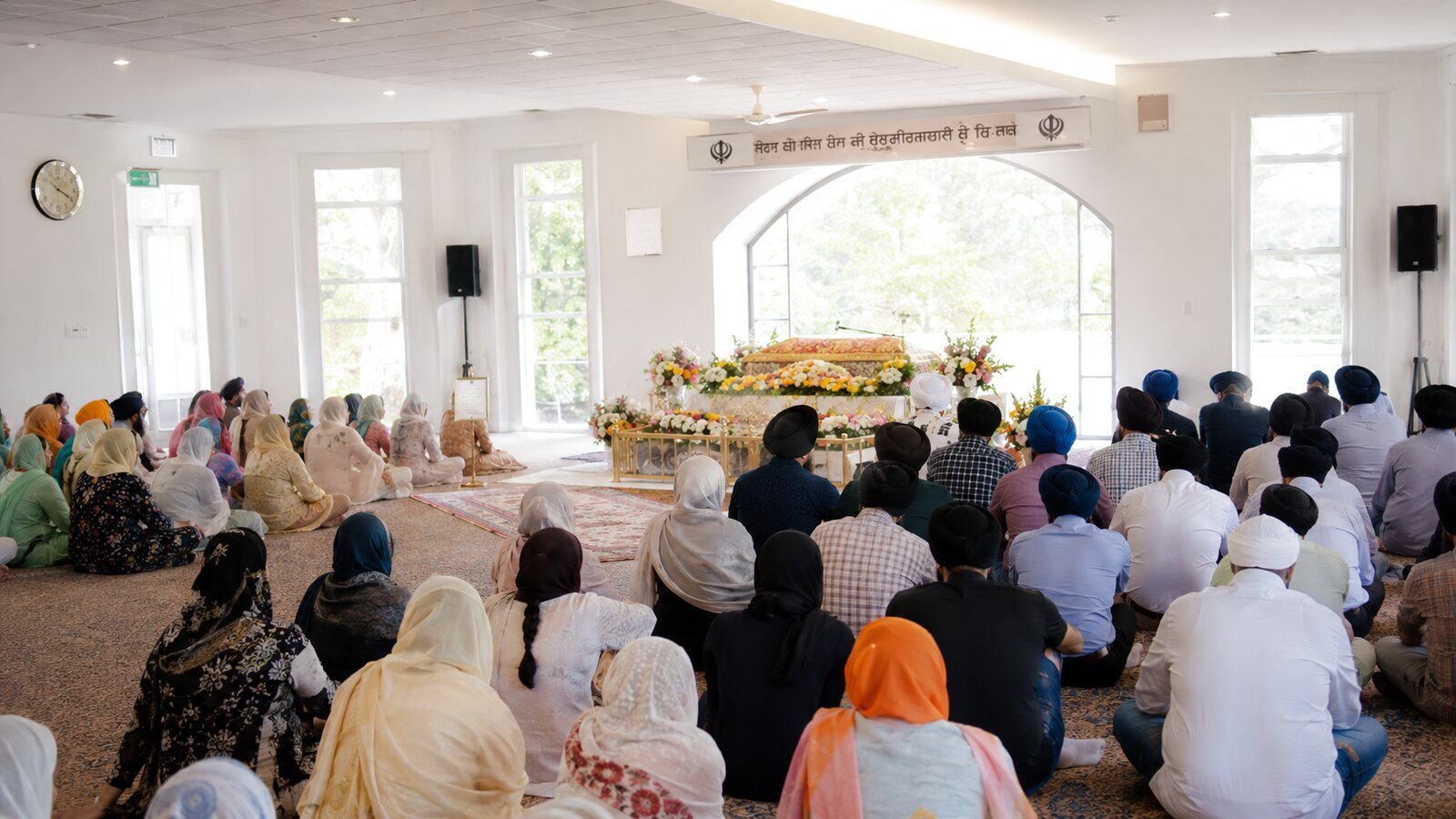
Before entering the gurdwara prayer hall, cover your head with a scarf, handkerchief or other suitable covering, remove your shoes, wash your hands if facilities are provided, avoid carrying alcohol, tobacco or other intoxicants onto the premises, and sit where directed.
Men and women may sit in separate areas of the prayer hall, although arrangements differ between gurdwaras. Guests commonly sit on the floor, but chairs may be available for people who cannot do so comfortably.
You may be offered food as part of the langar. The meal is vegetarian so that it can be shared by people from different religious and cultural backgrounds.
Further reading
- Australian Sikh Civil Rights: Antam Sanskar and Sikh funeral rites
- Sri Guru Singh Sabha Revesby: Sikh death ceremonies PDF
- NSW Health: cremation ashes
- ABS: Religious affiliation in Australia
Frequently asked questions
What is Antam Sanskar?
Do Sikhs cremate?
What are the Five Ks?
Can non-Sikhs attend?
What happens to the ashes?
What should guests wear?
Related rites, and what follows
This guide is general information to help Australian families, editorially reviewed by the Funerals Direct team from publicly available sources. It is not legal or financial advice. Funeral prices change and vary by provider and region, so always ask for an itemised written quote. For prepaid funerals, bonds, or insurance, consider speaking with an independent financial adviser or a free financial counsellor on 1800 007 007.
Ready to find a funeral director?
Compare directors who list the right experience, read reviews from other families, and request a quote. Always free for families.
Find a funeral directorWas this guide helpful?