
What is proper funeral etiquette in Australia?
Funeral etiquette is usually simpler than people expect. Every family is different, and customs vary between cultures and faiths, but arriving on time, dressing respectfully, following the family's wishes and treating those around you with kindness will rarely steer you wrong.
Most people go to few funerals, so feeling unsure is normal. This guide walks through what usually happens and what is expected of you: what to say to the family, what to wear and bring, where to sit, what actually happens during the service, and how the wake works. Where customs differ, we have said so, because there is no single Australian funeral.
What do you say to the family?
Less than you might think, and that is normal. Before the service, a family often has only a few seconds with each guest as people file in, so a short, sincere word is all that is needed, and all anyone expects. "I am so sorry for your loss" is plenty. A handshake, a hug or a hand on the arm all work; take your cue from the person in front of you.
If you knew the person who passed away and want to share a memory, the wake afterwards is usually the better moment, when there is more time. And if the words will not come, it is fine to say so. "I do not really know what to say, but I wanted to be here" is honest, and often lands better than a rehearsed line.
Where do you sit, and what if you are late or have to leave early?
This is what people worry about most, so it helps to know before you arrive.
The first few rows are usually kept for immediate family and close relatives. If you are unsure where to sit, choose a seat further back, and an usher or the funeral director will wave you forward if the family would like you closer. At a small service, people often fill up from the front, so take your lead from those already seated.
Running late happens, and it is not the disaster it feels like in the car. Slip in quietly at the back and wait for a natural pause, like the end of a song or a reading, rather than walking down the aisle during the eulogy.
If you can, stay until the service has finished. Leaving partway through can be distracting, and depending on where you are sitting it may draw attention away from the service. That said, no one will begrudge you slipping out quietly if you genuinely have to go.
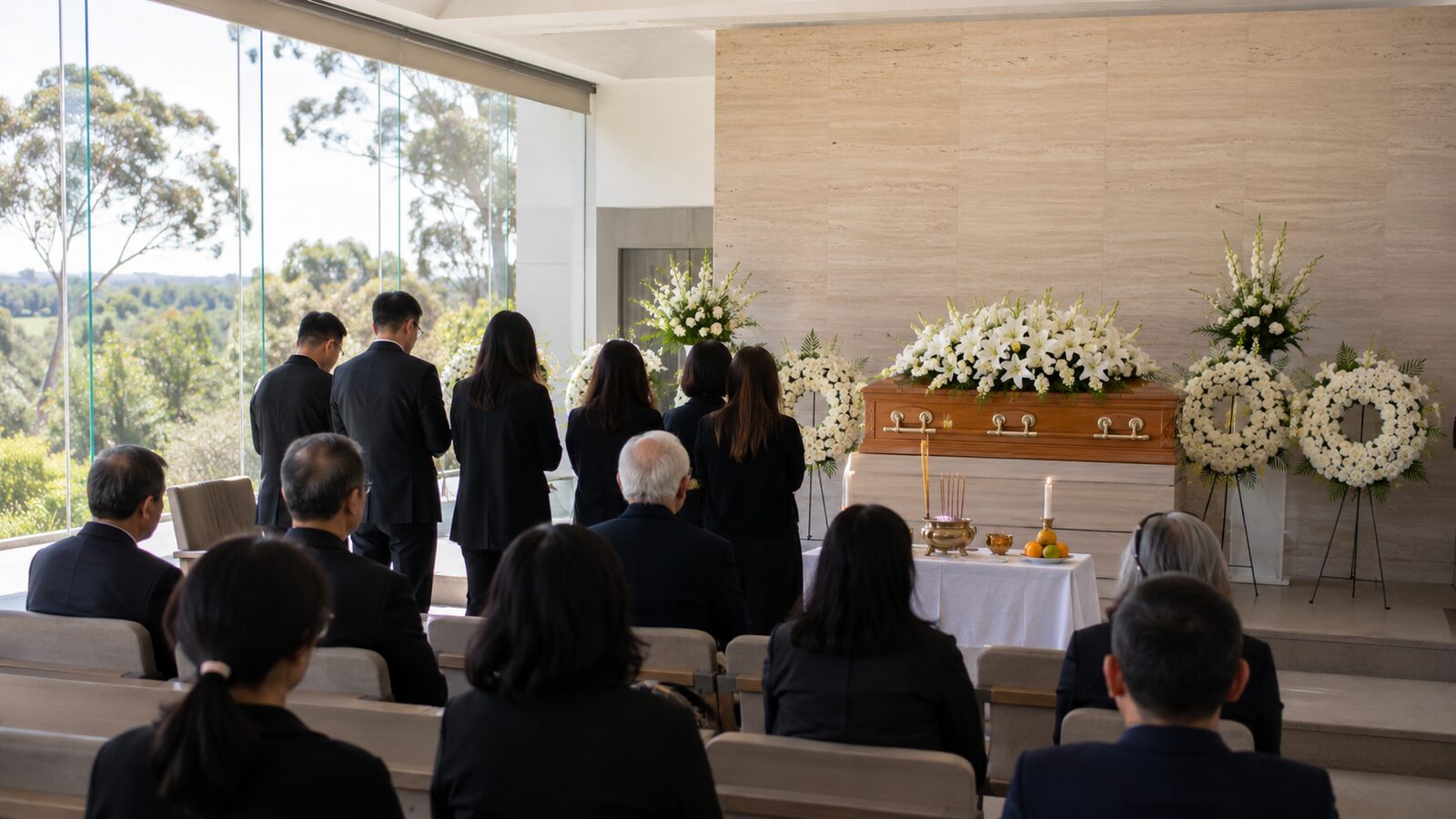
What actually happens during the service?
If you have not been to many funerals, knowing roughly how the day runs takes a lot of the worry out of it. Most Australian services, whether led by a civil celebrant or a member of the clergy, follow a loose version of the same order.
Most services run about 30 to 60 minutes. You do not need to know your part in advance, as the celebrant guides everyone through it.
Should you send flowers, or give to a charity?
It depends on the family, so read the notice first. Flowers are a traditional and welcome gesture, sent to the funeral home for the service or to the family's home. But many families now ask for a donation to a charity instead, particularly after a long illness, or where a cause meant something to the person who passed away. If that is the request, giving to the charity is every bit as thoughtful as flowers. Our guide on funeral flowers covers what to send and where.
Phones, photos and social media
Set your phone to silent or turn it off, and keep it away for the whole service. A screen lighting up in a quiet chapel is the sort of thing people notice.
Photographs are a matter for the family. Some welcome them, especially at a celebration of life; many would rather the service was not photographed at all. Unless you have been asked, leave the camera in your pocket. Social media is the same: hold off posting about the death until the family has, because relatives further away may not have heard yet.
What happens at the wake?
The wake, sometimes just called the gathering, the refreshments or morning tea, and often held at a club, a hall, a pub or the family home, has a very different feel from the service. Conversations loosen, people share stories, and the family usually has far more time to talk with guests than they did beforehand. If you wanted to pass on a memory of the person who passed away, this is the moment for it.
You do not need to bring anything, as the family hosts it. Going along, even for a short while, is appreciated, and there is no set length, so stay as long or as little as suits you.
What if you cannot attend?
Plenty of people cannot make it, whether for distance, work or health, and it is not held against you. A handwritten card or a phone call still counts, and can come before or after the day. Many services are livestreamed now, so it is worth asking the family or the funeral director for a link. A card that shares a specific memory tends to be kept and reread, so it is worth writing a little more than a single line.
Frequently asked questions
Can you wear colour to a funeral?
Should you take children to a funeral?
Is it okay to cry at a funeral?
Should you sign the condolence book?
Is it rude not to send flowers?
Do you have to go to the wake?
If you take one thing from this
If you are unsure about anything on the day, ask the funeral director. Guiding people through it is part of what they do. Do not overthink the rest, because for the family, what counts is that you came at all.
Before you go
This guide is general information to help Australian families, editorially reviewed by the Funerals Direct team from publicly available sources. It is not legal or financial advice. Funeral prices change and vary by provider and region, so always ask for an itemised written quote. For prepaid funerals, bonds, or insurance, consider speaking with an independent financial adviser or a free financial counsellor on 1800 007 007.
Ready to find a funeral director?
Compare directors who list the right experience, read reviews from other families, and request a quote. Always free for families.
Find a funeral directorWas this guide helpful?