What funeral flowers should you send in Australia?
Sending flowers after someone has recently passed away is a thoughtful gesture, but many people are unsure what to send, where it should go, or whether flowers are appropriate at all. The answer depends on how well you knew them, the wishes of the family, and the type of service being held. This guide explains what is usually done across Australia, so you can be confident your gesture will be welcome.
Below we cover why flowers are sent, what to send and where, which flowers people usually choose, what they cost, and what to write on the card.
Why do people send funeral flowers?
Funeral flowers serve two purposes. They honour the person who has passed away, and they let the family know that others are thinking of them. On a difficult day they also soften the space and become part of the tribute to the person's life.
What flowers should you send?
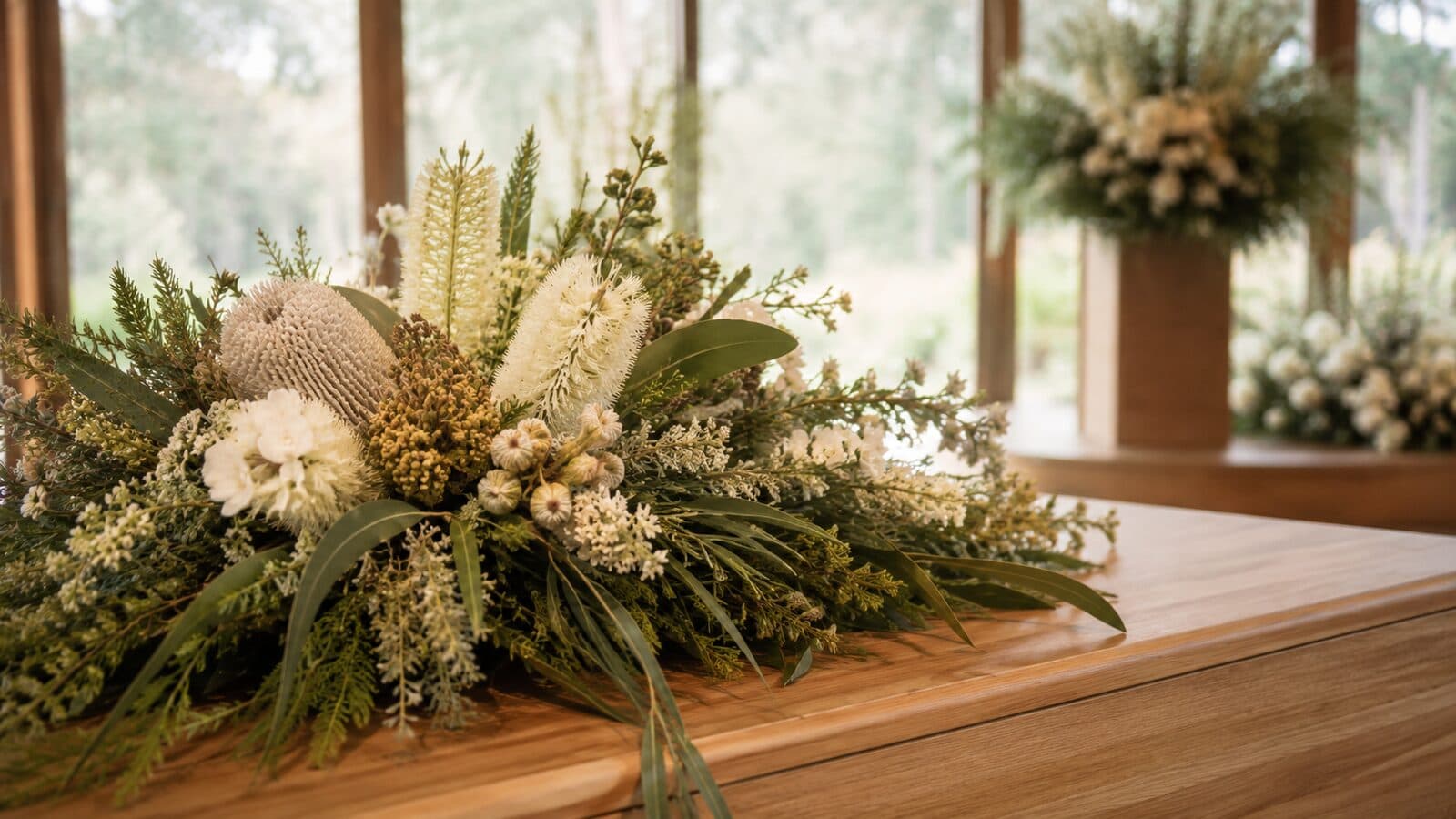
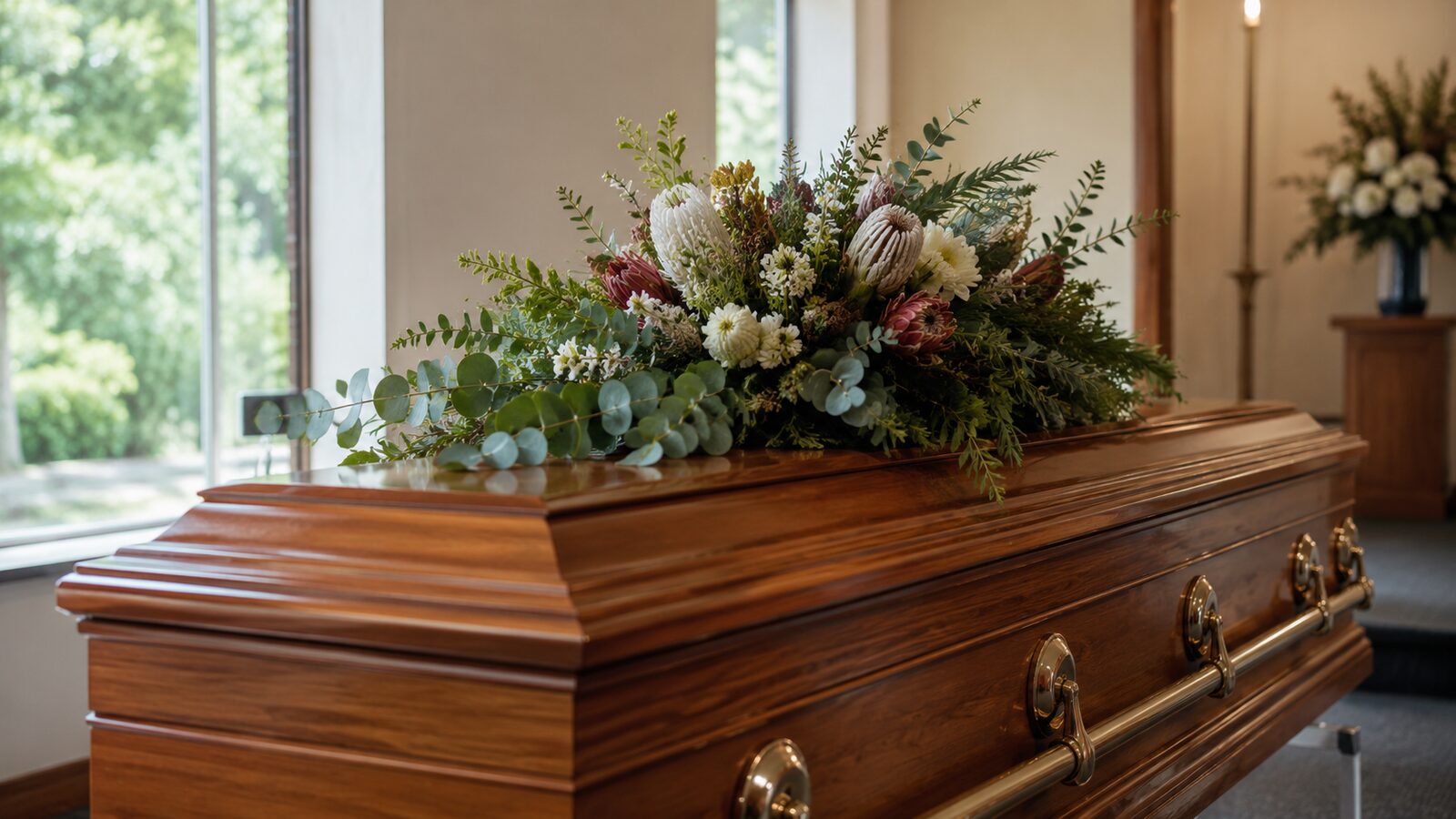
In Australia, the immediate family usually arranges the flowers that sit on or beside the coffin, most often a casket spray. If you are a friend, neighbour or colleague, a sympathy bouquet for the family's home or a wreath delivered to the service is both thoughtful and appropriate. There is no expectation that you send anything large, or that you send flowers at all.
| Arrangement | What it is |
|---|---|
| Casket spray | A large arrangement laid across the top of the coffin |
| Wreath | A circular tribute, usually displayed on a stand |
| Standing spray | A large display on an easel beside the coffin |
| Posy or bouquet | A smaller hand-tied arrangement |
| Single stem | One flower, often placed on the coffin during the service |
Where should the flowers go?
If the flowers are for the service, a florist will normally arrange delivery directly with the funeral home, so they are in place in time. If you are sending flowers to the family home, they can arrive before the funeral or in the days afterwards. Many families appreciate flowers after the service, once the visitors have gone home and the house has become quiet.
If you are ordering through a florist, give them the funeral home's name, the name of the person who has passed, and the date and time of the service. Most Australian florists deliver to funeral homes regularly and will coordinate the timing with the funeral director.
Which flowers do people usually choose?
There is no wrong choice, and no need to decode any flower symbolism. Most people pick something that looks right and suits the person. A few flowers come up more often than others.
| Flower | Why people choose it |
|---|---|
| Lilies | Traditional and elegant, and suitable for almost any funeral |
| Roses | A classic choice that works in both formal and simple arrangements |
| Carnations | Long lasting, and common in wreaths and sprays |
| Native flowers | Popular across Australia, often chosen for someone who loved the outdoors |
| White flowers | Suitable for almost any funeral, whatever the culture or denomination |
If the person had a favourite flower or colour, that is always a good choice.
How much do funeral flowers cost?
Cost depends on the size of the arrangement and the flowers you choose. A posy or small bouquet is the most affordable, a wreath or standing spray costs more, and a large casket spray is the most expensive. A florist can work to a budget, so tell them what you would like to spend and ask for a price before you order.
What do you write on the card?
The card that comes with flowers is small, so a short message is all it needs. "With deepest sympathy, the Smith family" is enough, or something more personal if you knew the person well. If you would like to say more, a separate sympathy card gives you the room. Our guide on what to write in a sympathy card has messages you can adapt.
Frequently asked questions
Is it appropriate to send flowers to a funeral?
What if the family asks for donations instead of flowers?
Can you send flowers after the funeral?
How much should you spend on funeral flowers?
What do you write on the card with funeral flowers?
Keep it simple
Whatever you decide to send, keep it simple. A good florist will help you choose something that suits the service, and the family will be glad you thought of them.
Other ways to show you are thinking of them
This guide is general information to help Australian families, editorially reviewed by the Funerals Direct team from publicly available sources. It is not legal or financial advice. Funeral prices change and vary by provider and region, so always ask for an itemised written quote. For prepaid funerals, bonds, or insurance, consider speaking with an independent financial adviser or a free financial counsellor on 1800 007 007.
Ready to find a funeral director?
Compare directors who list the right experience, read reviews from other families, and request a quote. Always free for families.
Find a funeral directorWas this guide helpful?