
How do you plan a funeral in Australia?
Planning a funeral is something most people do only once or twice, usually within a week or two of a death and while grieving. Once a doctor has confirmed the death, a funeral director does most of the coordination and paperwork, and the family makes the decisions that matter: cremation or burial, the kind of service, the coffin, and who leads it. This guide sets out the order things happen in, who signs what, what the director takes care of, and where the real choices and costs sit.
The decision that settles most of the rest is cremation or burial, because it sets the cost, the venue and the timing. Most of the paperwork, the transfer, the permits and registering the death, is handled by the director on your behalf.
Below we cover the order of events, who signs which documents, what the director does versus what is up to you, what happens if the coroner is involved, how long you have, and how to keep the cost down.

A director takes care of the practical details
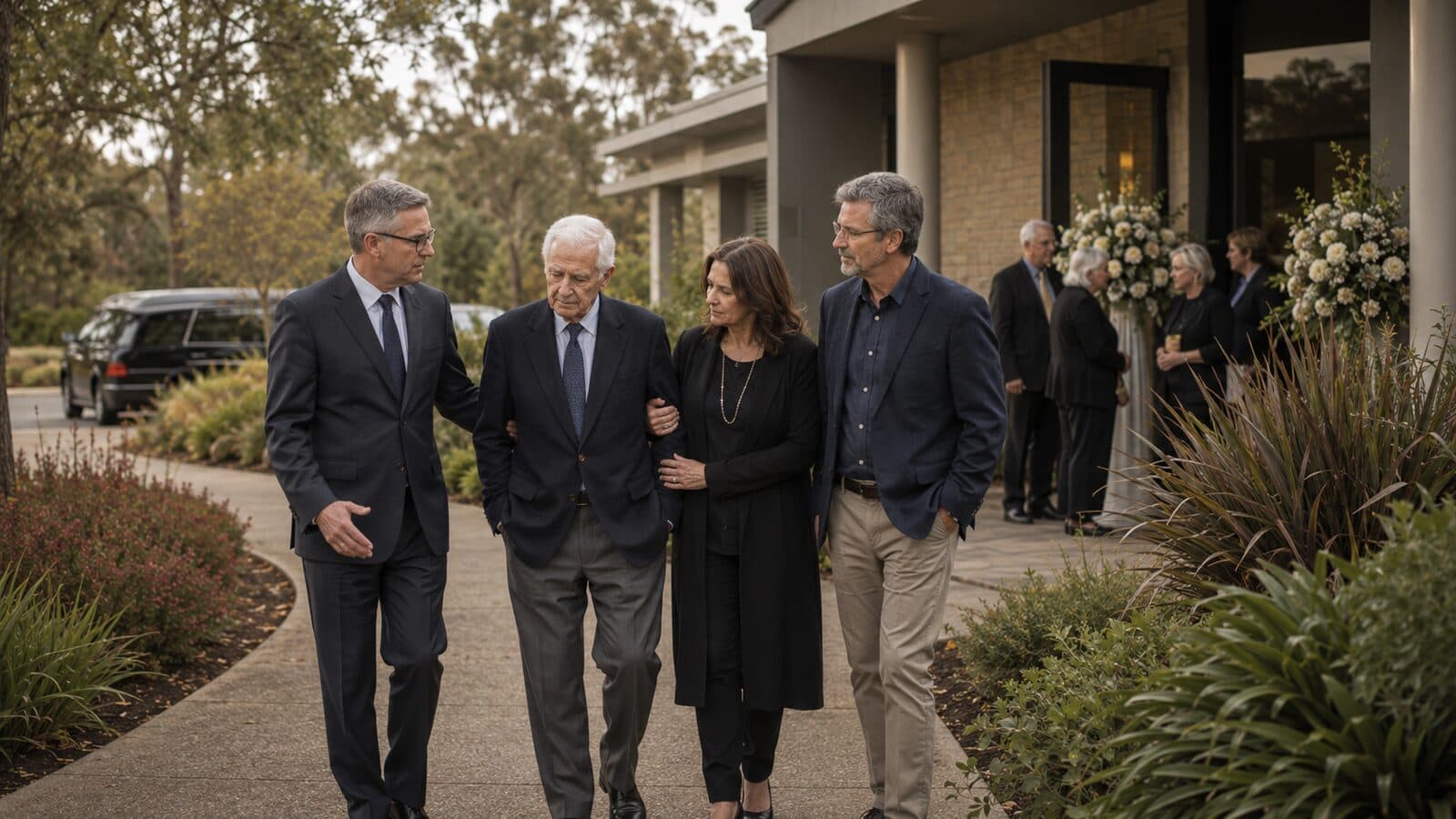
Once a doctor has confirmed the death, a funeral director takes on the coordination and the paperwork: the transfer into care, the permits, and registering the death with Births, Deaths and Marriages.
That leaves the family free to focus on the decisions that matter, cremation or burial, the kind of service, and who leads it, with someone experienced guiding each step.
The order things happen in
A funeral follows a fairly set sequence. You will not do it all at once, and the director keeps it on track.
Who signs what?
Several documents are needed before a funeral, and it helps to know who signs each, because a cremation in particular cannot go ahead until they are complete.
| Document | Who signs or completes it |
|---|---|
| Medical certificate of cause of death | The doctor who confirms the death |
| Permission to cremate | The executor or next of kin |
| Cremation permit | A medical referee, after checking the certificates |
| Funeral arrangement authority | The person arranging the funeral, usually the next of kin or executor |
| Death registration | The funeral director, on the family's behalf |
The director prepares these and walks you through the ones you need to sign. Without them, and the cremation permit in particular, a cremation cannot proceed, which is one reason a cremation can take a little longer to arrange than a burial. The exact forms differ by state.
What does the funeral director take care of, and what is up to you?
The director handles the logistics and the legal requirements, and the family makes the personal decisions. Knowing the split takes a lot of the worry out of it.
| The funeral director | The family or executor |
|---|---|
| Transfers and cares for the person | Decides cremation or burial |
| Lodges the permits and registers the death | Chooses which funeral director to use |
| Books the venue, celebrant, crematorium or cemetery | Decides the type of service |
| Pays third-party costs and invoices you | Chooses the coffin and any extras |
| Coordinates the timing | Sets the budget |
It is worth separating necessary from optional, too. Transfer, care, paperwork and a coffin are unavoidable. Embalming, a viewing, funeral cars, a printed order of service and a premium coffin are choices. A good director tells you which is which. Our guide on choosing a funeral director covers comparing quotes.

What happens if the coroner is involved?
If a death is sudden, unexpected, or happens outside medical care, it is reported to the coroner, and the process changes. The coroner has to determine the cause before a cremation can be approved, and the person cannot be released to the funeral director until an initial examination is done.
You do not have to wait for the whole coronial investigation to finish before arranging the funeral, though. The funeral director liaises with the Coroners Court about when the person will be released, and you can plan the service in the meantime. It does usually mean the funeral, and the final death certificate, take longer. Our guide on when the coroner is involved explains this in full.
How long do you have to plan a funeral?
There is no legal deadline, and no need to rush the arrangements in the first day or two. Most funerals in Australia are held within one to two weeks of the death, but that is custom, not law. Some traditions hold the funeral very quickly, within a day where possible, while other families wait longer to let interstate or overseas relatives travel, or for a coroner's release. You can take the time the situation needs.
How much does it cost, and how do you keep it down?
The choices above drive most of the cost: cremation or burial, the coffin, the type of service, and the director you choose. Comparing itemised quotes from two or three directors is the single most effective way to keep it manageable. Our guide on how much a funeral costs sets out the ranges, and who pays for a funeral covers the help available if money is tight.



Frequently asked questions
What is the first thing to do when someone passes away?
Who is responsible for arranging the funeral?
Can you plan a funeral yourself, without a director?
How long does it take to get the death certificate?
What if the family disagrees about the funeral?
One decision at a time
Planning a funeral is mostly a sequence of clear decisions, made with a director who does this every day. Take them one at a time, ask for the paperwork and the costs in writing, and let the director handle the parts that are theirs.
Working through each decision
This guide is general information to help Australian families, editorially reviewed by the Funerals Direct team from publicly available sources. It is not legal or financial advice. Funeral prices change and vary by provider and region, so always ask for an itemised written quote. For prepaid funerals, bonds, or insurance, consider speaking with an independent financial adviser or a free financial counsellor on 1800 007 007.
Ready to find a funeral director?
Compare directors who list the right experience, read reviews from other families, and request a quote. Always free for families.
Find a funeral directorWas this guide helpful?