
How much does a funeral cost in Australia?
If you are arranging a funeral, you probably need a figure before you have spoken to a funeral director. The price depends mostly on the type of funeral: a direct cremation with no service, a cremation with a service, or a burial.
The simplest option, a direct cremation, has a middle advertised starting price of $3,648 across 296 funeral brands on the Funerals Direct price index. Half of those brands start between $2,890 and $4,650. A full funeral costs more. In a 2023 survey for Australian Seniors, people aged 50 and over who had recently paid for a funeral, or been told what one cost, put the average total at $8,045 for a cremation and $11,039 for a burial.
You do not have to decide today, and you may not need all the money up front, because some banks will pay the funeral director from the account of the person who died. Ask any funeral director for a written, itemised quote before you sign anything.
How much does each type of funeral cost?
Direct cremation
A direct cremation has no service, and family do not attend. The funeral director collects the person who has died, completes the paperwork, arranges the cremation and returns the ashes. Some families hold their own memorial later.
Prices for a direct cremation vary widely. These are prices published on provider websites, checked in October 2026:
| Provider | Published price |
|---|---|
| Bereavement Assistance, Melbourne (a charity) | From $990 |
| Light Cremations, Sydney | $1,769 |
| Tony Hollands Funerals, Brisbane | From $1,980 |
| Fixed Price Cremations, Sydney and Melbourne | $1,995 |
| Northern Beaches Funerals, Sydney | $2,848 |
| Greenfields Funerals, Perth | $4,260 |
| McCartney Family Funerals, Brisbane | $4,395 |
Bereavement Assistance is a charity for families who cannot afford commercial prices, and its price leaves out the crematorium fee. At Tony Hollands, a viewing or a larger coffin costs extra.
The direct cremation guide lists what each package includes.
Cremation with a service
A cremation with a service has a funeral first, in a chapel, church or other venue, with family and friends there. In the 2023 Australian Seniors survey, the average estimated total for a cremation was $8,045. The price depends on what you add: the venue, the coffin, a celebrant, a viewing. Ask each funeral director to price the same service so you can compare like with like. The cremation cost guide has more detail.
Burial
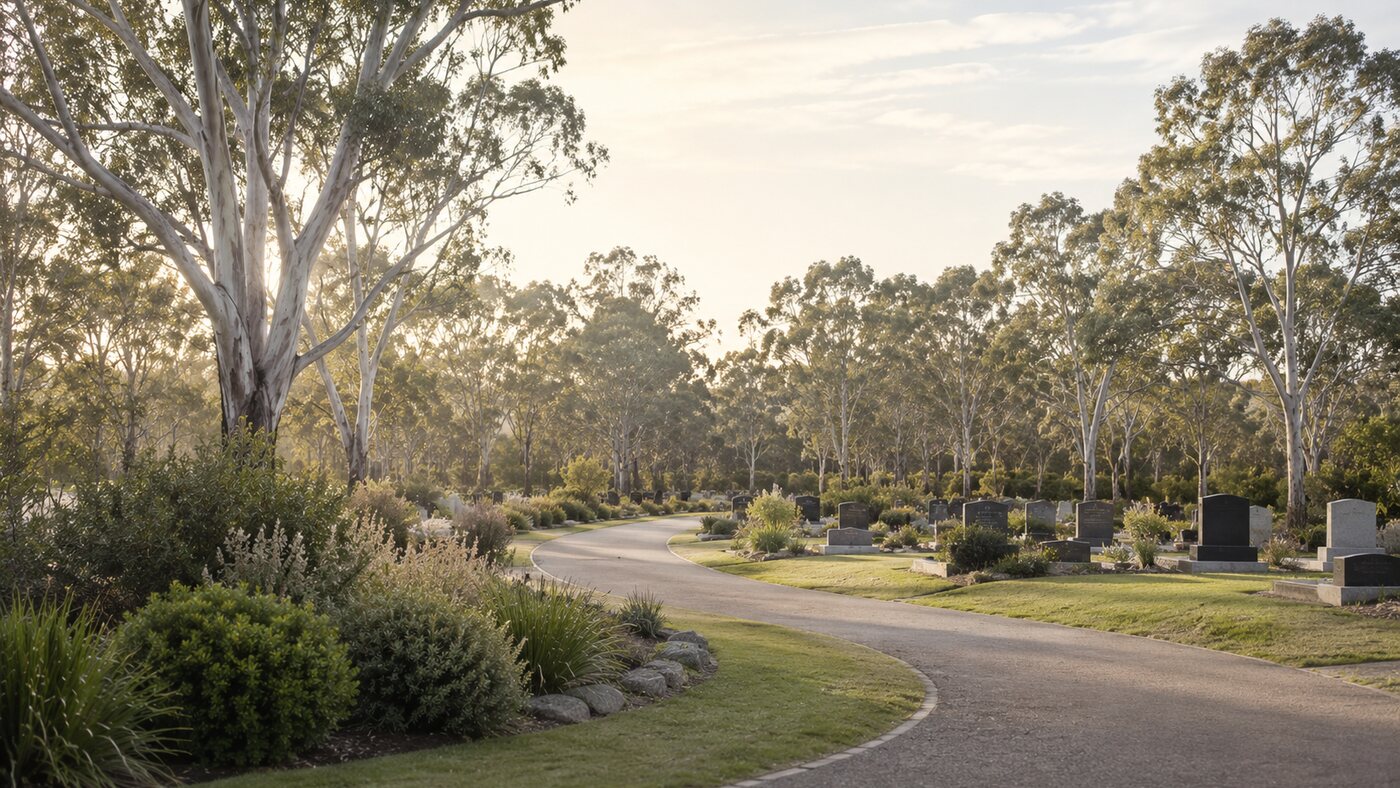
With a burial, you pay the cemetery as well as the funeral director. For a new adult lawn grave and the burial, the cemetery charges $4,645 at cemeteries run by the Metropolitan Cemeteries Board in Perth and $14,058.20 at Rookwood General Cemetery in Sydney, which includes a granite headstone the cemetery requires in that section. In Melbourne, the Greater Metropolitan Cemeteries Trust charges for the grave on its own: $6,205 at Lilydale, $7,490 at Northern Memorial Park, and $14,645 for a premium grave at Northern Memorial Park that includes the headstone. The fee for the burial itself is added to these. The burial cost guide explains each fee.
What is on a funeral bill?
This is one real price list: the itemised list for a direct cremation in Sydney from Northern Beaches Funerals (July 2026):
| Item | Price |
|---|---|
| Collecting the person who has died (weekdays; $100 more on weekends) | $330 |
| Staff member who makes the arrangements with you | $625 |
| Coffin and mortuary care | $310 |
| Doctors' certificates needed for cremation | $275 |
| Death certificate | $70 |
| The funeral director's own fee (professional fee) | $640 |
| Cremation at a commercial crematorium, including transport there and government levies | $598 |
| Total | $2,848 |
On any quote, look for these five kinds of charge:
- The funeral director's own fee. This pays for their staff, time and premises. Providers split it differently. For a direct cremation, Northern Beaches Funerals charges a $640 professional fee plus $625 for arranging, while McCartney Family Funerals in Brisbane charges a $1,296 professional fee. Compare the total of the funeral director's own charges, not one line.
- Fees the funeral director pays to others for you. These include the crematorium or cemetery, the doctors' certificates and the death certificate. A quote may call them disbursements. An adult cremation on a weekday costs $697.30 at Macquarie Park in Sydney (before 3:30pm, including the NSW levy), $1,210 at Springvale in Melbourne (no chapel service), $1,422 at the Metropolitan Cemeteries Board in Perth and $1,838 at Thorak near Darwin.
- Care and the coffin. This covers collecting the person, caring for them until the funeral (mortuary care), and the coffin, which can be anything from plain pressed board (MDF) to solid timber.
- The service. This covers the venue, the celebrant, the hearse, flowers and livestreaming. Ask which of these the package includes.
- Timing and distance. Collection at night, on weekends or from far away can add to the bill. Greenfields Funerals in Perth charges $495 for a weekday collection after 5pm, $575 on a weekend and $645 on a public holiday. Other providers include after-hours collection in the price, so ask before you agree.

Compare the total, not one line
Ask two or three funeral directors to quote the same service, with each charge on its own line.
One provider lists a single professional fee. Another splits it into a fee and a charge for arranging. Add up everything each funeral director charges, then compare the totals.
How common is cremation?
In New South Wales, 72.1% of burials and cremations in 2024-25 were cremations, according to Cemeteries and Crematoria NSW.
Does it cost more in some states?
On the Funerals Direct price index, the middle advertised starting price for a direct cremation in each state is below. Tasmania, the ACT and the Northern Territory do not have enough published prices to work out a figure.
| State | Middle starting price | Brands |
|---|---|---|
| Western Australia | $3,800 | 29 |
| Victoria | $3,775 | 74 |
| New South Wales | $3,749 | 107 |
| Queensland | $3,260 | 80 |
| South Australia | $2,498 | 12 |
Western Australia, Victoria and New South Wales are close together, so none is clearly more expensive. South Australia looks cheapest, but its figure comes from only 12 funeral brands, so it could change as more publish their prices. The state-by-state price guide has city figures, and links to a guide for each state.
What are your rights when you ask for a price?
In New South Wales, Victoria, Queensland and Western Australia, funeral directors must show their prices on their website and at their premises. They must also give you an itemised quote, including fees they pay to others and the total, before you sign.
The ACCC, the national consumer regulator, says you should ask for an itemised quote and ask which items are required by law and which are optional. It is also concerned when a funeral business makes you buy a coffin or headstone from a particular supplier, and that stops you getting a lower price somewhere else.
Some funeral brands share an owner. For example, InvoCare owns both White Lady Funerals and Simplicity Funerals, so two quotes under different names can come from the same company. ABN Lookup (abr.business.gov.au) shows the business behind a trading name, although it will not always show a parent company. The guide to who owns funeral brands explains who owns which brands.
How can you pay for a funeral?
From the bank account of the person who died. Some banks, including CommBank and NAB, will pay the funeral director's invoice from the account before the estate is settled. NAB says it pays within 14 business days of getting all the paperwork, if there is enough money in the account. Ask the bank's deceased estates team.
A Centrelink bereavement payment. If your partner has died and you had both been getting an income support payment for at least 12 months, or a pension, you may get a one-off lump sum. It is usually what you would have received as a couple over 14 weeks, minus your new single rate. It is meant to help you move to a single income.
Help for veterans. From 1 July 2026, the Department of Veterans' Affairs pays up to $14,990 towards the funeral when a veteran's death was related to their service, and $3,000 in some other cases, including when a veteran dies without the money to pay. Call 1800 VETERAN (1800 838 372).
Your own super. If the funeral is for someone who depended on you, you can apply to the ATO to release some of your own super. The ATO generally releases super only for bills that have not been paid, so apply before you pay. You will need an itemised quote no more than six months old, or an invoice no more than 30 days old.
Help when no one can pay. If neither the estate nor the family can pay, ask here:
| Where you live | Who to contact |
|---|---|
| New South Wales | The hospital social worker or, if the person died outside hospital, the local Public Health Unit. NSW Health pays for a basic funeral |
| Victoria | Bereavement Assistance, a charity funeral director, on (03) 9564 7778 |
| Queensland | Coroners Court of Queensland Funeral Assistance Scheme. Apply in person at your nearest Magistrates Court |
| South Australia | Funeral AssistanceSA on 1300 762 577 |
| Western Australia | Department of Communities Bereavement Assistance, free call 1800 854 925 |
| Tasmania | Essential Care Funeral Policy, run by the state health department. It pays for a cremation without a service. The Coroners Court website explains who can get it |
| Australian Capital Territory | ACT Government funeral assistance, through Tobin Brothers, Toscan Dinn, William Cole Funerals or Tender Funerals. The ACT Revenue Office runs it: (02) 6207 0028, option 5 |
| Northern Territory | Help may be available. The Public Guardian and Trustee points families to the NT Government website, nt.gov.au |
Each scheme has its own rules. Queensland, for example, will not pay if the person who died had super, life insurance or a funeral plan. The guide to paying for a funeral with no money explains who is responsible for the bill. If you are planning ahead for your own funeral, the guide to prepaid funerals, bonds and insurance compares the options.
What should you do before you sign?
To make sure you know exactly what you are paying for before signing an agreement, keep these key steps in mind:
- Get written, itemised quotes from two or three funeral directors for the same service, with the professional fee, the coffin and the fees paid to others on separate lines.
- Ask what is required and what is optional, and which costs, like cemetery fees, are not in the quote.
- Work out how you will pay before you sign. Call the bank about releasing money from the account, and if you plan to use your own super, apply to the ATO first.
Frequently asked questions
What is the average cost of a funeral in Australia?
What is the cheapest funeral option?
Why is a burial more expensive than a cremation?
How can I keep costs down?
Further reading and sources
- Funeral prices by state and city
- Itemised funeral cost breakdown
- Hidden funeral costs
- How to plan a funeral on a budget
Sources: Funerals Direct price index (26 September 2026); Australian Seniors, Cost of Death Report 2.0 (2023) and whitepaper; provider price pages for Bereavement Assistance, Light Cremations, Tony Hollands Funerals, Fixed Price Cremations, Northern Beaches Funerals, Greenfields Funerals and McCartney Family Funerals; crematorium and cemetery fees from Metropolitan Memorial Parks, Macquarie Park and Rookwood, Southern Metropolitan Cemeteries Trust, Metropolitan Cemeteries Board, Litchfield Council and Greater Metropolitan Cemeteries Trust; Cemeteries and Crematoria NSW, Activity Report 2024-25; NSW Government, Consumer Affairs Victoria and customer quotation, Queensland Government and WA Consumer Protection on price display; ACCC, funeral services; Simplicity Funerals and White Lady Funerals on ownership; ABN Lookup; CommBank and NAB deceased estates; Services Australia, What help there is when an adult dies; DVA, funeral benefits and contact; ATO, how to apply; state funeral help from Legal Aid NSW, Victorian Government, Queensland Coroners Court, SA Department of Human Services, WA Department of Communities, Tasmanian Magistrates Court, ACT Revenue Office and NT Public Guardian and Trustee; National Debt Helpline. All checked October 2026.
Ask up to three funeral directors at once
Prices vary a lot between directors, so ask for itemised quotes in one go.
- Free
- You choose who
- No obligation
Works for planning ahead too. How we make money
This guide is general information to help Australian families, editorially reviewed by the Funerals Direct team from publicly available sources. It is not legal or financial advice. Every figure here is a working guide rather than a quote, because funeral prices change by provider, suburb, cemetery and crematorium. Before you sign anything, ask for an itemised written quote that separates the funeral director's professional service fee from third-party costs like the crematorium, cemetery, celebrant, flowers, notices and death certificate fees, and ask which of those items are legally required and which are optional. For prepaid funerals, bonds, or insurance, consider speaking with an independent financial adviser or a free financial counsellor on 1800 007 007.
Ready to find a funeral director?
Compare directors who list the right experience, read reviews from other families, and request a quote. Always free for families.
Compare funeral directorsWas this guide helpful?