How much does cremation cost in Australia?
Cremation is the majority choice where figures are published. There is no official national cremation rate for Australia, because the ABS does not record method of disposal in death registrations. The best available state evidence comes from Cemeteries and Crematoria NSW, whose 2023-24 Activity Report recorded a 73% cremation rate in NSW, from 48,252 cremations against 18,232 burials, covering an estimated 99.9% of interment services. The cost, though, swings several times over depending on the service type and the provider. A direct cremation at a charity provider can cost from $990 (charitable, for families who cannot afford commercial rates; crematorium fee extra). The same physical process at a premium brand can run to around $8,782 (White Lady Funerals at Pennant Hills NSW lists its "Cremation Only" service from that price in its price disclosure dated 6 July 2026, for an adult, Monday to Friday, at Northern Suburbs Memorial Gardens; checked September 2026). What changes is the service level and branding, not the cremation, which is why it pays to compare a few itemised quotes.
Every price here is a base advertised package price unless labelled otherwise. Named-provider figures come from each provider's own published pricing and show the month we last checked them; they are indicative, change over time, and vary by branch. Median and percentile figures are computed from providers' own published direct cremation prices, one price per brand, as at 26 September 2026. This is general information, not advice. Always request an itemised quote before signing anything.
Three tiers of cremation
Australian cremation services fall into three distinct tiers, each with a different set of inclusions.
Direct cremation
No ceremony, and usually no viewing. The cremation usually happens without the family attending.
Cheapest optionNo ceremonyFamily not in attendance
Cremation with service
A funeral ceremony before the cremation, held at a chapel, church or venue with mourners present.
Chapel or venue includedCelebrant includedMourners attend
Memorial-only service
Held after the cremation, once the family already has the ashes. Many choose this after a direct cremation.
Held after cremationAshes already in handFlexible venue
Direct cremation figures are computed from providers' own published prices, one price per brand, as at 26 September 2026. Prices vary by provider and location.
Tier 1: Direct cremation (no service, no attendance)
Direct cremation is the simplest and cheapest option: no ceremony, usually no viewing, and the cremation usually happens without the family attending. Charitable providers start from $990 (crematorium fee extra). Across the brands that publish a price, the median is $3,648 and the middle half sit between $2,890 and $4,650. Outside charity pricing, the lowest published price is $1,290 from Dignified Cremations (QLD), and a premium corporate branch lists $8,782 for the same physical service.
It includes collection of the deceased, mortuary care, a basic cardboard or MDF coffin, the cremation itself, all paperwork (death registration, permits, medical certificate handling), and return of the ashes in a basic container. It does not include a service or ceremony, chapel hire, viewing, a celebrant, flowers or printed materials, or after-hours transfer fees.
Budget-end providers include:
- Bereavement Assistance (VIC, charitable, for families who cannot afford commercial rates): from $990 (crematorium fee extra), checked September 2026
- Fixed Price Cremations: $1,995, checked September 2026
- Value Cremations: $1,399 in Queensland, $1,699 in South Australia, $1,899 in NSW and $1,899 in Victoria, checked September 2026
- Bare Cremation: from $2,899 in Adelaide, $3,199 in Melbourne and $3,999 in Perth, checked September 2026
- Salvos Funerals: for example $2,348 in south east Queensland to $3,725 in Perth on its location price guides, checked September 2026
Many families choose direct cremation followed by a separate memorial at a time and place of their choosing. This separates the time-pressured logistics from the farewell.
Tier 2: Cremation with service
A cremation with service includes a funeral ceremony before the cremation, held at a chapel, church or other venue with mourners present. There is no reliable average price for it. What you pay depends on the venue, the coffin, the celebrant and the funeral director's professional fee, so compare written itemised quotes for the same service.
It typically includes everything in a direct cremation plus chapel or church hire, a celebrant, a hearse, basic flowers, and certificates. Viewing, embalming, elaborate florals, order-of-service printing, livestreaming, mourning cars and catering are usually charged as extras.
The difference between a modest service and a premium one is largely the professional fee, the coffin, and the venue. A timber coffin usually replaces the cardboard option, and chapel or church hire and a celebrant are each added to the bill. Ask for each of these as a separate line on the quote.
Tier 3: Memorial-only service (ashes already in hand)
A memorial service is held after the cremation has already taken place, with the body not present (the ashes may or may not be on display).
It typically includes professional coordination, sometimes venue hire, a celebrant or MC, and audiovisual setup. It excludes the cremation itself (already paid for separately), a coffin, and catering, which is usually arranged independently.
Some providers package the preceding direct cremation into the memorial price; traditional directors quote the coordination separately. A memorial at home, a park, a community hall or a pub can cost very little beyond the direct cremation already paid for, and you control the timing, venue and guest list.
Cremation costs by state
Direct cremation pricing varies by state, partly because crematorium fees differ from state to state. There is no official national funeral price index. The figures below come from providers' own published direct cremation prices, one price per brand however many branches it runs, computed 26 September 2026.
| State or territory | Brands publishing a price | Median direct cremation | Middle half of prices |
|---|---|---|---|
| New South Wales | 107 | $3,749 | $2,993 to $4,650 |
| Victoria | 74 | $3,775 | $2,871 to $4,744 |
| Queensland | 80 | $3,260 | $2,628 to $4,470 |
| Western Australia | 29 | $3,800 | $3,050 to $4,539 |
| South Australia | 12 | $2,498 | $2,350 to $3,179 |
| Tasmania | 7 | Too few brands for a median | Prices run $3,300 to $5,989 |
| ACT | 4 | Too few brands for a median | Too few brands for a range |
| Northern Territory | 0 | No median | No prices in our count |
Swipe the table sideways to see every column.
A median is shown only where at least twelve brands in a state publish a price. South Australia has the smallest sample that qualifies, so its figure is provisional. Of the five states with a median, Western Australia, Victoria and New South Wales sit highest, too close together to rank, and South Australia sits lowest.
The one state-level cost that operators publish is the crematorium's own fee, set out in the next section, which runs from $510 in Adelaide to $1,838 in Darwin among the crematoria we checked. Everything above that is the funeral director's fee, and that varies more between providers in the same city than it does between states. Compare two or three itemised quotes near you rather than working from a state figure.
Full state-by-state funeral price comparison
The crematorium fee explained
The crematorium fee is the charge from the crematorium itself. It is a third-party cost, set by the crematorium operator, not the funeral director, who passes it through on the invoice as a disbursement. Published crematorium fees for a standard adult cremation range from $510 at Centennial Park in Adelaide to $1,838 at Thorak Regional Cemetery in Darwin, with Macquarie Park in Sydney at $650, Springvale Botanical in Melbourne at $1,210 and the Metropolitan Cemeteries Board in Perth at $1,422. All are GST inclusive and effective 1 July 2026. Higher rates apply for weekends and public holidays, so ask the funeral director which rate your booking attracts.
Because the fee belongs to the crematorium rather than the funeral director, it does not change much between the funeral directors using the same crematorium. A $1,995 budget provider and an $8,782 premium provider pay the same fee if they book the same crematorium. The difference in what you pay is the funeral director's own fee.
What happens to the ashes
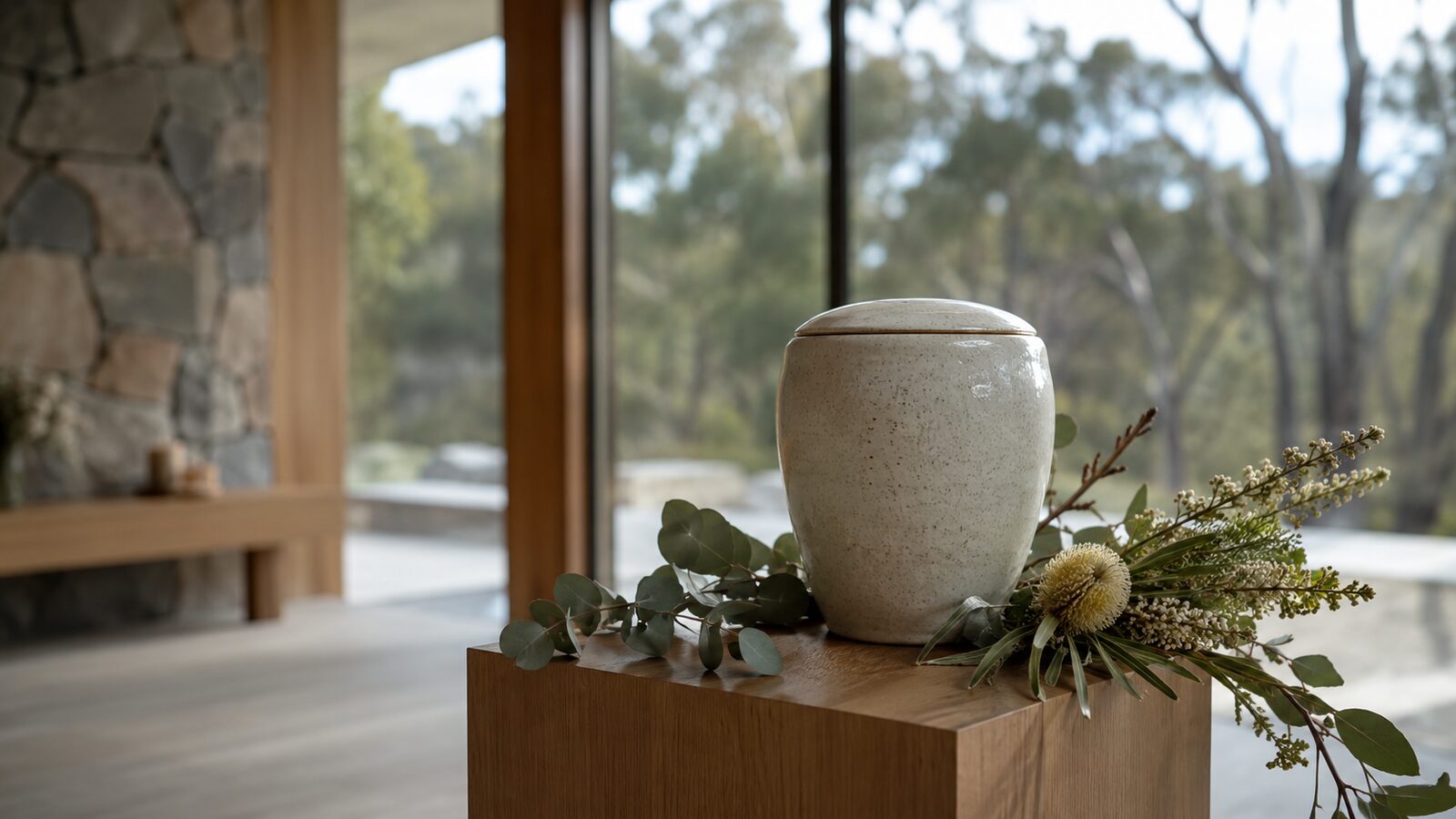
After cremation, the crematorium returns the ashes to the family or the funeral director, usually within a week or two, in a basic container. Ask your funeral director for the expected date. From there, families keep them at home (no legal restriction in any state), scatter them (with landowner or council permission), inter them in a cemetery niche or garden of remembrance, divide them between relatives, or move them into an urn of their own choosing. Funeral directors sell urns across a wide price range, but there is no requirement to buy one from them.
See our full guide on what to do with a loved one's ashes for the scattering rules by state and ideas for a lasting memorial.
Where families commonly save on cremation costs
- Direct cremation. Skipping a formal ceremony at the time of cremation takes the chapel, celebrant and ceremony charges off the bill.
- A separate memorial. A memorial at home, a park, or a community venue tends to cost a fraction of a funeral-home chapel service, and can happen whenever the family is ready.
- The coffin. For a direct cremation, the coffin is not viewed, so the cheapest option covers the requirement. Cardboard coffins are among the lowest-cost options: The Last Hurrah in Melbourne lists one at $300 plus delivery if required (checked September 2026), and Daisybox gives a recommended retail price of up to $395 for a plain casket, with a custom-printed design at around $1,395 plus artwork (checked September 2026). Many funeral directors supply them only inside a package rather than as a separate item.
- The urn. An urn can be bought independently, or a container the family already owns can be used. There is no requirement to buy one from the funeral director.
- Comparing providers. Many families obtain two or three itemised quotes, and check whether different-sounding brands share the same parent company.
Frequently asked questions
How much does a cremation cost in Australia?
How much does a direct cremation cost in Australia?
What is the average cost of a cremation in Australia?
Is cremation cheaper than a funeral in Australia?
What is the difference between a direct cremation and a cremation with service?
What is the crematorium fee?
What is the cheapest cremation available?
What happens to the ashes after cremation in Australia?
Comparing cremation with the alternatives
Ask up to three funeral directors at once
Prices vary a lot between directors, so ask for itemised quotes in one go.
- Free
- You choose who
- No obligation
Works for planning ahead too. How we make money
Cremation costs by city
- Sydney: $3,498, median, 52 providers
- Melbourne: $3,447, median, 48 providers
- Brisbane: $2,750, median, 29 providers
- Adelaide: $2,498, median, 12 providers
- Perth: $3,500, median, 23 providers
- Gold Coast: $2,999, median, 17 providers
- Newcastle: $3,750, median, 15 providers
- Sunshine Coast: $1,399 to $6,878, full range, 8 providers
By state: Western Australia, Victoria, New South Wales, Queensland, South Australia, Tasmania, Australian Capital Territory, Northern Territory. Or compare every state and city.
This guide is general information to help Australian families, editorially reviewed by the Funerals Direct team from publicly available sources. It is not legal or financial advice. Every figure here is a working guide rather than a quote, because funeral prices change by provider, suburb, cemetery and crematorium. Before you sign anything, ask for an itemised written quote that separates the funeral director's professional service fee from third-party costs like the crematorium, cemetery, celebrant, flowers, notices and death certificate fees, and ask which of those items are legally required and which are optional. For prepaid funerals, bonds, or insurance, consider speaking with an independent financial adviser or a free financial counsellor on 1800 007 007.
Ready to find a funeral director?
Compare directors who list the right experience, read reviews from other families, and request a quote. Always free for families.
Compare funeral directorsWas this guide helpful?