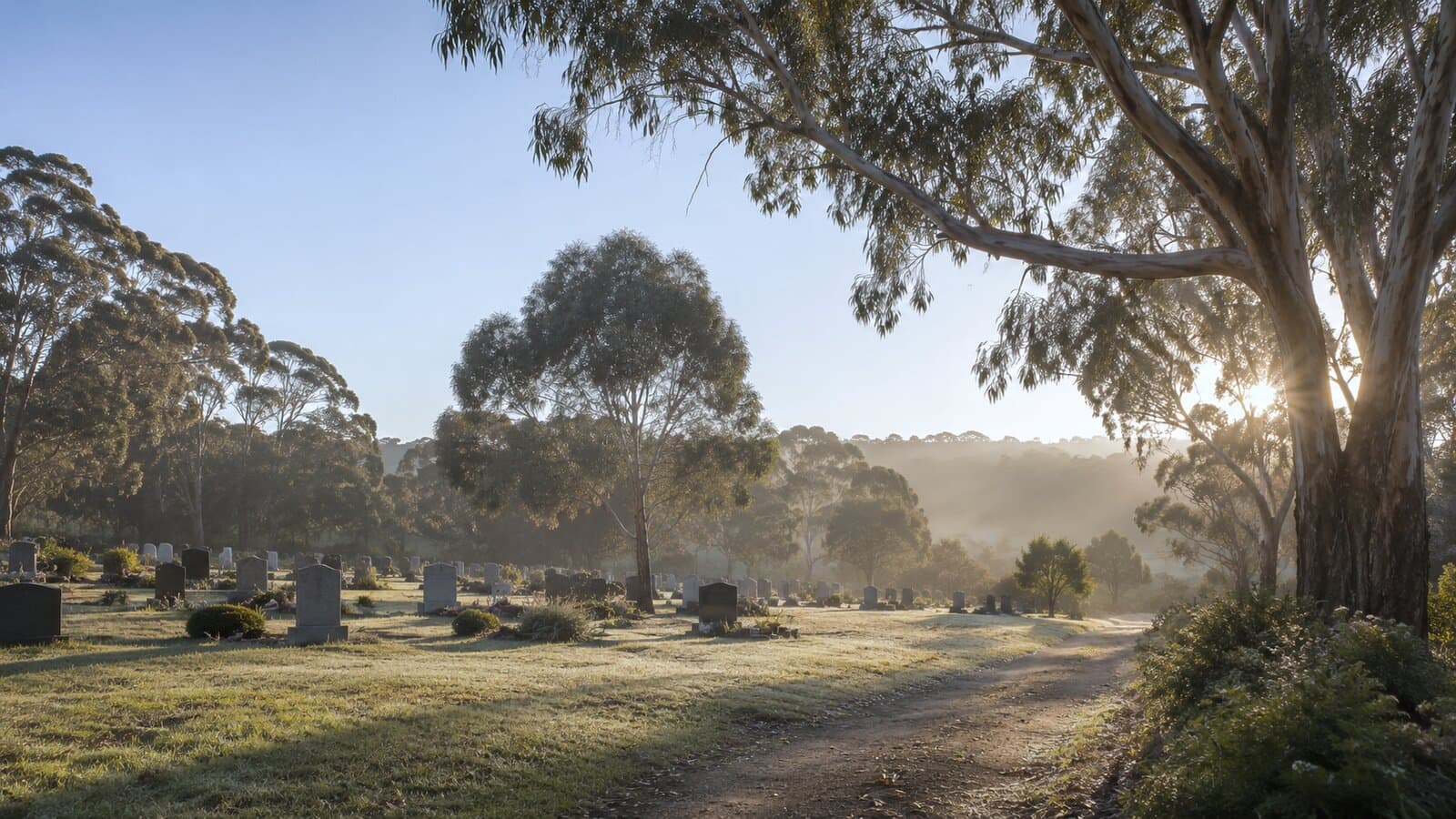
How much does a burial cost in Australia?
A funeral director's burial package is only part of the cost. The burial plot, opening and closing the grave, other cemetery fees and eventually a headstone can all be charged separately.
Where the burial takes place makes a big difference too. Each cemetery sets its own plot prices, and they differ even between cemeteries run by the same trust in the same city.
So if you see a burial funeral advertised at a package price, check exactly what that price includes. The final amount you pay can be considerably higher once the cemetery is added.
Before you rely on these numbers
Treat every figure here as a working guide, not a quote. Prices change by provider, suburb and cemetery, and by the choices a family makes.
Cemetery and levy figures are drawn from each operator's own published schedule, and the tables show when each was last checked. Cemetery fees are set by individual cemeteries and change regularly, usually on 1 July. This is general information, not advice. Ask for an itemised written quote before you sign anything.
Where does the money actually go?
One of the confusing things about paying for a burial is that there are usually two separate sets of costs.
There is the funeral, which is generally arranged through the funeral director, and then there is the burial, which the cemetery charges for.
A funeral director's fee can cover bringing the person who has died into their care, the coffin, mortuary care, paperwork, transport and arranging the funeral itself.
The cemetery then has its own costs. This is where you pay for the burial plot, opening and closing the grave, and any other cemetery charges.
There may also be costs that come later, particularly if you want a headstone.
| Who you are paying | What you are generally paying for |
|---|---|
| Funeral director | Care of the person who has died, coffin, arrangements, transport and the funeral |
| Cemetery | Burial plot, opening and closing the grave, and other cemetery fees |
| Memorial provider | Headstone, monument, inscription and installation |
How much does the funeral director cost?
What a funeral director charges for a burial depends largely on the funeral you choose. A smaller funeral with a simple coffin and service costs less than a larger one with an upgraded coffin, extra vehicles, flowers, catering and a bigger ceremony.
A funeral director's burial package typically includes the professional service fee, mortuary care, transfer of the person who has died, the coffin, the hearse, a chapel or church service, clergy or a celebrant, and the death certificate.
Common extras not in the base package: embalming, viewing, flowers, mourning cars, catering, livestreaming and order of service booklets. Coffin choice alone moves the total more than most families expect, which we cover in the guide to coffins and caskets. CHOICE's 2019 mystery shop found a viewing, which is included in more expensive packages, charged as an extra of $110 to $1,600 in budget packages.
When you get a quote, the important thing is to check whether cemetery costs are included. A quote can cover everything you asked the funeral director to arrange and still leave the cemetery's charges to pay.
An itemised quote shows what you are actually getting.
The 2023 Australian Seniors Cost of Death 2.0 Report, an insurer-commissioned report by CoreData (April and May 2023) that combined a survey of 1,200 Australians aged 50 and over with mystery shopping of funeral homes and cemeteries, estimated the cost of a burial at $11,039 and a cremation at $8,045. Treat it as indicative: these are estimates, not what families reported paying.
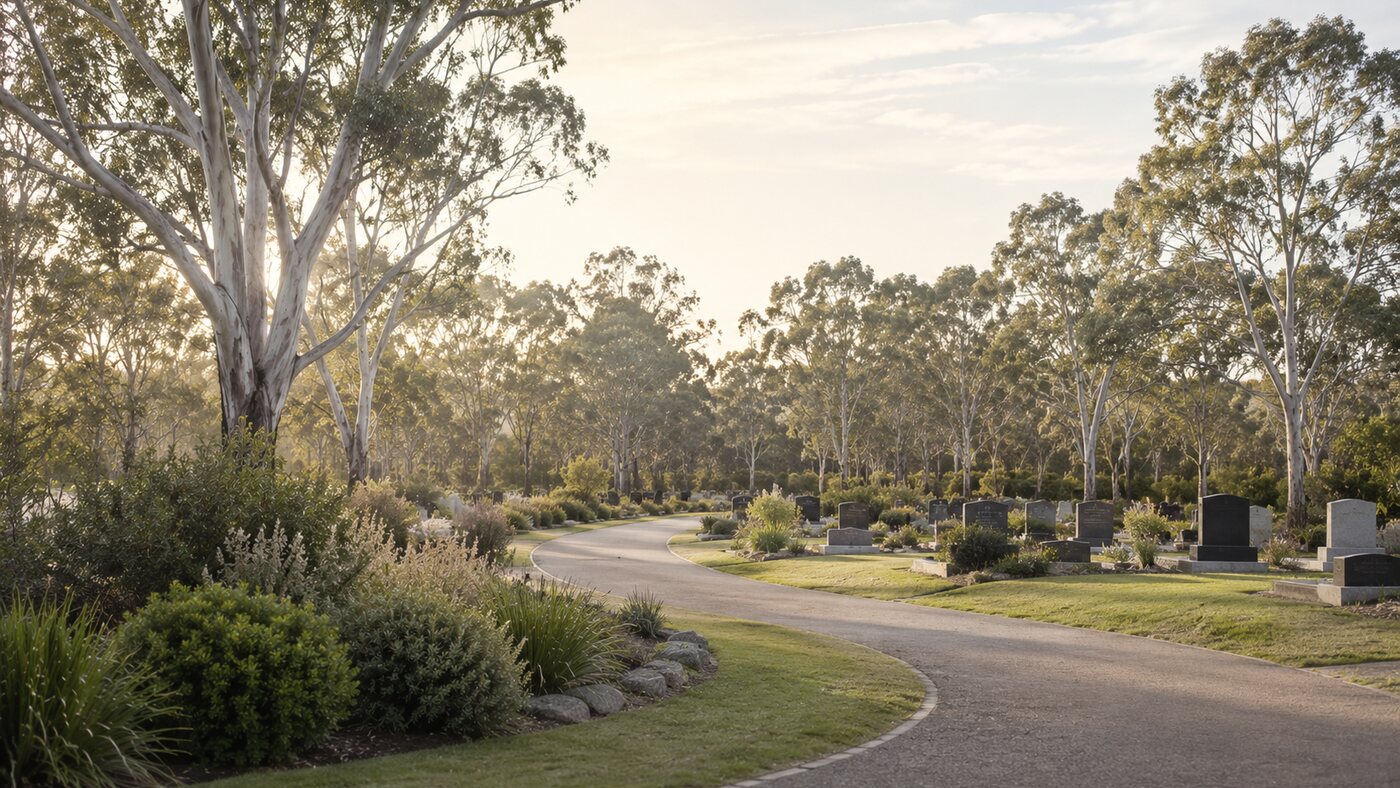
How much is a burial plot?
Plot prices differ widely around Australia, and between cemeteries in the same city.
An adult lawn grave in metropolitan Melbourne costs from $7,490 at Northern Memorial Park or from $8,980 at Altona Memorial Park (a premium lawn grave with the headstone included at Northern is $14,645), on the Greater Metropolitan Cemeteries Trust products and prices schedule for 2026-27, effective 1 July 2026.
Published plot and burial-right prices, where cemeteries make them available:
| Cemetery | Operator | State | What the fee buys | Published price | Checked |
|---|---|---|---|---|---|
| Altona Memorial Park | Greater Metropolitan Cemeteries Trust | VIC | Adult lawn grave, plaque section, 2026-27 | $8,980 | September 2026 |
| Northern Memorial Park | Greater Metropolitan Cemeteries Trust | VIC | Adult lawn grave with beam and desktop, 2026-27 | from $7,490 | September 2026 |
| Northern Memorial Park | Greater Metropolitan Cemeteries Trust | VIC | Premium lawn grave with headstone included, 2026-27 | $14,645 | September 2026 |
| Rookwood, Independent Lawn | Metropolitan Memorial Parks | NSW | Interment right | $9,260 | September 2026 |
| Metropolitan Cemeteries Board cemeteries | Metropolitan Cemeteries Board | WA | At-need grant of burial, lawn, 2026-27 | $2,862 | September 2026 |
| Carr Villa Memorial Park | City of Launceston | TAS | Pre-purchase of a right of burial | $2,103 | September 2026 |
Swipe the table sideways to see every column.
Those are published schedules, not estimates. They are not always like for like, because a lawn grave, an interment right and a grant of burial are each defined by the operator.
Prices can vary within the same cemetery. The type of grave, the section and the burial rights attached to it all affect what you pay.
If your family already has a grave, it is worth finding that out before you agree to buy another one. An existing family grave may be able to take another burial, provided there is space and the right interment rights are held. If it can be used, that removes one of the biggest costs in arranging a burial.
Does the burial plot include the actual burial?
Usually, no. This is one of the easiest costs to misunderstand.
Buying the plot gives you the right to use that burial site. The cemetery generally charges another fee to prepare the grave, open it for the burial and close it afterwards. This is usually called the interment fee, and it is set by the cemetery rather than the funeral director.
No authority publishes a national range for interment fees. These are published fees for an adult burial:
| Cemetery | Operator | State | Fee | Published price | Checked |
|---|---|---|---|---|---|
| Macquarie Park Cemetery and Crematorium | Metropolitan Memorial Parks | NSW | Interment, lawn burial | $3,185 | September 2026 |
| Metropolitan Cemeteries Board cemeteries | Metropolitan Cemeteries Board | WA | Adult burial and interment, 2026-27 | $1,783 | September 2026 |
| Thorak Regional Cemetery | Litchfield Council | NT | Burial interment, 2026-27 | $1,332 | September 2026 |
Swipe the table sideways to see every column.
For any other cemetery, ask for its current schedule.
So if you are quoted a price for a plot, do not assume that is the whole cemetery bill. Ask what the interment costs as well.
Extra-depth digging costs more again. Weekend and public holiday burials cost more, and some cemeteries charge separately for concrete work or foundations.
Rather than working through every possible fee yourself, ask one question: what will the cemetery charge us in total? That gives you a much more useful number.
Do you own the burial plot?
When you pay for a grave, you are generally not buying the land.
What you normally purchase is an interment right. In plain terms, that gives you the right to use a particular grave for a burial, and it can determine who may be buried there in future.
The rules vary around Australia. In Western Australia, section 25 of the Cemeteries Act 1986 (WA) provides for a 25-year right of burial and requires the Board to renew it for a further 25 years when the holder applies. Further renewals are available in 25-year increments at the cemetery authority's discretion. The first renewal is guaranteed if the holder applies, and it costs money. Where a right is sold in perpetuity, families do not pay this.
For most people arranging a funeral, the legal terminology is not something to spend much time on. It is worth knowing whose name the burial right is registered in, though, particularly if the grave may eventually be used by another family member.
Can two people be buried in the same grave?
In many cemeteries, yes.
A grave can often be prepared at greater depth so another person can eventually be buried above the first. This is commonly called a double-depth grave.
Couples and families sometimes choose it when they want to be buried together, and it can mean the family does not need to buy another plot later.
If this might matter to your family, raise it before the first burial takes place. Preparing the grave for two burials from the beginning is much simpler than dealing with it afterwards.
There is normally an extra charge for digging deeper, and the cemetery charges another interment fee when the second burial happens.
Are there other cemetery fees?
There can be. The plot and interment are normally the biggest costs, but cemeteries have other charges.
Maintenance and perpetual care levies are either built into the plot price or charged separately.
Concrete capping is required at some cemeteries to stabilise the grave. Macquarie Park Cemetery and Crematorium lists a concrete cover fee of $1,540 on the Metropolitan Memorial Parks price list, checked September 2026.
Government levies. In NSW, the Interment Services Levy adds $162 per burial, $65 per ash interment and $43 per cremation for the 2026/27 financial year, with limited exemptions for destitute people and children under 12. Cemeteries and Crematoria NSW decides each year whether to raise it by CPI from 1 July, so check the current figure.
Headstone foundation. A concrete beam or footing, charged by the cemetery before monumental work can begin.
You do not need to know every possible fee before contacting a funeral director. Just make sure the quote either includes cemetery costs or tells you clearly which ones still need to be paid.
Is the headstone included?
Usually not. A headstone is generally arranged separately from the funeral, often months later. Many cemeteries require a settling period of 6 to 12 months before one can be installed.
The price depends on the size, material and style, from a simple flat plaque or desk headstone to a full upright monument, so ask a monumental mason for a written quote. Some cemeteries sell a grave with the headstone included, like the premium lawn grave at Northern Memorial Park listed above. Cemeteries have their own rules about size, material, colour and inscription, and there may be a cemetery fee to approve or install it. Our guide to headstones and memorials covers the choices in more detail.
Because this cost comes later, it is easy to forget when working out what a funeral costs. If you know you want a headstone, include it in the overall budget even if you will not pay for it straight away.
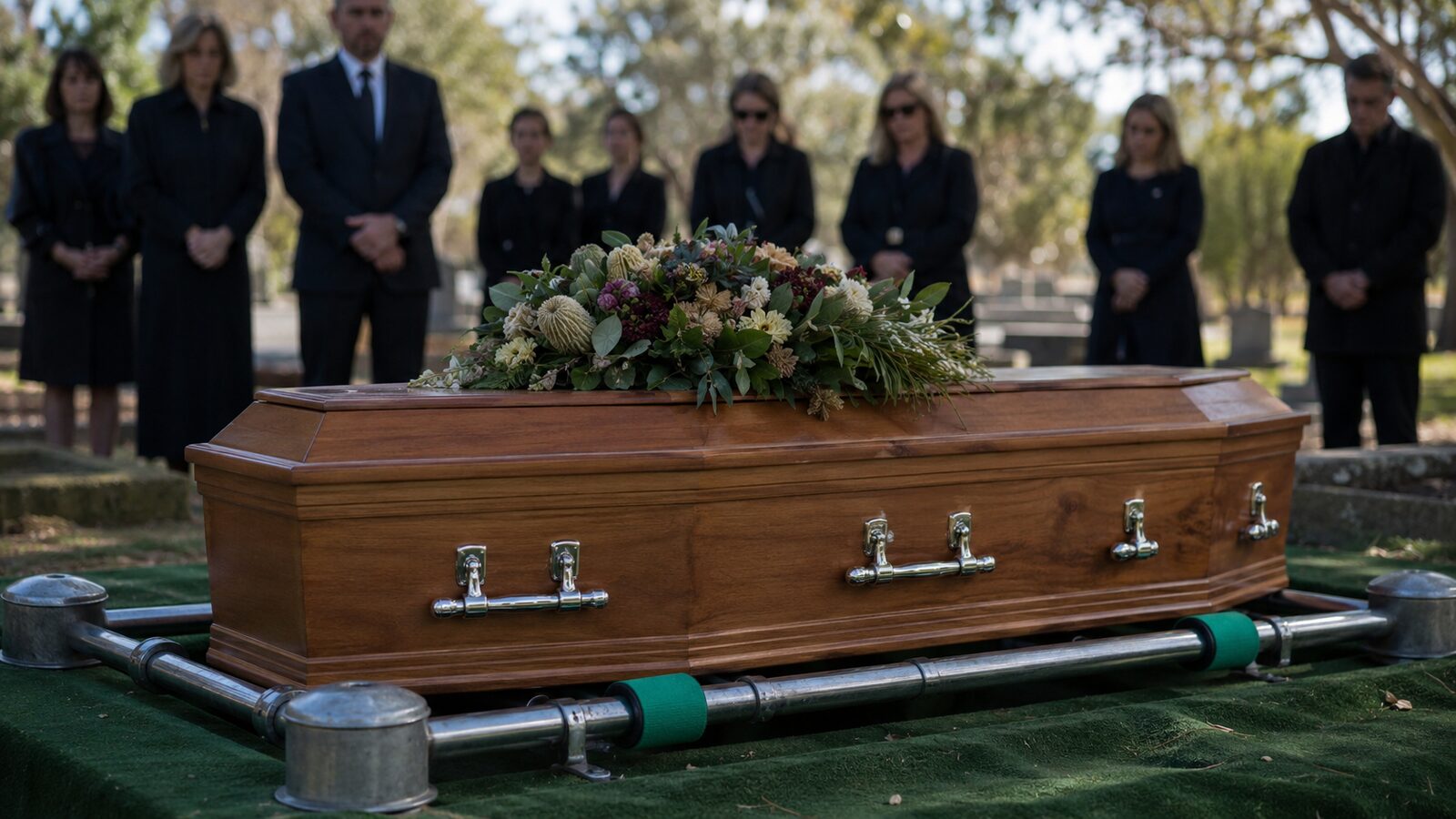
Would a graveside funeral be cheaper?
It can be. A graveside funeral means the service happens at the grave rather than having a separate ceremony at a church, chapel or funeral venue first.
Some families prefer the simplicity. It can also cost less because there are fewer venue, transport and service costs. Where the cemetery has no permanent facilities at the graveside, a marquee and chairs may be charged instead, so ask the funeral director to itemise both options.
You still pay for the plot and interment, so a graveside service does not make the cemetery side cheaper. The saving comes from keeping the funeral itself simpler.
How do the parts of a burial bill add up?
A burial bill is easier to follow as three lines, so ask for each one separately.
| Cost | What to ask for |
|---|---|
| Funeral and service | An itemised written quote from the funeral director |
| Cemetery in total: plot, interment and fees | One combined figure from the cemetery |
| Headstone arranged later | A written quote from a monumental mason, plus any cemetery approval or installation fee |
The cemetery line is deliberately one number. That is how you should ask for it, because the plot and the interment are quoted separately and it is the combined figure that lands on your bill. On the Metropolitan Cemeteries Board 2026-27 schedule in Western Australia, for example, an at-need lawn grant of burial and an adult burial and interment together come to $4,645, before any other cemetery charges.
If the family already has a grave, the cemetery line can be thousands lower.
Is burial much more expensive than cremation?
It usually costs more. In the 2023 Cost of Death 2.0 Report described above, a burial was estimated at $11,039 and a cremation at $8,045. For a direct cremation with no service, the national median of the published prices we track is $3,648, with the middle half of brands between $2,890 and $4,650.
Most of the difference comes from the cemetery. With a burial you may be paying for the grave, opening and closing it, other cemetery charges and eventually a headstone. None of those apply in the same way with cremation, which has a crematorium fee instead. Published crematorium fees for a standard adult cremation include $510 at Centennial Park in Adelaide, on the Centennial Park 2026-27 cremation services brochure, and $1,838 at Thorak Regional Cemetery in Darwin, on Litchfield Council's 2026-27 fees and charges.
Religion, culture and the person's own wishes often decide this before cost does. If your family would accept either, the price gap is worth knowing.
Compare burial and cremation in Australia
What about natural burial?
Natural burial, sometimes called green or eco-burial, is available in parts of Australia. It generally means burial in a designated natural area using a biodegradable coffin or shroud, without embalming. There is no traditional headstone; markers are natural, like a rock or a tree.
Families choose it for environmental reasons or for its simplicity.
It is not always cheaper. Each natural burial ground sets its own fees, so compare the complete cost.
Read our guide to natural and eco-friendly funerals
How much does burial cost around Australia?
There is no standard burial price across Australia. For the full picture across every service type, see the guide to funeral costs in Australia. Even cemeteries in the same city charge very different amounts, so the table below lists published cemetery fees and the rules that differ by state, not an all-in price.
| State or territory | Published cemetery fees and what to know |
|---|---|
| New South Wales | Lawn burial interment $3,185 at Macquarie Park Cemetery, and an Independent Lawn interment right $9,260 at Rookwood, both on Metropolitan Memorial Parks price lists. Interment Services Levy of $162 per burial for 2026/27, adjusted for CPI each 1 July. One of four states with mandatory funeral price disclosure |
| Victoria | Metro lawn graves from $7,490 at Northern Memorial Park or from $8,980 at Altona Memorial Park, or $14,645 for a premium lawn grave with headstone, on the Greater Metropolitan Cemeteries Trust 2026-27 schedule |
| Queensland | Fees are set by each cemetery. Ask the council or trust that runs the cemetery for its current schedule |
| Western Australia | At-need lawn grant of burial $2,862 and adult burial and interment $1,783 on the Metropolitan Cemeteries Board 2026-27 schedule. Burial rights are 25-year grants, not permanent purchases, and a renewal cost applies |
| South Australia | Fees are set by each cemetery, and cemetery choice makes a large difference. Ask for the current schedule |
| Tasmania | Pre-purchase of a right of burial $2,103 at Carr Villa Memorial Park, on the City of Launceston schedule of fees |
| Australian Capital Territory | Canberra Memorial Parks publishes separate fee schedules for Gungahlin, Woden and Hall cemeteries, so ask for the one you plan to use |
| Northern Territory | Burial interment $1,332 at Thorak Regional Cemetery, on Litchfield Council's 2026-27 fees and charges |
Full state-by-state funeral price comparison
Before you agree to anything
If you are arranging a burial now, what you need is the total.
If the quote contains something you do not understand, ask what it means. Funeral directors deal with these costs every day. Families generally do not.
A good quote should make it reasonably easy to see what you are paying the funeral director, what you are paying the cemetery, and what might still need to be paid later.
Common questions about burial costs
How much does a burial cost in Australia?
It depends mostly on the cemetery. A funeral director's burial package usually leaves out cemetery costs like the plot and opening and closing the grave, so ask for both. The 2023 Australian Seniors Cost of Death 2.0 Report estimated a burial at $11,039.
How much does a burial plot cost?
Each cemetery sets its own prices. On the Greater Metropolitan Cemeteries Trust 2026-27 schedule in Melbourne, an adult lawn grave is from $7,490 at Northern Memorial Park and from $8,980 at Altona Memorial Park. Opening and closing the grave is usually charged separately.
Does a burial plot include digging the grave?
Usually not. Cemeteries generally charge a separate interment fee to prepare, open and close the grave.
Can we use an existing family grave?
Possibly. If there is room for another burial and your family holds the appropriate interment rights, the cemetery may allow it. Check with the cemetery before buying another plot.
Can two people be buried in one grave?
Often, yes. Many cemeteries can prepare a grave at greater depth so two people can eventually be buried in it. There is normally an extra charge for the deeper dig, and a second interment fee later.
Is a headstone included in the funeral?
Usually not. Headstones are generally organised and paid for separately after the funeral, often 6 to 12 months later. Ask a monumental mason for a written quote.
Is burial cheaper if we already have a family plot?
It can be considerably cheaper, because you may not need to buy a new plot. You will still normally pay the cemetery's interment and other applicable fees.
Is a graveside funeral cheaper?
It can be. Holding the service at the graveside removes the cost of a separate venue, although the plot and cemetery fees still apply.
Why does burial cost more than cremation?
The cemetery is the difference. Burial can involve buying a plot, opening and closing the grave, other cemetery fees and a headstone. Cremation requires a crematorium fee instead, and the crematorium fees published in this guide are lower than the plot prices.
Can you keep the cost of a burial down?
Yes, particularly if the family already has a grave, chooses a lower-cost cemetery or keeps the funeral simple. If a new plot has to be bought in a major city, the cemetery side is the hardest part to reduce.
Before you ring a director
If you are ready to compare funeral directors, it helps to have a rough idea of where the burial will take place and whether your family already has a grave.
From there, ask for a quote that covers the funeral and gives you a clear idea of the cemetery costs as well.
Ask up to three funeral directors at once
Prices vary a lot between directors, so ask for itemised quotes in one go.
- Free
- You choose who
- No obligation
Works for planning ahead too. How we make money
Funeral costs by state
Western Australia, Victoria, New South Wales, Queensland, South Australia, Tasmania, Australian Capital Territory, Northern Territory. Or compare every state and city.
This guide is general information to help Australian families, editorially reviewed by the Funerals Direct team from publicly available sources. It is not legal or financial advice. Every figure here is a working guide rather than a quote, because funeral prices change by provider, suburb, cemetery and crematorium. Before you sign anything, ask for an itemised written quote that separates the funeral director's professional service fee from third-party costs like the crematorium, cemetery, celebrant, flowers, notices and death certificate fees, and ask which of those items are legally required and which are optional. For prepaid funerals, bonds, or insurance, consider speaking with an independent financial adviser or a free financial counsellor on 1800 007 007.
Ready to find a funeral director?
Compare directors who list the right experience, read reviews from other families, and request a quote. Always free for families.
Compare funeral directorsWas this guide helpful?