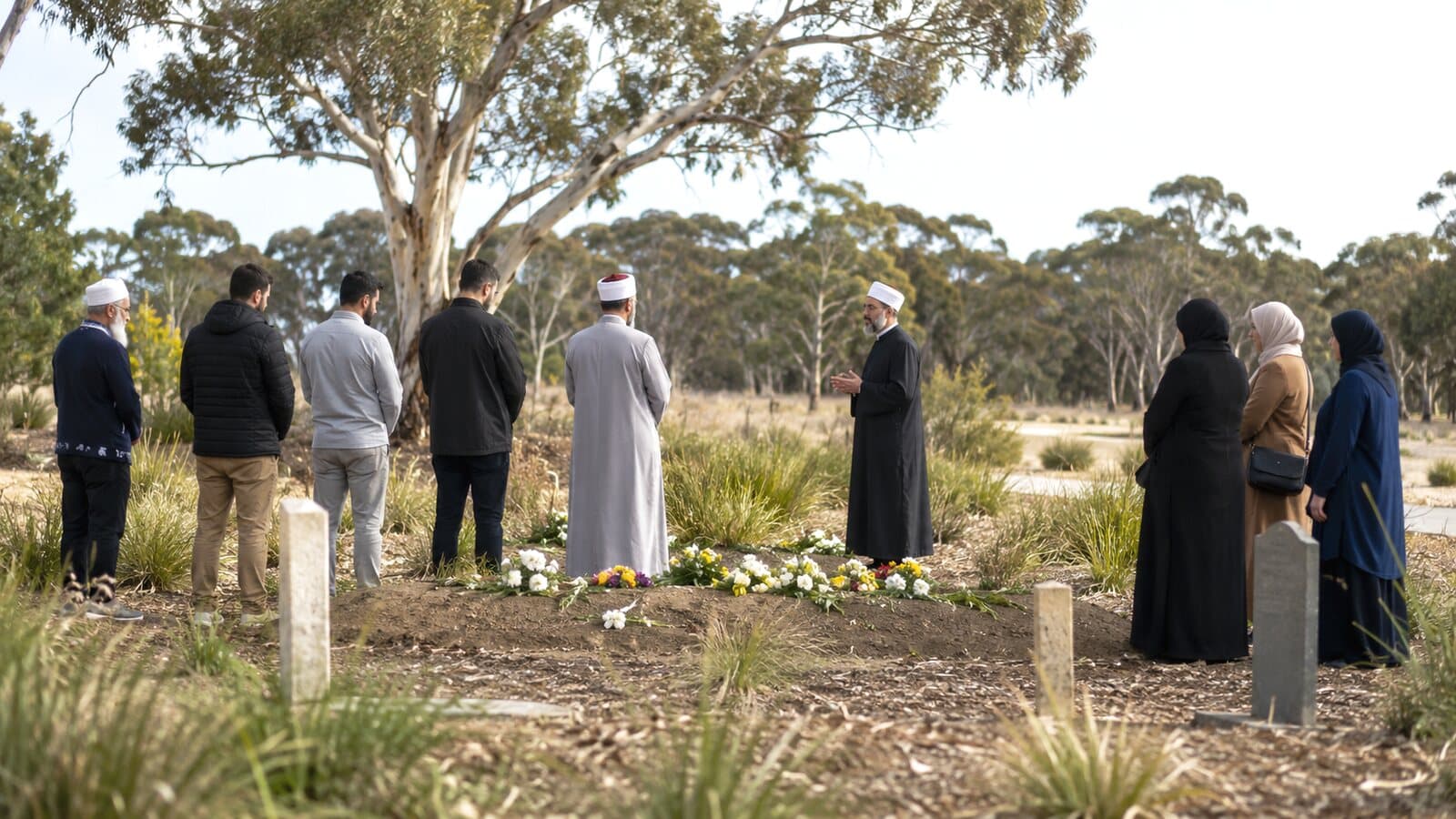
What happens at a Muslim funeral in Australia?
Muslim funerals are guided by several important religious practices, including prompt burial, ritual washing, shrouding, funeral prayer and simplicity. The person who has died is usually washed, wrapped in a plain shroud, prayed over and buried as soon as the necessary legal and practical arrangements allow.
Australia's Muslim community is highly diverse. According to the latest available Census data from the Australian Bureau of Statistics, 813,392 people identified with Islam in 2021, representing 3.2 per cent of the Australian population. Lebanese, Turkish, Bosnian, Indonesian, Somali, Afghan, Pakistani, Bangladeshi, Indian and many other Muslim communities share the core Islamic funeral rites. Customs around visiting, food, language and community support may differ between families and cultural backgrounds.
Australia's next Census will take place on 11 August 2026, with data for most topics scheduled for release in June 2027, according to the ABS 2026 Census release plan.
The Australian National Imams Council's funeral and burial wishes material identifies washing, shrouding, congregational prayer and burial without unnecessary delay as central parts of an Islamic funeral.
The main Muslim funeral rites
The main rites commonly associated with a Muslim funeral are:
- Burial. Islamic funeral practice requires burial rather than cremation.
- Timing. Burial usually takes place as soon as possible, subject to the release of the body, legal requirements and cemetery availability.
- Washing. The ritual washing, known as ghusl, is usually performed by trained Muslims of the same sex as the person who has died.
- Shrouding. The body is wrapped in a simple shroud, known as a kafan, which is commonly made from plain white cloth.
- Prayer. The Islamic funeral prayer is known as Salat al-Janazah.
- Early contact. The family's imam, mosque or preferred Islamic funeral service should be contacted as early as possible.
What should be arranged first?
It is helpful to contact the family's imam, mosque or preferred Islamic funeral service as soon as possible. The funeral director should also be told that the family is arranging a Muslim burial, as this may affect the timing, care of the body and other funeral arrangements.
The usual aim is for the body to be released, washed, shrouded, prayed over and buried without unnecessary delay, while still meeting all legal and administrative requirements.
The funeral director can help coordinate:
- Transfer and care of the person who has died
- Required documents and registrations
- Communication with the cemetery
- Washing and shrouding arrangements
- Transport to the mosque, prayer facility or cemetery
- Burial arrangements
- Communication with the coroner where necessary
Not every funeral director has facilities specifically designed for Muslim funeral preparation. Families may wish to ask whether the funeral home regularly works with Muslim families and whether it coordinates with local mosques or specialist Islamic funeral services.
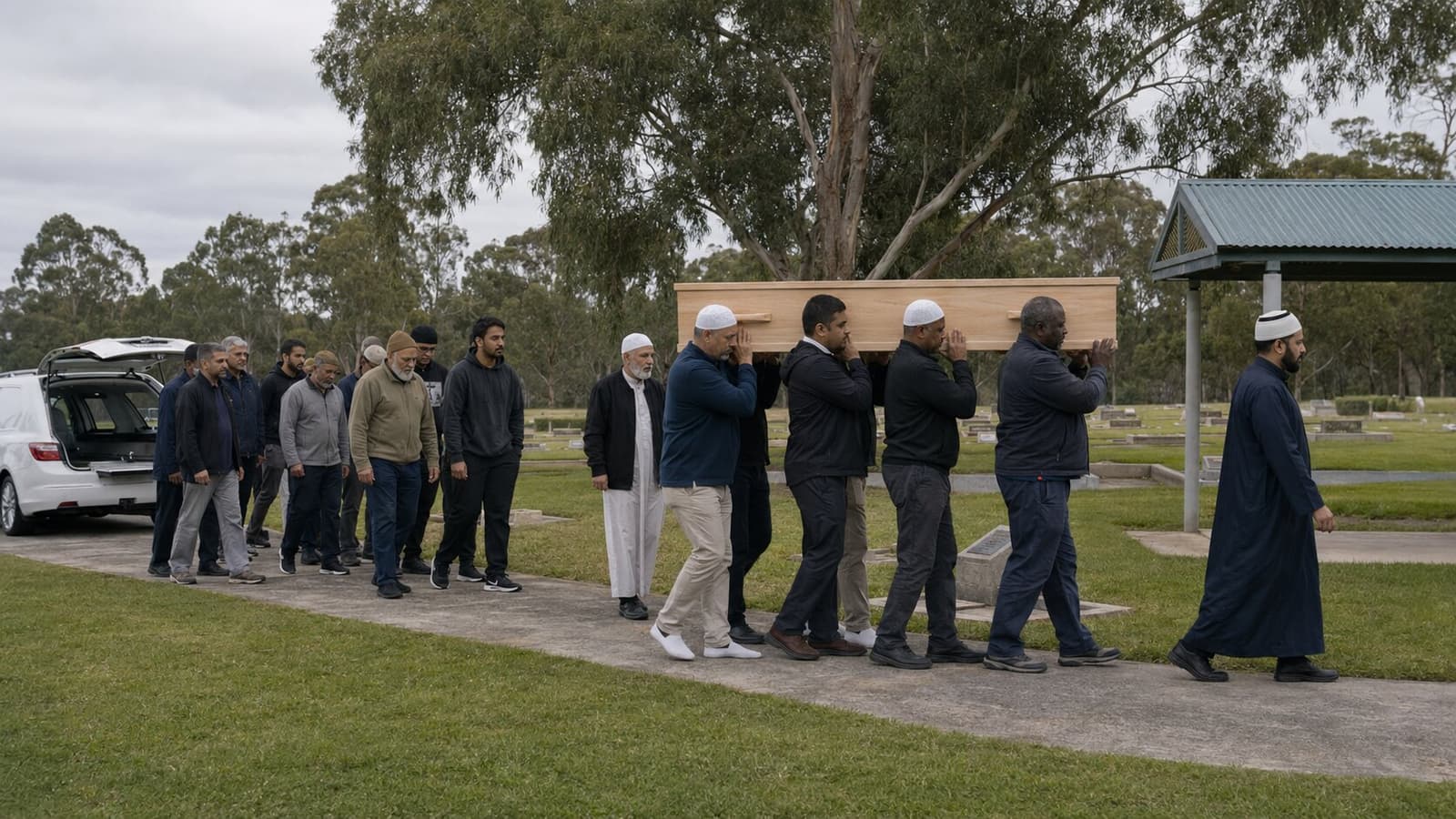
The funeral director coordinates the journey from hearse to grave
Family, friends and community members often help carry the casket from the hearse to the burial site. The funeral director works alongside the imam or Muslim funeral service to coordinate this so burial can follow the funeral prayer without unnecessary delay.
Australia's Muslim community identified 813,392 people at the 2021 Census, 3.2 per cent of the population, spanning Lebanese, Turkish, Indonesian, Somali, Afghan, Pakistani and many other backgrounds.
When a death is referred to the coroner
Where a death is referred to the coroner, the family or funeral director can explain that the person was Muslim and that prompt burial is religiously important. The coroner must still complete any necessary legal processes, but early communication can make the family's religious needs clear from the beginning.
The exact process varies between states and territories. Generally, the body cannot be released until the coroner has authorised it. The funeral director will usually communicate with the court or forensic medicine service on the family's behalf.
The NSW Coroners Court, for example, explains that families can begin making funeral arrangements while the coronial process is underway, although the body cannot be released until the required initial examinations have been completed. The Coroners Court of Victoria similarly advises that a funeral director can apply for the release of the person once the required medical processes have been completed.
Families should avoid confirming a burial time until the funeral director has received clear information about when the body can be released.
Washing and shrouding
The body is prepared through a ritual washing called ghusl. This is usually carried out by trained Muslims of the same sex as the person who has died. Close family members may sometimes be involved, depending on the circumstances, the wishes of the family and the practices of the local community.
After washing, the body is wrapped in a simple shroud called a kafan. Plain white cloth is commonly used, reflecting the Islamic emphasis on modesty, dignity and equality.
Embalming is generally avoided unless it is required for legal, transport or other exceptional reasons. Viewing arrangements vary and may be limited in some families or communities.
The funeral director can explain whether washing can take place at its own facility or whether it will be managed by a mosque or specialist Muslim funeral service.
Detailed washing and shrouding practices can differ between Islamic traditions and communities. Families should follow the guidance of their imam or the people responsible for preparing the body.
The funeral prayer
The Islamic funeral prayer is known as Salat al-Janazah. It may take place at a mosque, cemetery prayer area or another suitable funeral facility.
The congregation remains standing during the prayer. Unlike the five daily Islamic prayers, Salat al-Janazah does not include bowing or prostration.
During the prayer, the congregation asks for mercy and forgiveness for the person who has died and offers support to the family.
Depending on the mosque and the customs of the family, men and women may stand in separate areas during the prayer.
Burial
Burial usually follows as soon as practical after the funeral prayer. Many Australian cemeteries have designated Muslim burial areas, although availability and arrangements vary between locations.
A simple coffin or another approved burial arrangement may be used, depending on the requirements of the cemetery and the laws or regulations applying in that location.
The family should confirm the available arrangements with its funeral director, cemetery and Muslim funeral service. Cemetery requirements can differ between states, councils and individual cemetery operators, so arrangements used in one location may not be available in another.
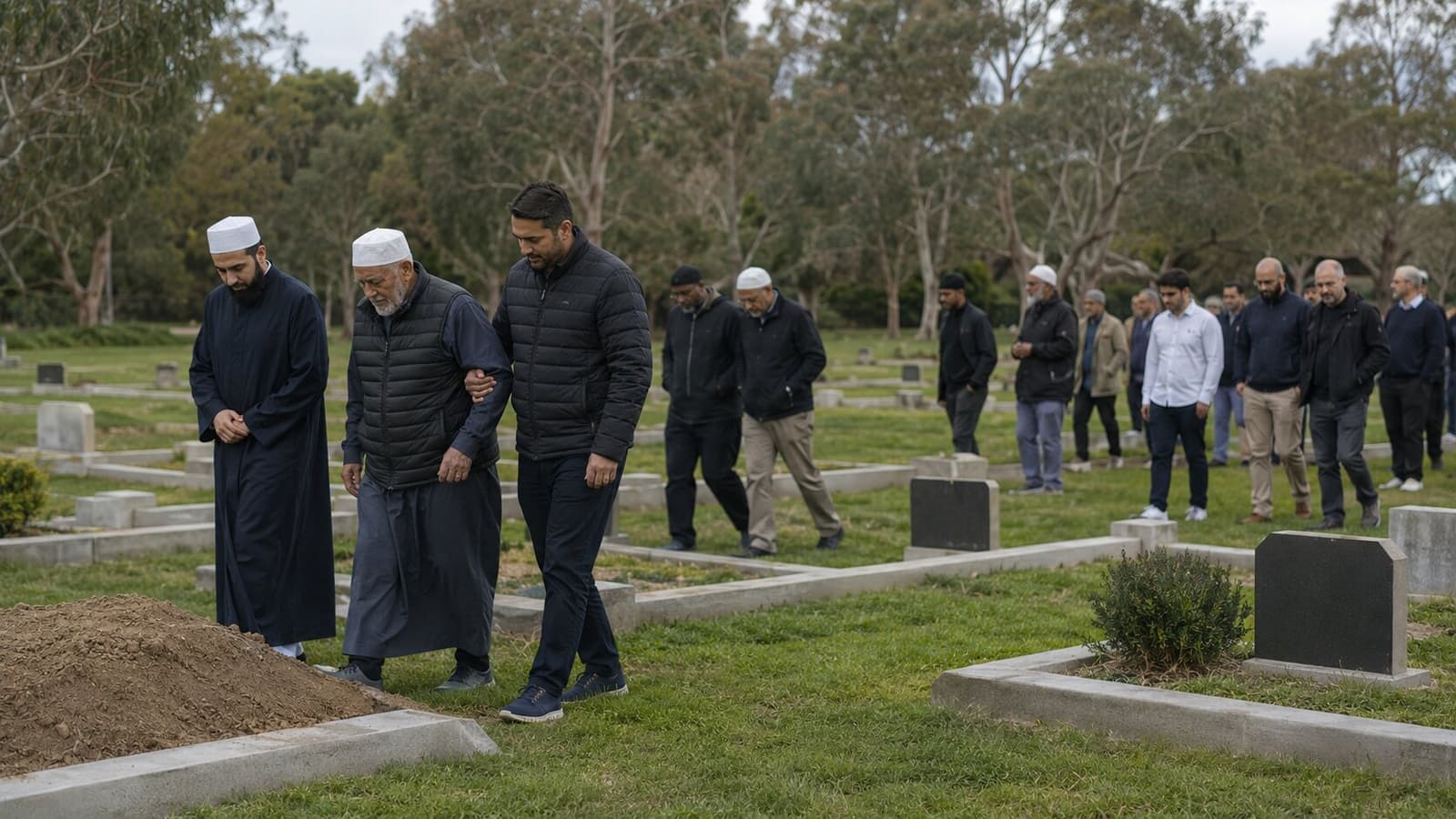
Burial follows the funeral prayer without unnecessary delay
Once Salat al-Janazah has been performed, mourners move to the burial site together. Many Australian cemeteries have designated Muslim burial areas, though availability and arrangements vary between locations.
A simple coffin or another approved burial arrangement may be used, depending on the requirements of the cemetery and the laws applying in that location.
What guests should know
Guests should dress modestly and respectfully. If the prayer is taking place inside a mosque, guests should follow any instructions about removing shoes or entering the prayer area.
Depending on the mosque and the customs of the family, men and women may stand in separate areas during the prayer. Some women may choose to cover their hair, particularly when entering a mosque.
Non-Muslim guests are generally welcome to attend. They can stand quietly during the funeral prayer and follow any guidance provided by the imam, funeral director or family. They are not expected to recite the prayer.
Flowers are not traditionally central to a Muslim funeral and may not be expected. Some families may prefer a charitable donation, food, practical assistance or a simple message of condolence. Check the funeral notice or ask the family if a particular preference has been expressed.
Relatives, friends and community members may visit the family or provide meals following the death and burial. The form these gatherings take can vary considerably between families and cultural backgrounds.
Practices can vary
Muslims in Australia come from many different cultural, linguistic and religious traditions. While the central rites of washing, shrouding, funeral prayer and burial are widely shared, some details may differ between families, communities and Islamic traditions.
This guide provides a general introduction rather than instructions for conducting a Muslim funeral. The family's imam, mosque or preferred Muslim funeral service should be consulted about any specific religious practices. The funeral director and cemetery should be consulted about legal, transport and burial requirements in the relevant location.
Frequently asked questions
How quickly does a Muslim funeral happen?
Is cremation allowed?
What is ghusl?
What is a kafan?
What is Salat al-Janazah?
Can non-Muslims attend?
Should women cover their hair?
Are flowers appropriate?
Is a coffin used at a Muslim burial in Australia?
What happens if the death is referred to the coroner?
Further reading
- Australian National Imams Council: Funeral and Burial Wishes
- Australian Bureau of Statistics: Religious affiliation in Australia
- Australian Bureau of Statistics: 2026 Census topics and data release
- NSW Coroners Court: Funeral arrangements
- NSW Coroners Court: First steps and support
- Coroners Court of Victoria: Funeral and release of body
- Al Zahra Funeral Services: Islamic funeral rites in Sydney - Community not-for-profit funeral service with an on-site mosque and wash-and-shroud facility, specialising in Islamic funeral rites.
Related information
- Same-day funeral logistics (Muslim, Jewish, Hindu)
- How much does a funeral cost in Australia?
- Burial costs explained
- Find a Muslim funeral director
- Back to all guides
This guide was reviewed by Al Zahra Funeral Services in July 2026. It provides general information about Muslim funeral practices in Australia. Practices may differ between families, communities and Islamic traditions, and legal, coronial and cemetery requirements can vary between states, territories and individual locations. Speak with the family's imam, mosque, Muslim funeral service, funeral director and cemetery about the arrangements applying to a particular funeral.
This guide is general information to help Australian families, editorially reviewed by the Funerals Direct team from publicly available sources. It is not legal or financial advice. Funeral prices change and vary by provider and region, so always ask for an itemised written quote. For prepaid funerals, bonds, or insurance, consider speaking with an independent financial adviser or a free financial counsellor on 1800 007 007.
Ready to find a funeral director?
Compare directors who list the right experience, read reviews from other families, and request a quote. Always free for families.
Find a Muslim funeral directorWas this guide helpful?