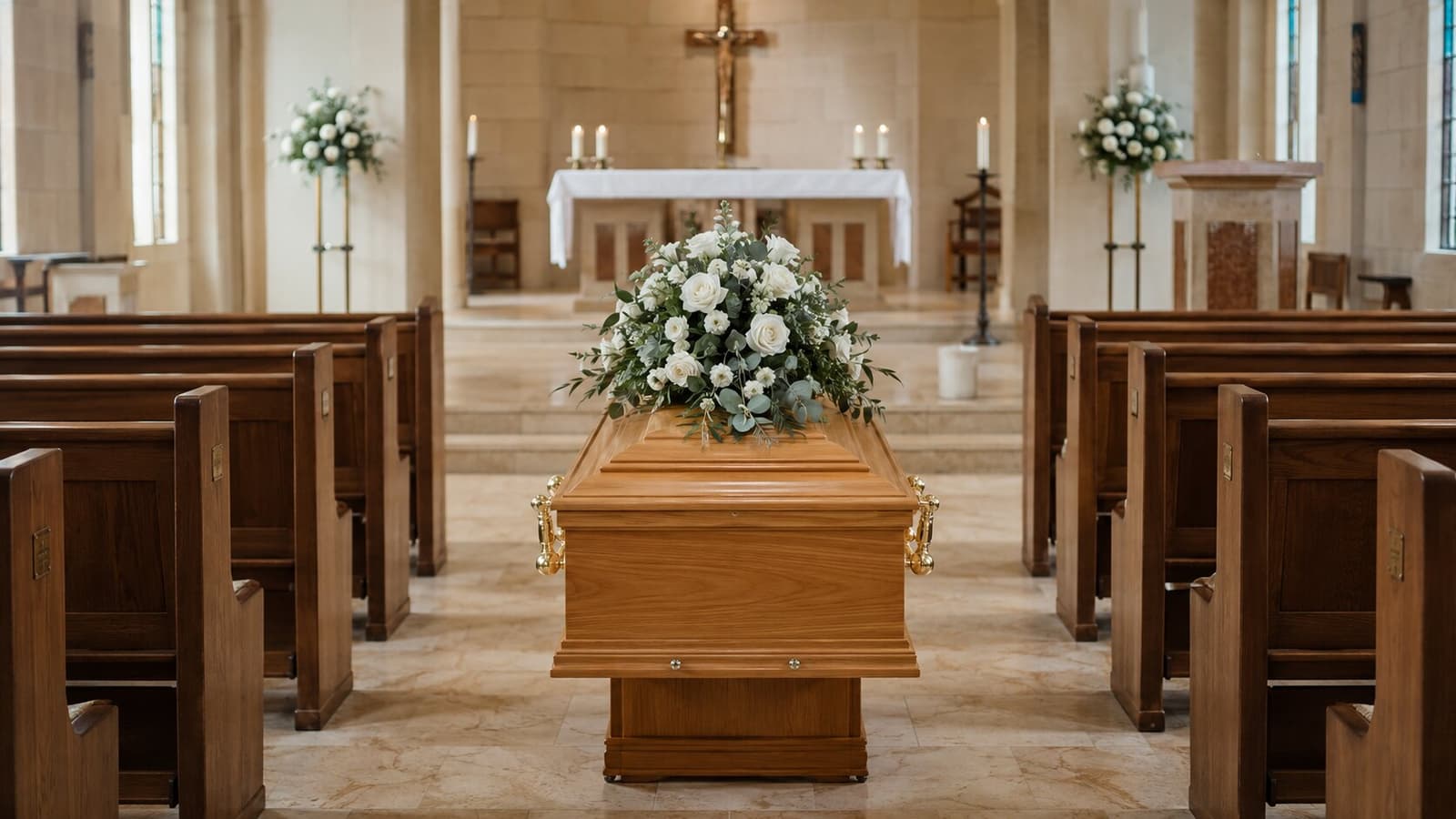
What happens at a Catholic funeral in Australia?
A Catholic funeral is a church rite, not only a family ceremony. The parish priest or deacon leads the service, the funeral director manages the arrangements, and the family chooses readings, music and tributes within the limits of the Catholic funeral rite.
Most Catholic funerals in Australia follow three possible parts: a vigil or rosary before the funeral, the funeral Mass or funeral liturgy, and the committal at the cemetery or crematorium. Not every funeral includes all three, and many families choose not to hold a vigil or rosary depending on their nationality, culture or personal beliefs.
What should be arranged early?
Contact the parish early if the family wants a Catholic funeral. The priest or parish office will confirm available times, whether a funeral Mass is suitable, music requirements, readings, and whether the coffin will be received at the church door.
Ask where the eulogy is allowed. This is largely up to the individual priest. The general rule is that the sacred ceremony should flow without interruption, so a eulogy or photo tribute is usually placed at the very beginning, before the opening prayer, or immediately after Communion and before the final commendation. Some families split the two: a eulogy before the opening prayer and a photo tribute after Communion. This should be settled before the order of service is printed.
Funeral Mass or funeral liturgy
A funeral Mass includes Holy Communion and is the most complete Catholic funeral rite. It usually includes introductory rites, scripture readings, a homily, prayers of the faithful, the Eucharist, final commendation and the procession to the committal.
A funeral liturgy without Mass may be chosen when the family is less connected to regular parish life, when many guests are not Catholic, or where timing is limited. It still includes prayers, readings, a homily or reflection, and the final commendation.
The priest or deacon will guide the family through the choice.
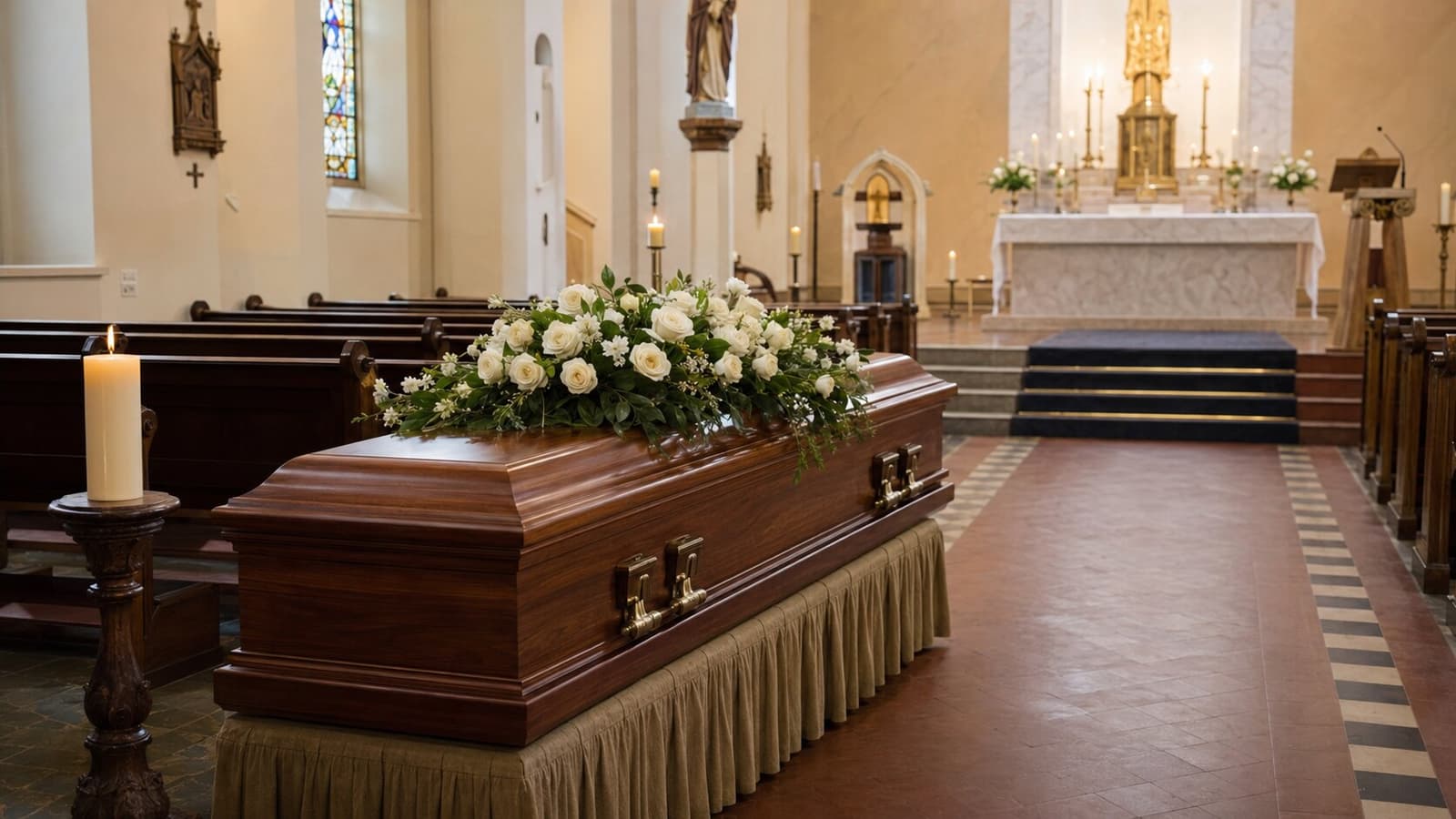
Flowers and candlelight mark the farewell
White flowers are the traditional choice for a Catholic funeral, though families are free to choose other colours. A lit candle placed near the casket is a common visual, symbolising the light of Christ.
The funeral director and florist can talk through what the church allows, since some parishes have their own guidelines on flowers and decoration.
The vigil or rosary
A vigil or rosary may be held the night before the funeral at the church, funeral home, family home or another place. It gives family and friends a chance to pray, view the person if the family wishes, and gather before the funeral day.
The vigil can be short. It may include the rosary, scripture, prayers, music and family reflections. In some Catholic families, especially those from European, Filipino, Vietnamese, Latin American or Pacific backgrounds, the vigil may be a major part of the farewell.
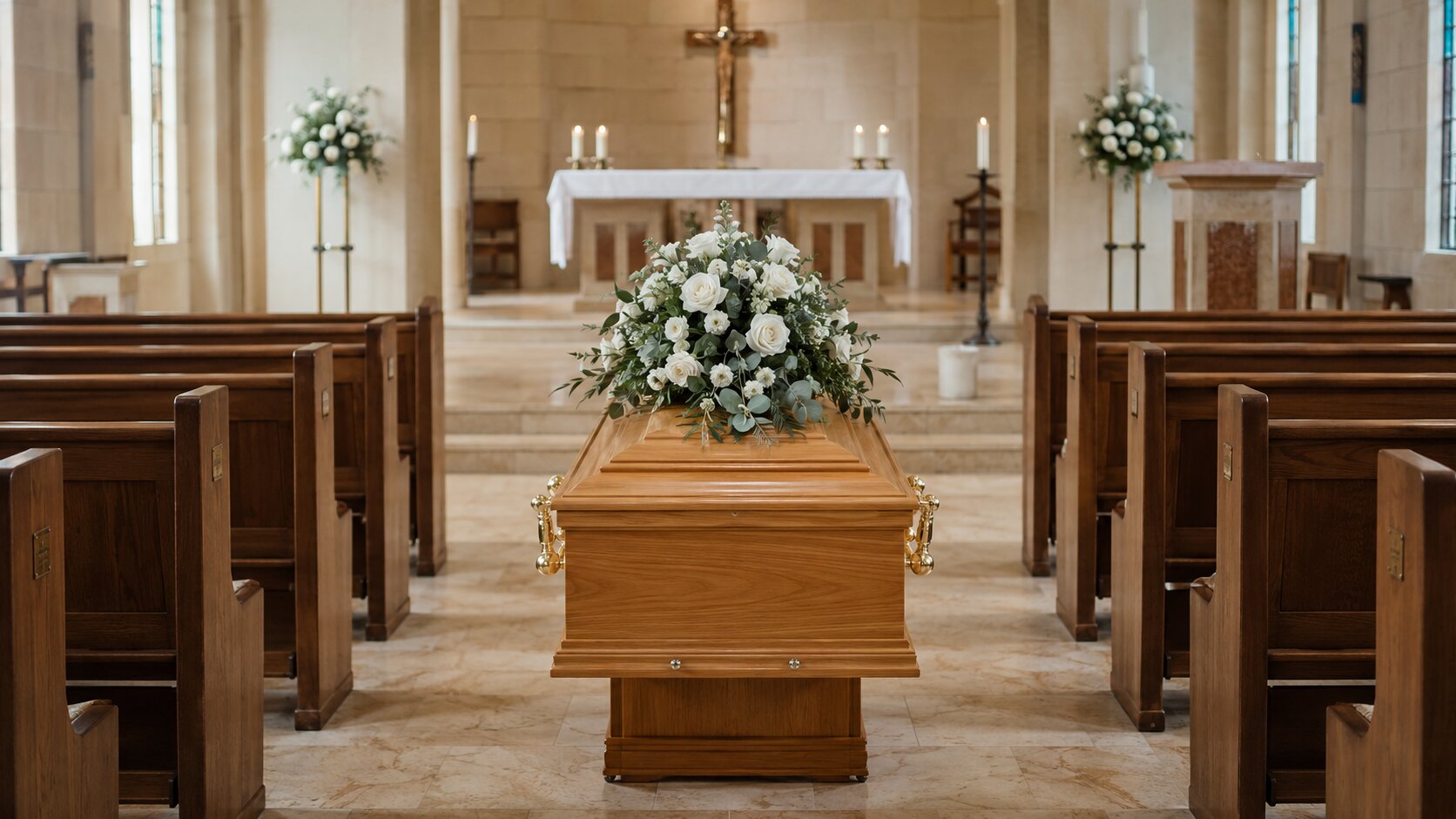
Burial, cremation and ashes
The Catholic Church permits cremation, but it places limits on what happens to ashes. The Church teaches that ashes should be kept together and laid to rest in a sacred place, usually a cemetery, mausoleum, columbarium or church-approved memorial place. Scattering ashes, dividing them between relatives, or keeping them permanently at home is not the normal Catholic practice.
If the family chooses cremation, the Church usually prefers the funeral liturgy to happen with the body present before cremation. A memorial Mass with ashes present may also be possible, depending on the parish and circumstances.
What guests should know
Guests who are not Catholic can attend. Stand, sit and kneel when others do, or remain seated if you are unsure. If Communion is offered, non-Catholic guests usually stay seated or may go forward for a blessing if that is the parish custom.
Neat, respectful clothing is generally expected. The Church has no strict dress requirement in modern practice, though individual families may make specific requests, like bright colours or, in some cultures, black. Flowers are usually acceptable, though donations may be requested instead.
Further reading
- Catholic Australia: To Rise With Christ, guidance on burial and ashes
- Vatican: Ad resurgendum cum Christo
- ABS: Religious affiliation in Australia
- Nepean Valley Funerals: Catholic funeral services
Frequently asked questions
Can Catholics be cremated?
Can Catholic ashes be scattered?
Does every Catholic funeral have Mass?
Can there be a eulogy?
Can non-Catholics attend?
Other traditions, and what to wear
This guide is general information to help Australian families, editorially reviewed by the Funerals Direct team from publicly available sources. It is not legal or financial advice. Funeral prices change and vary by provider and region, so always ask for an itemised written quote. For prepaid funerals, bonds, or insurance, consider speaking with an independent financial adviser or a free financial counsellor on 1800 007 007.
Ready to find a funeral director?
Compare directors who list the right experience, read reviews from other families, and request a quote. Always free for families.
Find a Catholic funeral directorWas this guide helpful?