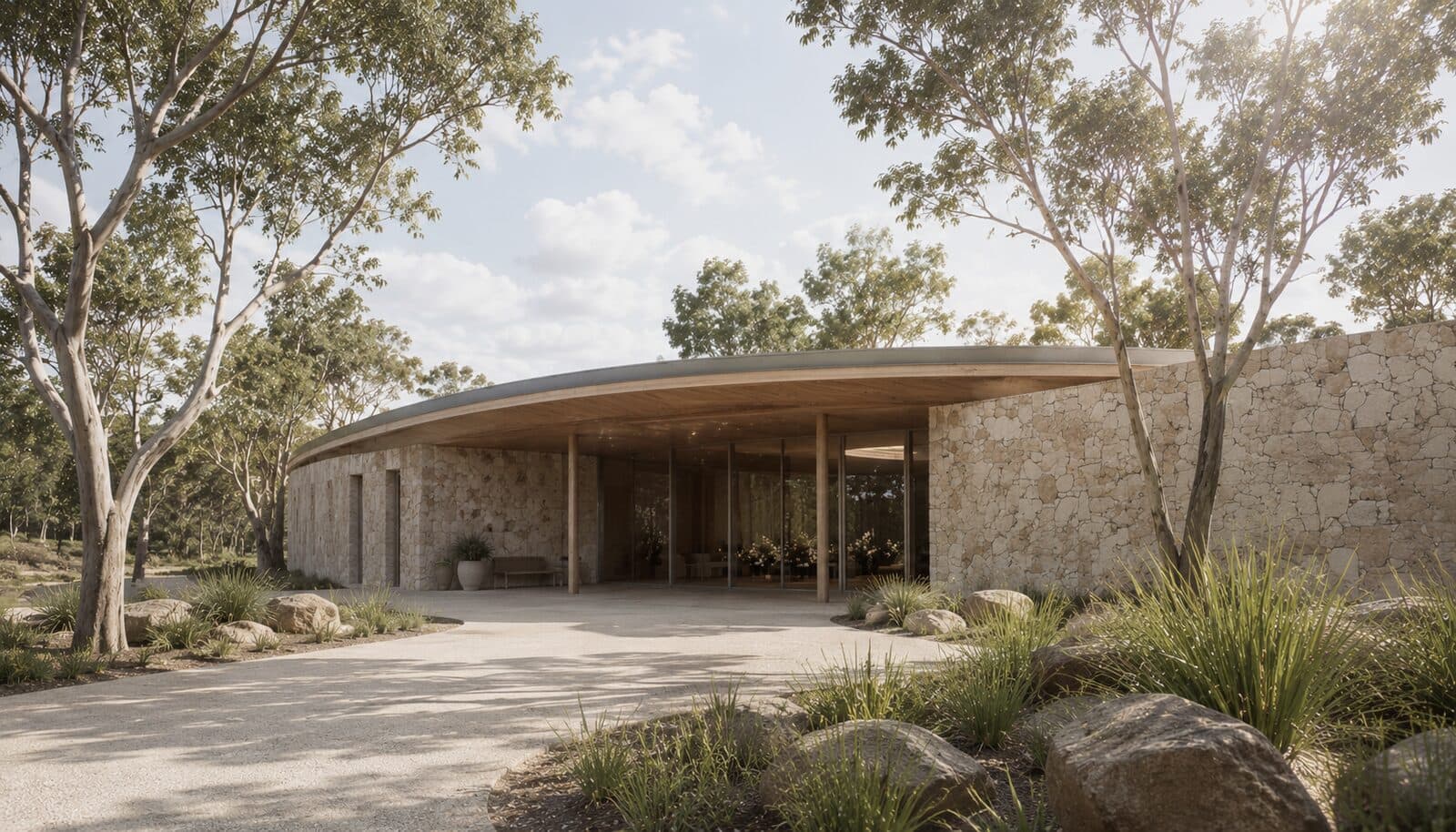
What happens at a cremation in Australia?
Many families arrange a cremation without ever seeing how it works, and the questions that follow tend to be the same few. Is the coffin cremated as well? How does the crematorium know the ashes are the right person's? What happens to a wedding ring, or to a pacemaker? This guide explains the process step by step, and how each of those things is handled at an Australian crematorium.
A cremation is carried out one coffin at a time, under a permit, with the person's identity checked against the paperwork at every stage. The coffin is cremated sealed. What comes back to the family is bone, processed to a fine ash, usually ready within a few days.
Below we cover the process from the service to the ashes, how identity is protected, what happens to the coffin and to jewellery, implants and a pacemaker, what you can place in the coffin, how long it takes and why, and what the ashes actually are.
How does a cremation work, step by step?
The process runs the same way at crematoria across Australia, and it cannot begin until the paperwork is complete: an Application for Cremation from the family, and a medical certificate of cause of death, or a coroner's cremation permit. Without those, the cremation does not go ahead.
How does the crematorium know the ashes are the right person's?
This is the question people most want answered, and Australian crematoria are built around it. From the moment a coffin arrives, its nameplate is checked against the Application for Cremation and the cremation permit. A unique numbered metal tag is assigned, and that tag stays with the cremation from the chamber, through cooling and processing, to the container the ashes go home in. Each step is recorded in a chain-of-custody document.
Only one coffin is ever in a chamber, and each cremation is completed and cleared before the next begins. Between the tag, the paperwork and the single-cremation rule, the ashes returned to you are your family member's.
Is the coffin cremated, and what about the handles?
Yes. The coffin is cremated with the person, sealed, and it is never reused. Whether the handles come off first depends on the coffin and the crematorium. Many modern coffins are built for cremation with fittings that burn away, while metal handles that will not burn are taken off and recycled.
This is also why a simple coffin is worth considering for a cremation. A cremation only needs a rigid, combustible coffin, so a plain timber or a heavy cardboard one does the job, costs less, and is not on display for long. Our guide on coffins and caskets covers the range and the prices.
What can you place in the coffin?
Most things families want to include are fine, and only a few are not allowed, for safety. If there is something you have in mind, tell the funeral director, who will let you know if it is a problem.
What happens to jewellery, implants and a pacemaker?
A pacemaker has to be removed before the cremation, because its battery can explode in the heat and damage the cremator. The funeral home takes care of this, which is why the paperwork asks whether the person had one.
Jewellery is mostly your decision, but worth thinking through. If a ring, watch or chain has sentimental or financial value, most funeral directors suggest removing it before the service, because it is unlikely to survive the cremation in a wearable state. Many families still choose to leave a wedding ring on, which is fine, as long as you know what it means. Larger metal implants, like a hip or knee, do not burn, and are separated from the ashes afterwards. Most Australian crematoria recycle them through a national scheme that donates the proceeds to charity.
How long does it take, and why does collection take a few days?
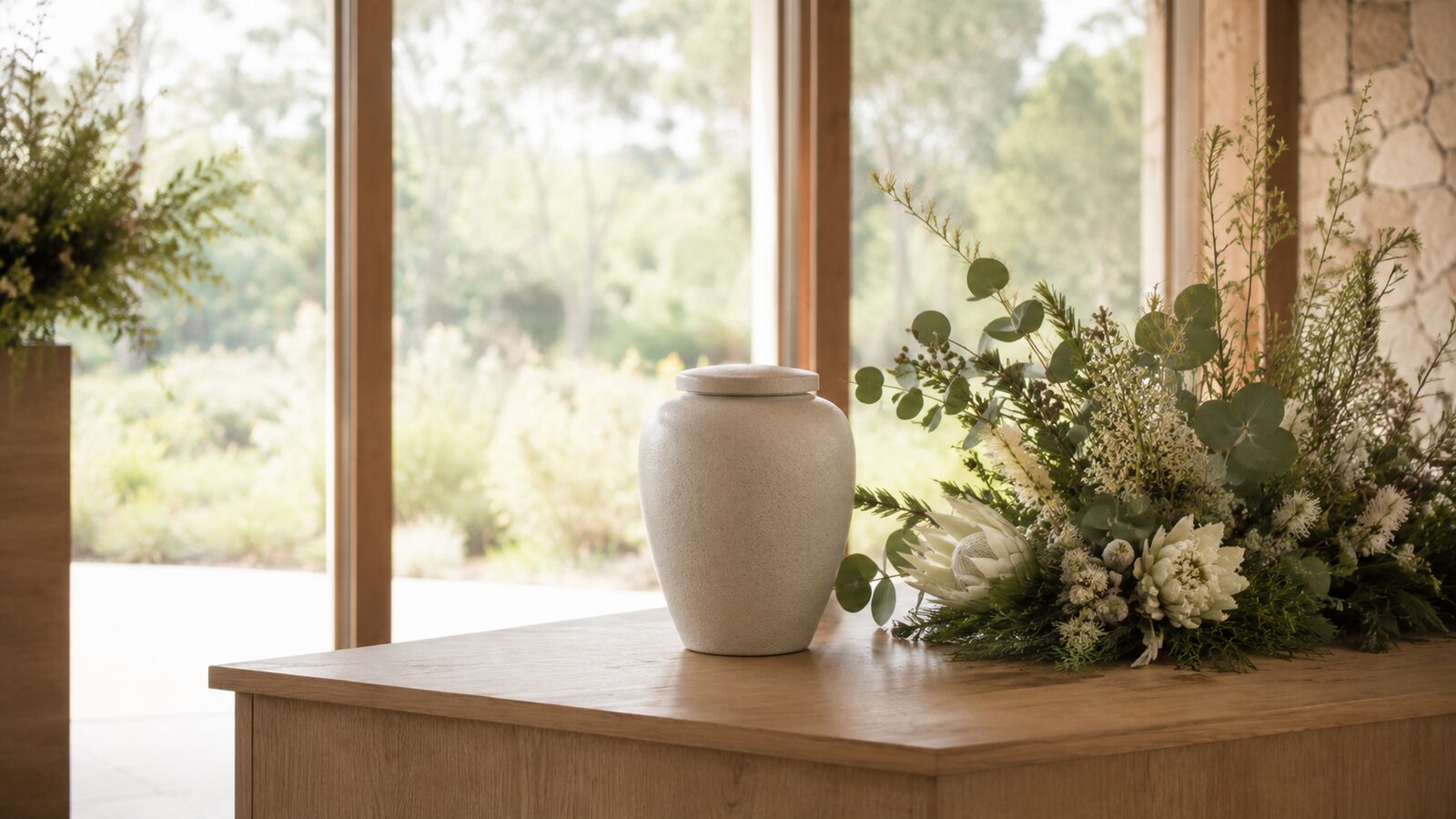
The cremation itself takes about 90 minutes for an adult. The rest of the time is cooling: the chamber and the remains are extremely hot, and have to cool before anything can be handled or processed. After that the ashes are processed, checked against the tag, and placed in a container, and crematoria work through cremations in sequence. That is why the ashes are almost never ready the same day, and usually take a few days to a week. The funeral director will tell you when and how to collect them.
What are the ashes, and can they be divided?
Not ash in the everyday sense. What remains is mostly bone, which is why it is processed: after cooling, the bone fragments go through the cremulator to produce a uniform, fine, pale ash. For an adult this usually weighs about 2 to 3 kilograms, or 3 to 4 litres by volume. The amount tracks the person's skeletal size rather than their body weight, so a tall person leaves more than a small one.
There is no law in Australia against dividing ashes, and they keep indefinitely, so families often share them between relatives, keepsake urns, or a piece of memorial jewellery. The crematorium can divide them at the time, or you can do it yourself later. Our guide on what to do with ashes covers scattering, keeping and memorial options.
Can the family be there?
It depends on the crematorium. Many allow a small group to accompany the coffin from the chapel to the cremator and to see it placed inside, and several faiths, including Hindu and some Buddhist traditions, include this in the rite. Children can usually attend if the family wishes. Watching the cremation itself is not the custom in Australia. If being present matters, ask the funeral director what your crematorium allows, and say so early.
Frequently asked questions
Can ashes get mixed up with someone else's?
Can you divide the ashes between family members?
Do teeth and bones survive a cremation?
Can you cremate someone in their own clothes?
Do you have to be cremated in a coffin?
Ask the questions you are worrying about
If you have questions about a cremation, ask your funeral director. Families often worry about the details that funeral and crematorium staff handle every day, and they can tell you exactly how the process works at the crematorium being used.
After the cremation
This guide is general information to help Australian families, editorially reviewed by the Funerals Direct team from publicly available sources. It is not legal or financial advice. Funeral prices change and vary by provider and region, so always ask for an itemised written quote. For prepaid funerals, bonds, or insurance, consider speaking with an independent financial adviser or a free financial counsellor on 1800 007 007.
Ready to find a funeral director?
Compare directors who list the right experience, read reviews from other families, and request a quote. Always free for families.
Find a funeral directorWas this guide helpful?