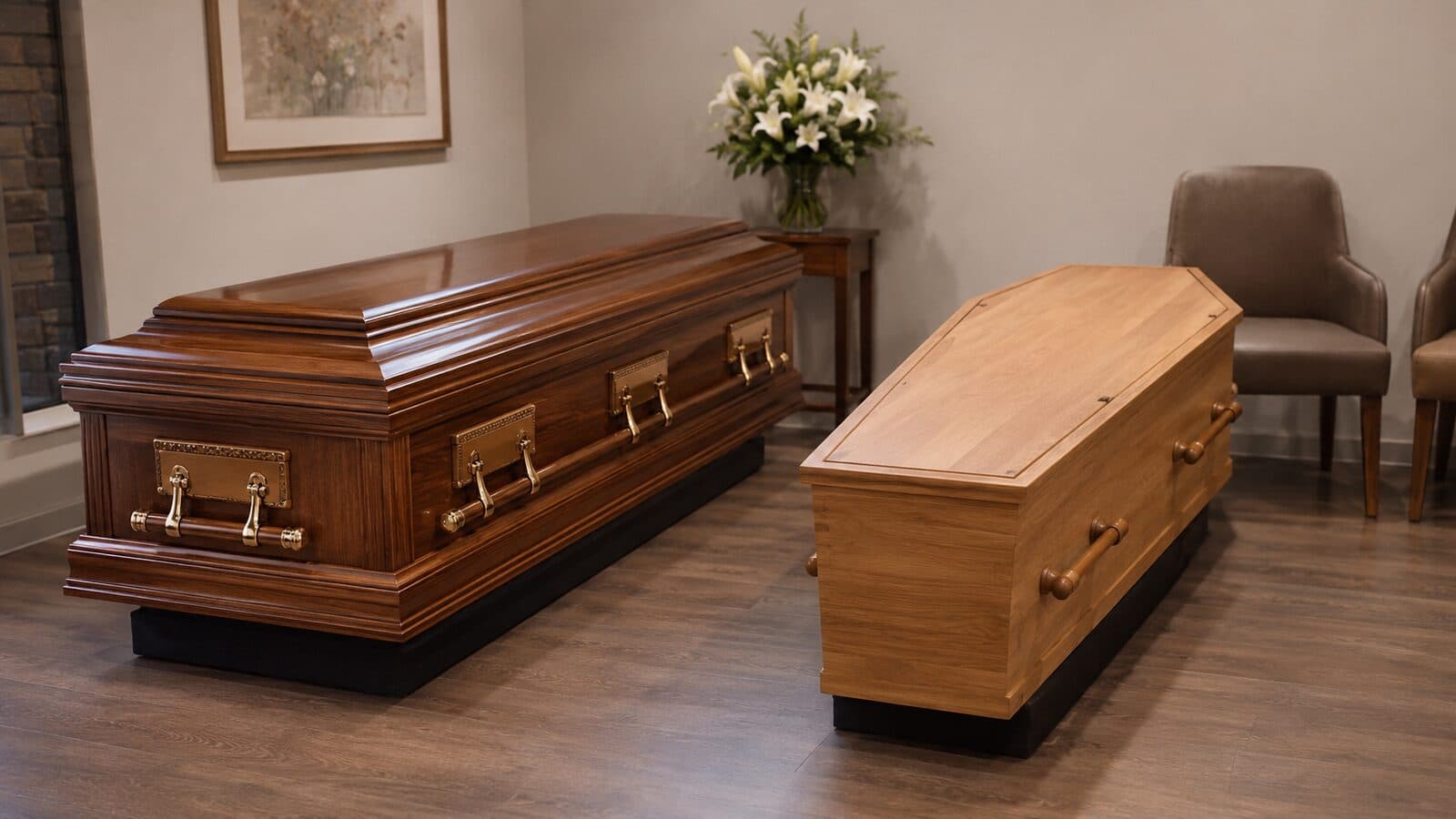
What is the difference between a coffin and a casket?
The coffin or casket is often one of the largest single items on a funeral bill. Under pressure, it is easy to choose the one in front of you without seeing the full range or what each option costs.
Coffins in Australia run from plain cardboard, which one Melbourne supplier lists at $300 plus delivery (checked September 2026), up to polished solid timber, with lined caskets at the top of the range.
What is the difference between a coffin and a casket?
People often use the two words interchangeably, but a coffin and a casket are built differently. There are three main differences.
The form. A coffin is the tapered kind, wide across the shoulders and narrowing towards the feet. A casket is rectangular, the same width from end to end.
The lid. A coffin has a single lid that lifts or hinges open. A casket usually has a split, two-piece lid, so the top half can be opened for a viewing while the lower half stays closed.
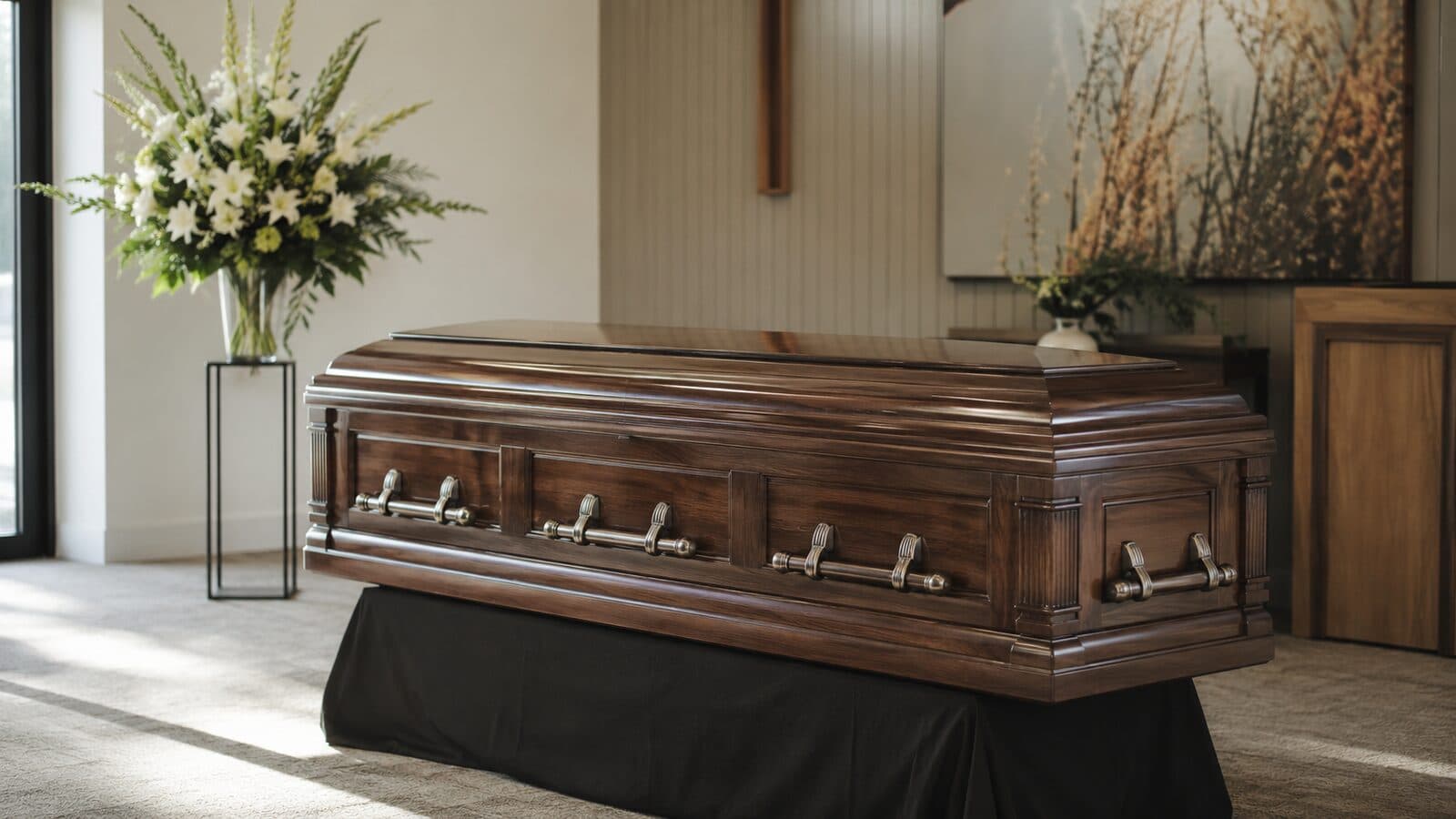
The lining and the price. A casket is generally lined and finished more elaborately, which is part of why it costs more. Caskets are the common choice in the United States, while in Australia and the UK the coffin is far more common.
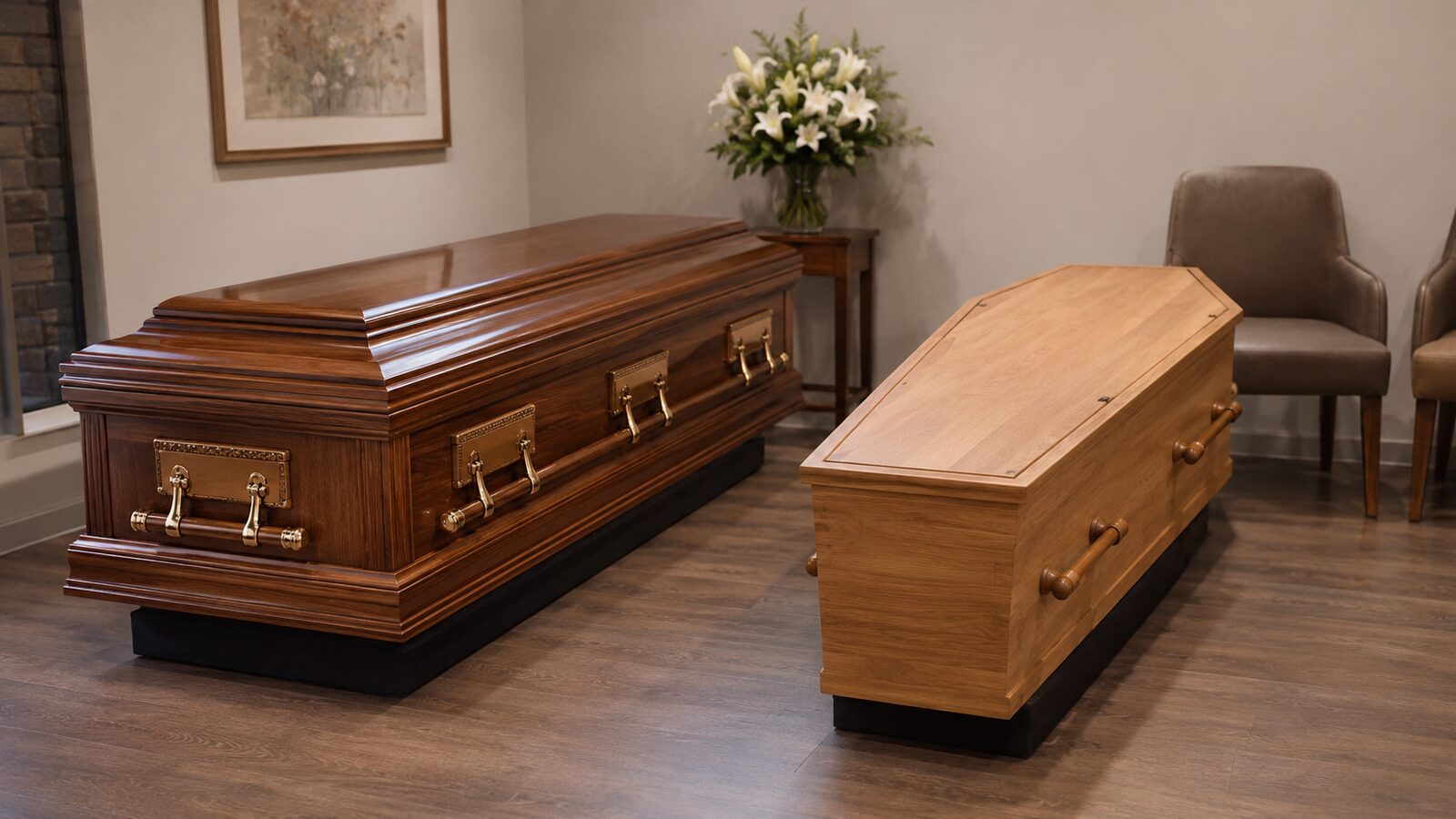
How much does a coffin or casket cost?
The price comes down to three things: the material, the build and finish (solid timber, polish, handles and lining all add to it), and who supplies it. Prices vary by supplier and region, so the only reliable figure is the one your funeral director or supplier puts in writing for a specific model.
In its 2019 funerals investigation, consumer group CHOICE reported that the coffin is "the product with the greatest markup, according to members of the industry", and that "industry insiders say funeral businesses routinely sell coffins for anything between two and ten times what they pay a wholesaler." It is one reason it pays to see the full range, with a price against every model, rather than only the display models.
What are coffins made of?
Coffins and caskets come in a range of materials, from plain cardboard to solid hardwood, and the material drives both the look and the price.
| Material | What it is like |
|---|---|
| Cardboard | Plain, light, often for direct cremation or eco funerals |
| Pine or veneer | Simple timber look, the common budget choice |
| Solid hardwood | Oak, mahogany or similar, traditional and polished |
| Wicker, bamboo or seagrass | Woven and biodegradable, for natural burial |
| Metal or premium casket | Rectangular, lined, split lid for viewing |
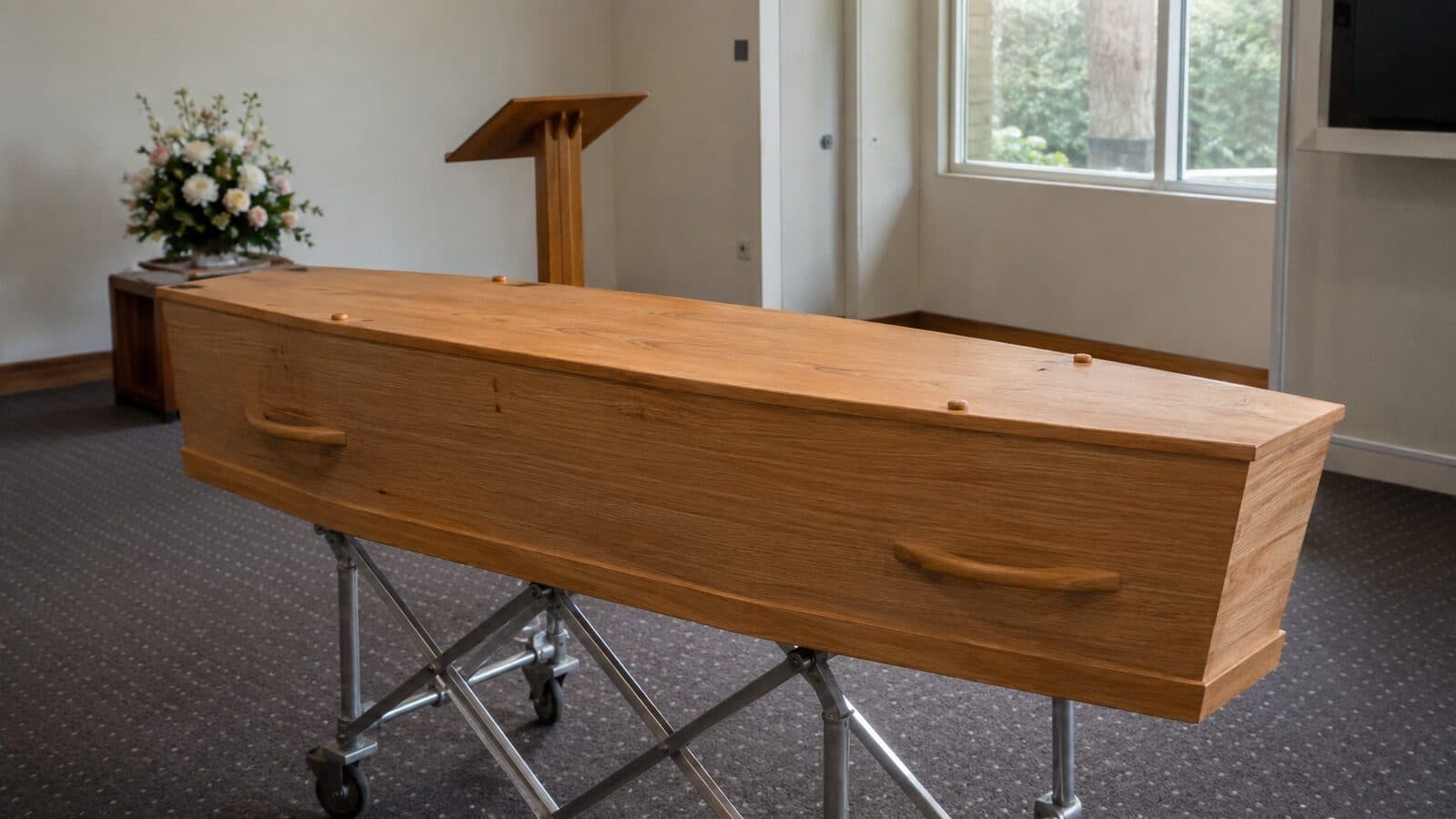
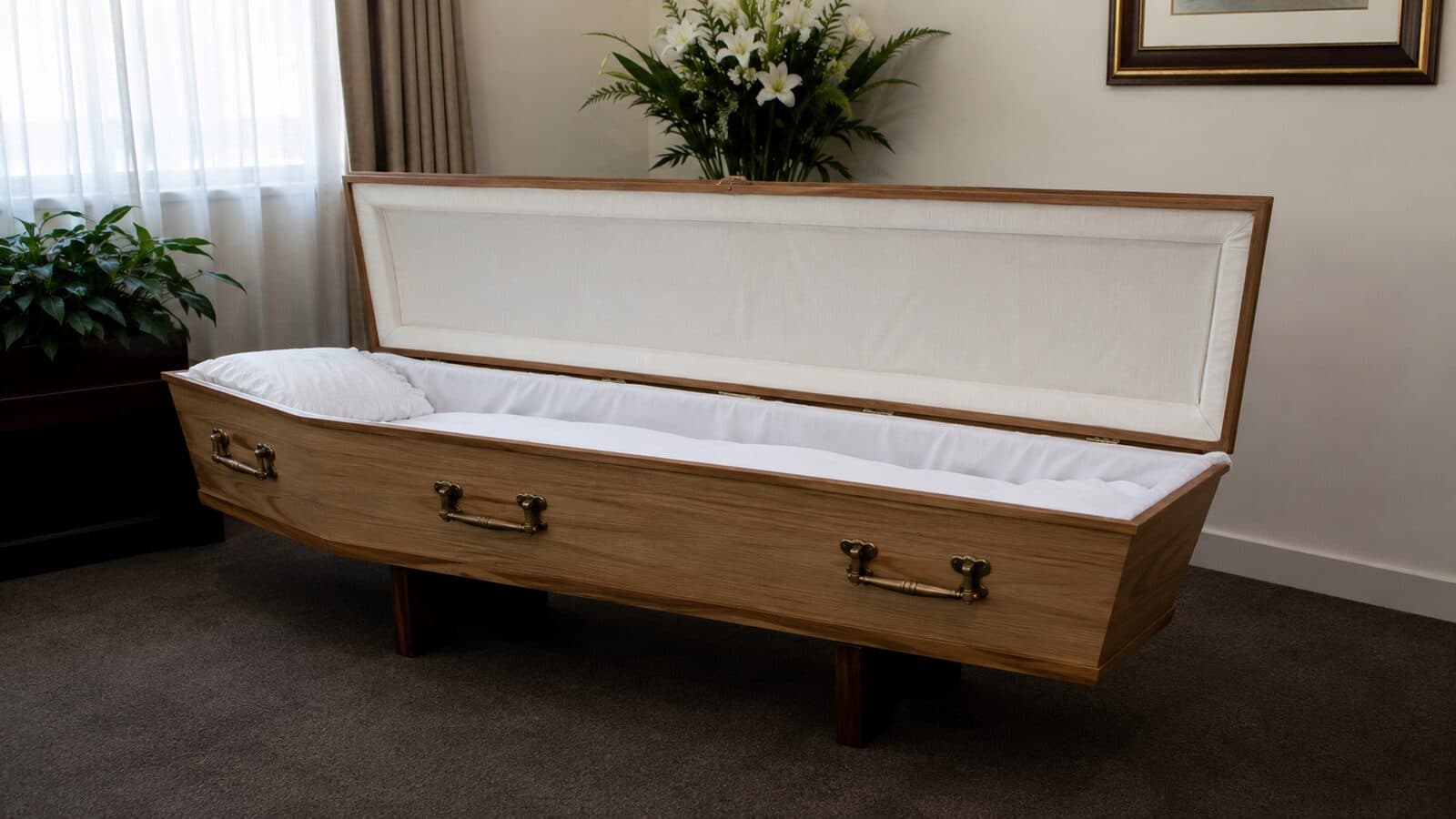
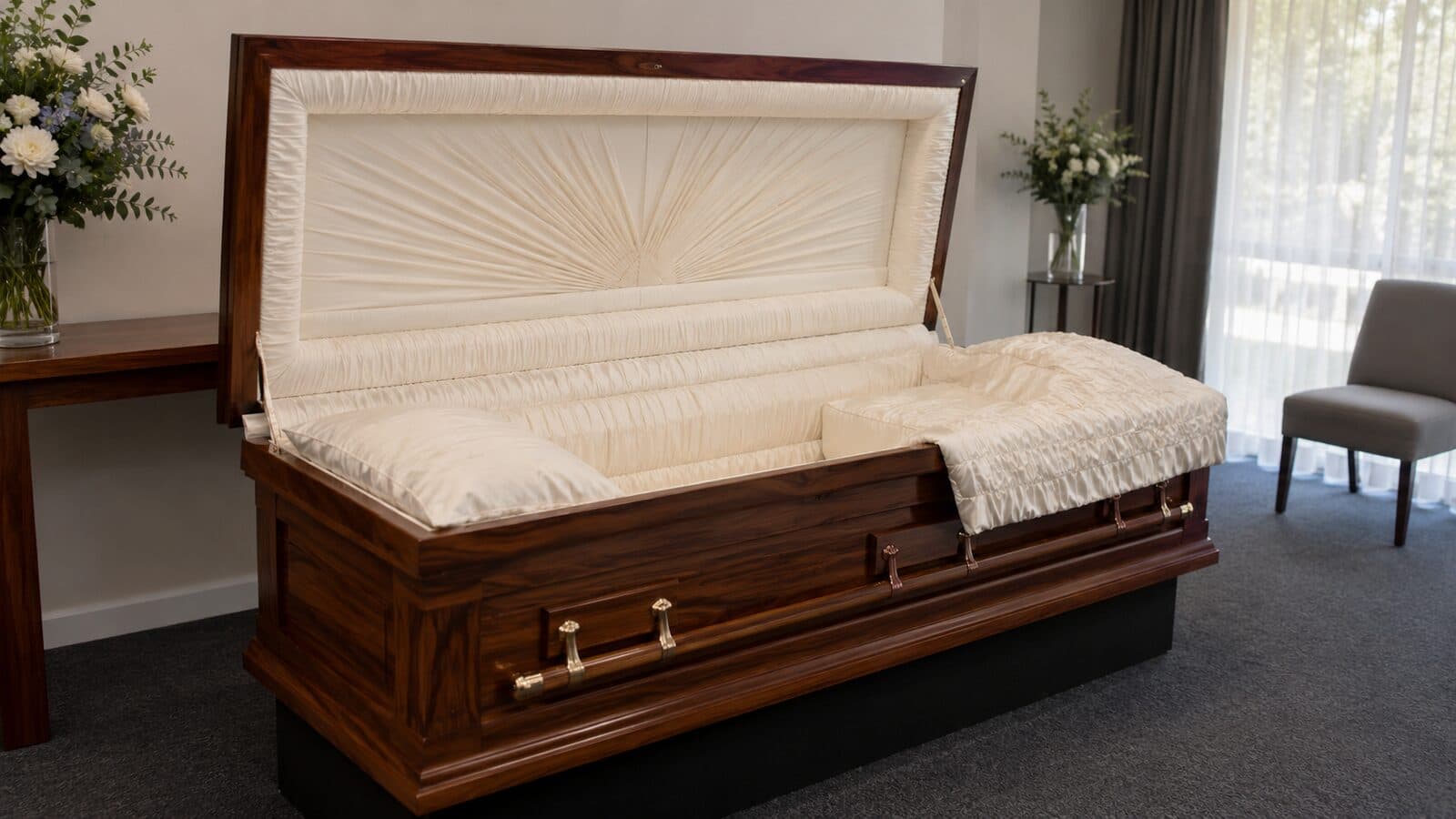
Eco-friendly and natural coffins
If a lighter environmental footprint matters to you, a natural coffin is worth asking about. Cardboard, wicker, bamboo, seagrass and untreated pine are all biodegradable, break down cleanly in a natural burial, and burn more efficiently in a cremation than a heavy lacquered timber coffin. Cardboard coffins are among the lowest-cost options: The Last Hurrah in Melbourne lists one at $300 plus delivery if required (checked September 2026), and Daisybox gives a recommended retail price of $395 for a plain casket (checked September 2026), with a custom-printed design at around $1,395 plus artwork costs (checked September 2026). Many funeral directors supply them only inside a package rather than as a separate item. These are the usual choice for a natural or bushland burial, so raise it early with your funeral director if you are leaning that way.
How can you avoid overpaying on a coffin?
The coffin is largely an aesthetic choice, cremation or burial.
- Ask to see every coffin and its price, not just the ones on display.
- Ask what other options are available, including plainer or eco coffins that may not be out on show.
- The ACCC has flagged funeral directors requiring you to buy your coffin only from them (a practice called "tying") as a competition concern. Ask your provider directly whether they will accept an externally supplied coffin and what handling fee, if any, applies.
- A crematorium needs a rigid, combustible coffin, which a simple or cardboard coffin meets. Check your crematorium's rules.
For more traps to watch, see hidden funeral costs and the itemised cost breakdown.
Frequently asked questions
What is the difference between a coffin and a casket?
How much does a coffin cost in Australia?
Can you supply your own coffin?
Do you need a coffin for a cremation?
What is the most eco-friendly coffin?
Working out the rest of the cost
Ask up to three funeral directors at once
Prices vary a lot between directors, so ask for itemised quotes in one go.
- Free
- You choose who
- No obligation
Works for planning ahead too. How we make money
This guide is general information to help Australian families, editorially reviewed by the Funerals Direct team from publicly available sources. It is not legal or financial advice. Every figure here is a working guide rather than a quote, because funeral prices change by provider, suburb, cemetery and crematorium. Before you sign anything, ask for an itemised written quote that separates the funeral director's professional service fee from third-party costs like the crematorium, cemetery, celebrant, flowers, notices and death certificate fees, and ask which of those items are legally required and which are optional. For prepaid funerals, bonds, or insurance, consider speaking with an independent financial adviser or a free financial counsellor on 1800 007 007.
Ready to find a funeral director?
Compare directors who list the right experience, read reviews from other families, and request a quote. Always free for families.
Compare funeral directorsWas this guide helpful?