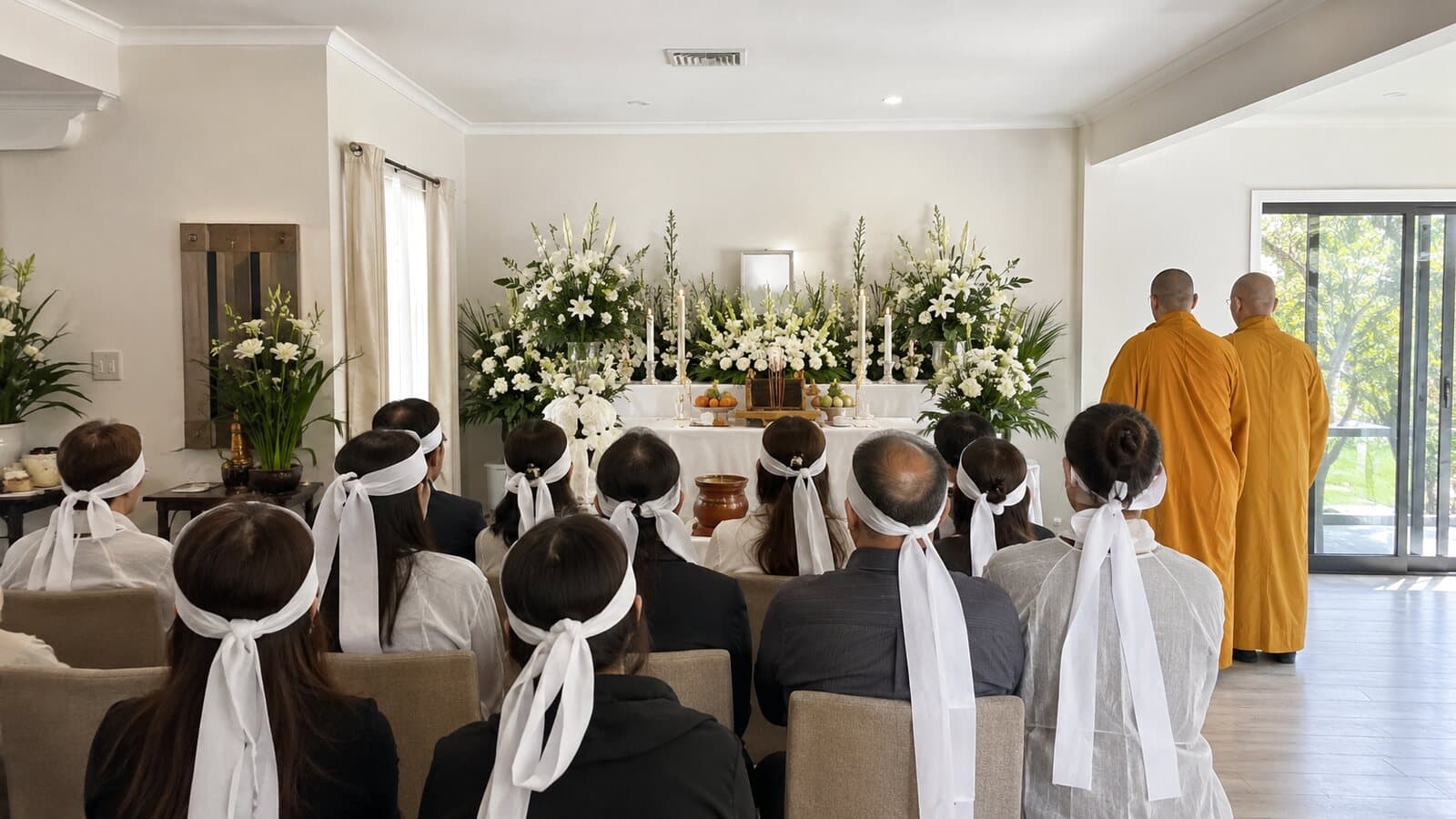
What happens at a Vietnamese Australian funeral?
When someone passes away in the Vietnamese Australian community, their farewell often brings together faith, family and cultural tradition. A funeral may include elements of Mahayana Buddhism or Catholicism, along with Confucian respect for ancestors and Taoist practices. This blend of beliefs is sometimes known as Tam Giáo, or "the three teachings".
The exact customs vary between families, depending on their faith and connection to Vietnamese tradition. According to the 2021 Census, 44.7% of Vietnamese Australians identify as Buddhist and around 19.8% as Catholic, while many report having no religion. Those figures only describe how people answer a form. Many more families keep customs like ancestor veneration, whether or not they name a religion.
Large Vietnamese communities can be found in south-western Sydney, particularly in Cabramatta, Canley Vale and Fairfield, and in Melbourne suburbs including St Albans, Sunshine, Footscray and Braybrook. Both cities have Vietnamese Buddhist temples and Catholic parishes that hold services in Vietnamese. In Queensland, organisations like the Ethnic Communities Council of Queensland can help families find culturally appropriate services.
Vietnamese funeral customs and etiquette
If you have been invited to a Vietnamese funeral, it is natural to be unsure about what to wear or bring. The summary above covers the essentials, and the section on attending sets out what to do on the day.
A few terms come up often. The ancestor altar is the permanent shrine kept in the family home. Joss paper, vàng mã, is burned as an offering, and the white mourning headband is the khăn tang worn by close family.
When death occurs and the vigil
Traditionally, some Vietnamese families prefer their loved one to spend their final days at home, surrounded by family. Being in a familiar place is believed to help the soul pass peacefully, and some families feel that dying in hospital or away from home may bring misfortune. Although hospital and palliative care are now common in Australia, spending the final days at home may remain particularly important to older family members.
After death, the person is carefully washed and dressed in their best clothing. Traditionally, the family may take part in this process as a mark of respect for parents and elders, often with help from funeral professionals.
Before the funeral, family and friends may gather for a vigil. Depending on the family and where the vigil is held, they may stay with their loved one for an extended period or overnight. Incense, prayers and white or yellow chrysanthemums are often part of the vigil.
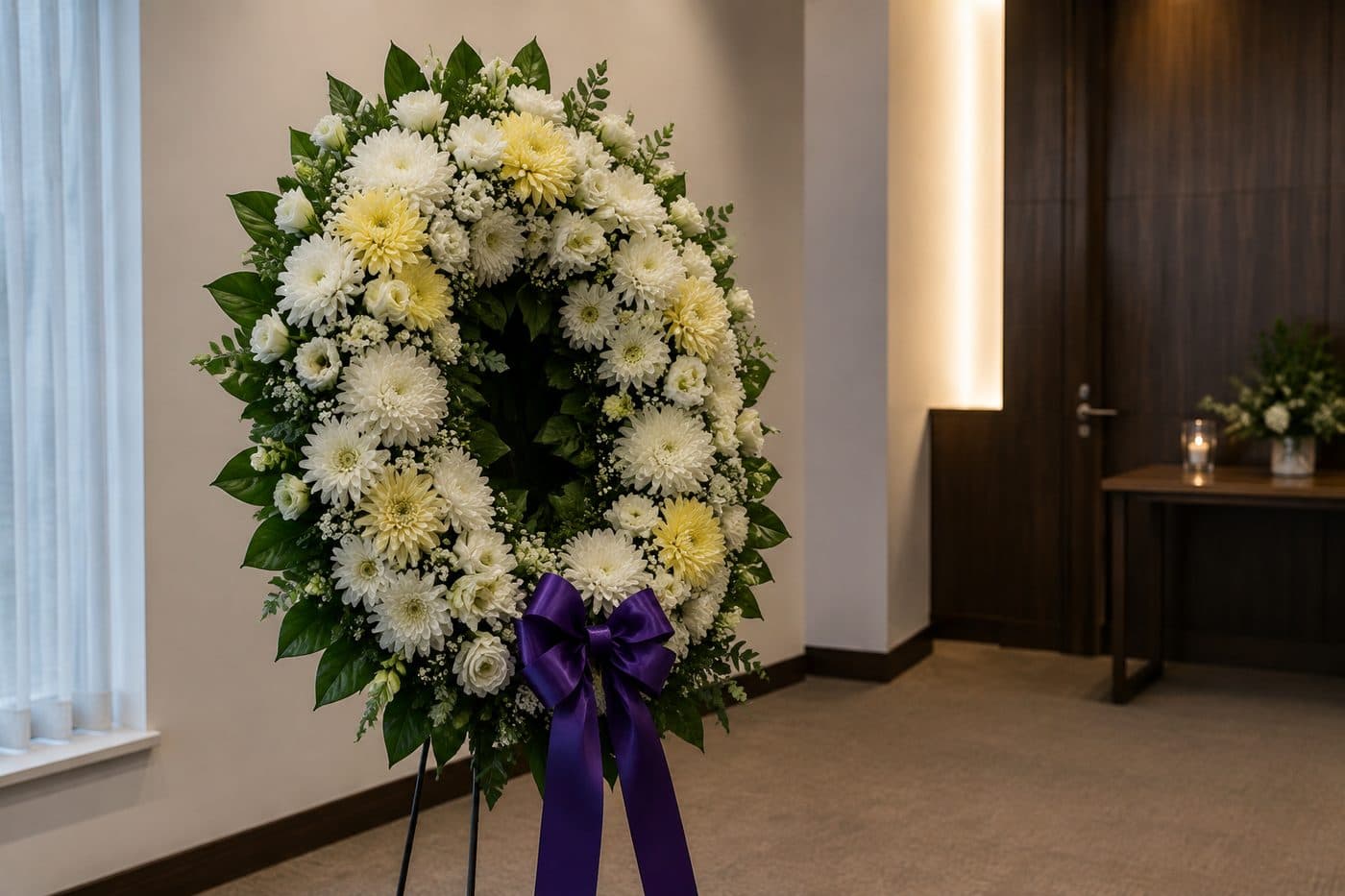
Why chrysanthemums
In Vietnamese tradition the white and yellow chrysanthemum is the flower of mourning, and it appears at almost every stage, around the coffin, on the altar and in wreaths sent by friends and colleagues.
Red is the one colour to keep away from. It belongs to weddings and Lunar New Year.
The funeral service
The funeral may take place at a Buddhist temple, Catholic church or funeral home. Some families include both Buddhist and Catholic elements, either at different venues or one after the other.
Buddhist traditions
Buddhist monks may chant sutras, including the Amitabha Sutra, to guide the deceased towards a peaceful rebirth or the Pure Land. The service may also include offerings of food, flowers, incense and joss paper.
Cremation is common among Buddhist Vietnamese families. The ashes may be kept at a temple or another meaningful place where relatives can visit and pay their respects.
Catholic traditions
Catholicism has long roots in Vietnam, dating back to the French colonial period. A Catholic funeral is usually led by a priest and follows the order of a funeral Mass, with readings, prayers, Communion and a final blessing before the body leaves the church. Vietnamese hymns and the rosary are often included, and the priest may deliver part of the service in Vietnamese.
Burial has traditionally been more common among Catholic families, and some choose a cemetery section where other Vietnamese Australian families are buried. Cremation is also accepted.
Buddhist and Catholic traditions at a glance
| Element | Buddhist Vietnamese funeral | Catholic Vietnamese funeral |
|---|---|---|
| Officiant | Buddhist monks | Catholic priest |
| Central rite | Sutra chanting | Requiem Mass |
| Prayers | May continue throughout the 49-day mourning period | Rosary, novena and other Catholic prayers |
| Offerings | Food, flowers, joss paper and incense | Candles, flowers and incense |
| Beliefs about the afterlife | Rebirth or the Pure Land | Resurrection and eternal life |
| Cremation or burial | Cremation is common, with ashes sometimes kept at a temple | Burial is traditionally more common, although cremation is accepted |
| Mourning dress | White headbands and white clothing | White headbands, with white or dark clothing |
The mourning timeline
Vietnamese mourning traditions include several important milestones. These ceremonies give the family time to grieve, remember their loved one and honour them after death.
The 49 days matter because Mahayana Buddhists believe the soul passes through stages of transition before rebirth, and the mourning period follows that journey. Many families who would not describe themselves as strictly Buddhist keep it anyway, since it draws on shared respect for ancestors as much as on doctrine.
| Timeframe | What happens |
|---|---|
| Days 1 to 7 | The vigil, funeral and burial or cremation usually take place. Family members may gather each day for prayers. |
| Days 1 to 49 | Buddhist families may offer daily incense at home and hold memorial prayers every seven days. Celebrations may be avoided during this period. |
| Day 49 | Final prayers mark the end of the formal mourning period. |
| Day 100 | The family gathers for a memorial ceremony sometimes known as the "end of tears" (tốt khốc). Daily food offerings may also come to an end. |
| One year | The first death anniversary (đám giỗ). Families often mark it with a meal together and offerings at the altar. |
| Three years | Rooted in Confucian tradition, this milestone may formally conclude the mourning period, particularly after the death of a parent. |
| Annually | The death anniversary (đám giỗ) is observed according to the lunar calendar. Family members gather for a memorial meal and place offerings on the ancestor altar. |
| Ongoing | The ancestor altar is kept permanently, with offerings at Lunar New Year and on other family occasions. |
Once the formal mourning period ends, the family places a photograph of their loved one, along with a spirit tablet, permanently on the ancestor altar. Honouring ancestors this way is older than either Buddhism or Catholicism in Vietnam.
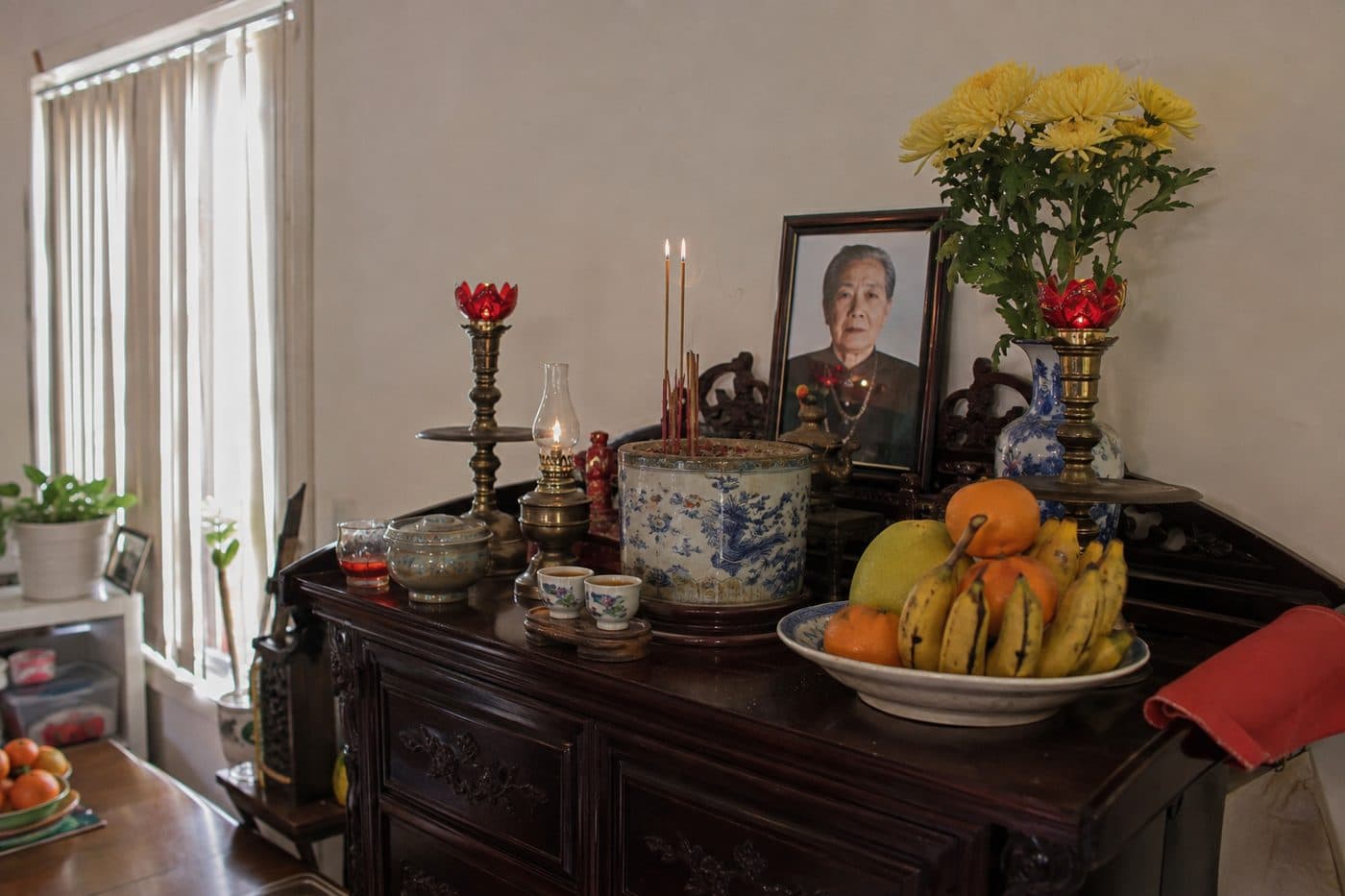
The ancestor altar at home
The altar usually holds a photograph of the person who died, an incense burner, candles and fresh flowers, with offerings of fruit and tea renewed by the family.
It stays in the home permanently, and relatives light incense there on anniversaries, at Lunar New Year and whenever they want to feel close to the person they have lost.
Each year, children and grandchildren prepare the đám giỗ memorial meal, sharing food and stories at the altar. In this way the person who died remains part of the family, and the practice carries on through the generations.
Understanding grief and composure
Grief may be expressed in different ways at a Vietnamese funeral. Some people may weep openly, while others remain quiet and composed.
A reserved response should not be mistaken for coldness or indifference. Some family members prefer to grieve privately or express their feelings through prayer and ceremony.
If you are attending, there is no need to find the perfect words. Simply being there and offering your condolences is enough.
If you are attending
Vietnamese funerals are open to non-Vietnamese guests, and nobody expects you to know every custom. If you are unsure at any point, follow the lead of the family around you.
The family may serve food after the service or the vigil. Accepting it is a way of showing respect and standing with them.
Related information
- Buddhist funerals in Australia
- Catholic funerals in Australia
- How much does a funeral cost in Australia?
- Back to: Australian funeral traditions
Further reading
- Death Rituals in Vietnamese Society - EthnoMed - Clinician-focused cultural guide from the University of Washington covering mourning customs, family dynamics and the structured grief process in Vietnamese communities.
- Vietnamese - Religion, Cultural Atlas (SBS) - Australian multicultural broadcaster SBS overview of Buddhism, Catholicism and the Tam Giao (three teachings) tradition among Vietnamese Australians.
- Vietnamese Australians - Wikipedia - Settlement history, 2021 Census religious and demographic data, and community geography for the Australian context.
- Dam Gio: Vietnamese Death Anniversary - Cake Blog - Detailed explanation of the annual death anniversary tradition, its Confucian roots, and how families observe it today.
- Vietnamese Funeral Customs - Funeral Circle - Practical overview of Vietnamese funeral customs with Australian context, covering mourning dress, etiquette and the 49-day and 100-day observances.
Frequently asked questions
What colour should I wear to a Vietnamese funeral in Australia?
Should I bring a gift to a Vietnamese funeral?
What does the white headband mean?
Are Vietnamese funerals usually followed by burial or cremation?
Do Vietnamese funerals combine Buddhist and Catholic elements?
How long is the mourning period?
Why is dying at home significant?
What is the ancestor altar?
This guide is general information to help Australian families, editorially reviewed by the Funerals Direct team from publicly available sources. It is not legal or financial advice. Funeral prices change and vary by provider and region, so always ask for an itemised written quote. For prepaid funerals, bonds, or insurance, consider speaking with an independent financial adviser or a free financial counsellor on 1800 007 007.
Ready to find a funeral director?
Compare directors who list the right experience, read reviews from other families, and request a quote. Always free for families.
Find a funeral directorWas this guide helpful?