Latin American Australian funerals: velorio, novenario and Dia de los Muertos
Latin American funerals in Australia draw on Catholic faith, indigenous traditions from across Central and South America, and the specific customs of each country of origin. A Mexican family's funeral will differ in detail from a Colombian, Chilean, or Salvadoran family's funeral, but the core structure holds: a prolonged velorio (wake), a Catholic mass, burial, and the novenario (nine days of communal prayer).
Grief is expressed publicly. The family is surrounded by community throughout the entire process. Food, prayer, and physical presence are how people show support.
Summary
| Cremation or burial | Burial is standard; cremation is permitted but uncommon |
| Mourning period | Novenario (9 days of nightly prayer), then memorial masses at 40 days, 1 year, and anniversaries |
| Key terms | Velorio (wake), novenario (nine-day prayer cycle), ofrenda (altar for the dead) |
| Common mistake | Assuming all Latin American funerals are identical. Customs vary by country of origin |
| Dress code for guests | Black or dark, conservative clothing. White is acceptable in some communities |
The United Spanish Latin American Welfare Service in Melbourne is one of the community organisations that provides culturally appropriate support for Latin American families in Australia.
The velorio (wake)
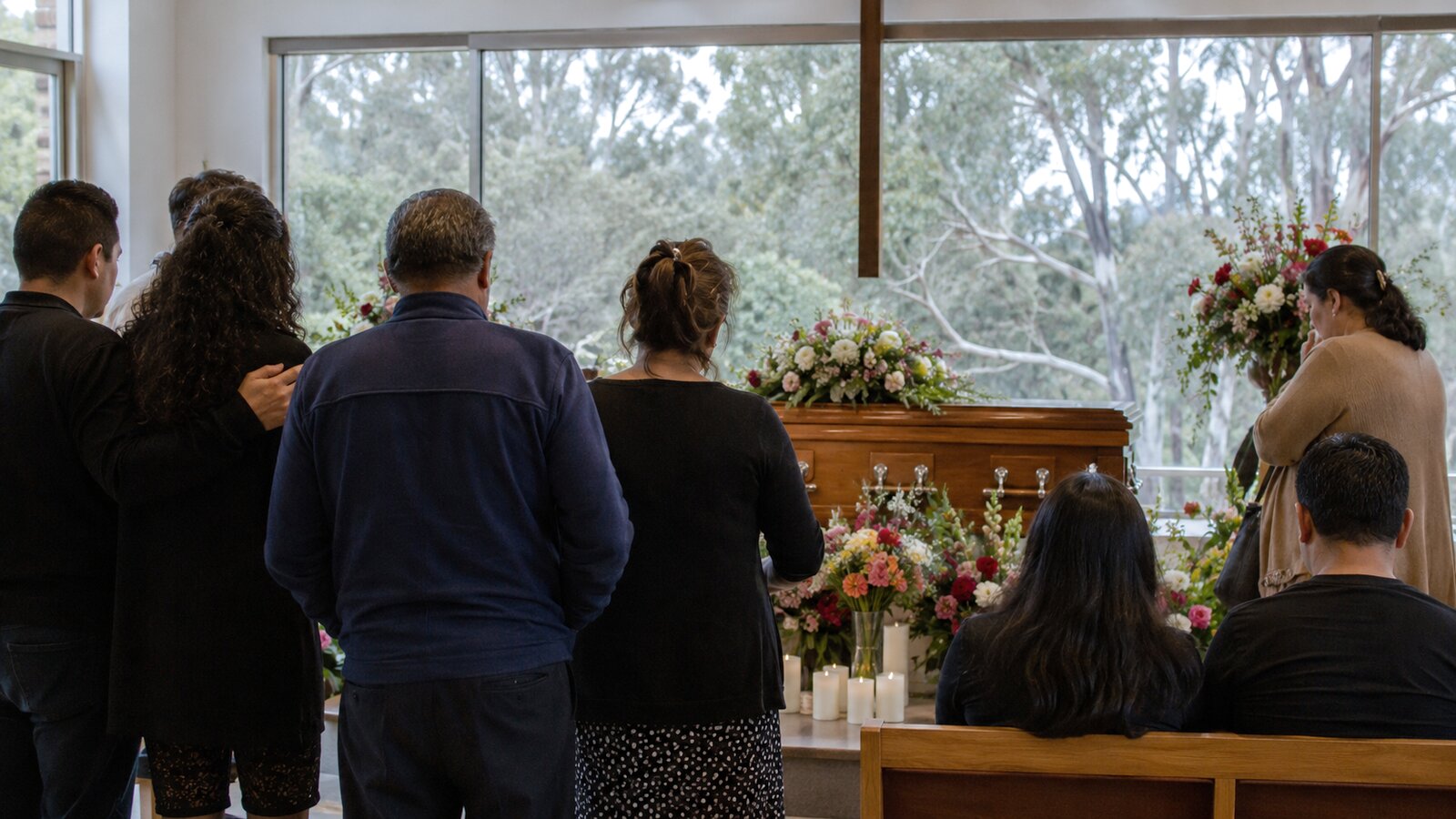
The velorio begins within hours of the death and lasts 24 to 48 hours. It is held at the family home, a funeral parlour, or a community venue. The body is present, either in an open casket or in a capilla (a casket with a small glass window, called a ventanilla, through which mourners can view the face of the deceased).
The velorio has no formal start or end time. It runs as a continuous vigil. Family, friends, neighbours, and community members come and go throughout the 24 to 48 hours. Coffee is served constantly. The community prepares food (often tamales, empanadas, or other traditional dishes) and brings it to the family.
People cry and express grief openly, but they also talk, tell stories about the deceased, and share comfort over food and drink. Children are present. The velorio is a whole-community event, not restricted to adults.
A family member or community leader leads prayers throughout the velorio, typically reciting the rosary at intervals during the vigil.
The funeral mass
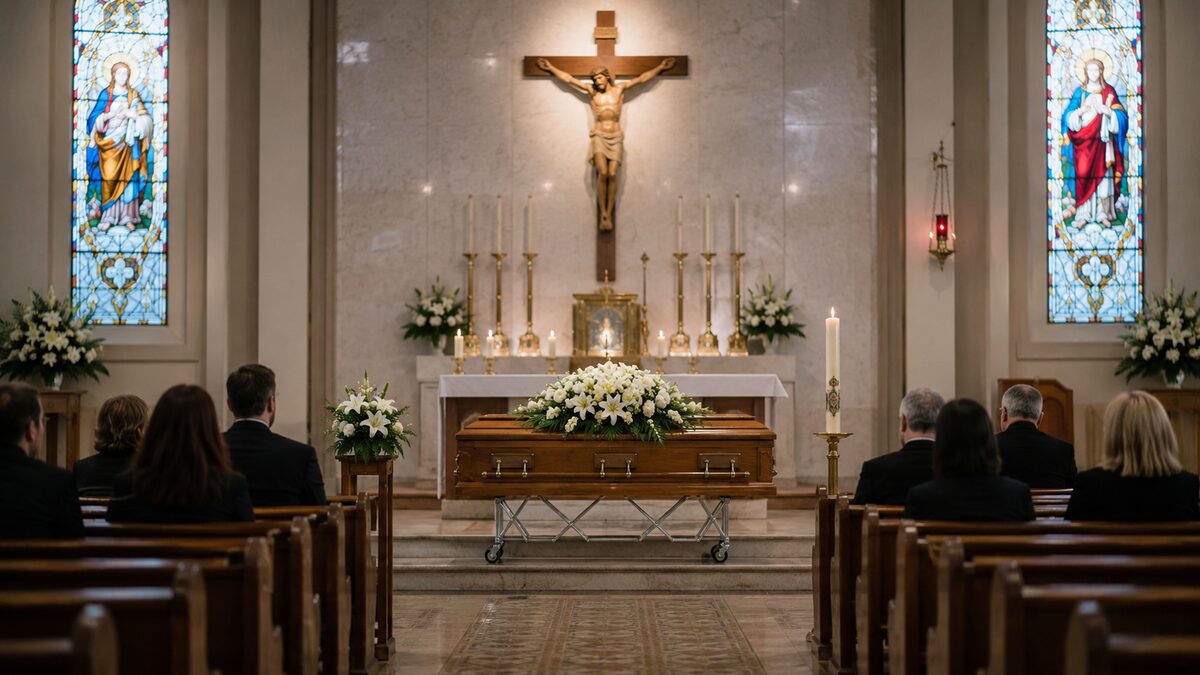
Most Latin American funerals in Australia include a Catholic funeral mass. The structure follows the standard Catholic rite (readings, prayers, communion, the commendation), but the priest conducts the service partly or entirely in Spanish, Portuguese, or the family's native language.
Hymns may be traditional Latin American religious songs. The homily often references the deceased's faith and the hope of resurrection. Family members may deliver readings or eulogies as part of the service.
The church is typically full. The community turns out in numbers. Mourners weep openly and grieve vocally, particularly during the commendation and the final viewing of the body before burial.
Burial is the standard practice. The Catholic Church has permitted cremation since 1963, but many Latin American families choose burial as the traditional and culturally expected option. The family accompanies the body to the cemetery, and a priest or family member leads prayers at the graveside.
The novenario (nine days of prayer)
After the burial, the family observes the novenario, a nine-day cycle of evening prayer. Each night, the family and community gather at the home (or a community venue) to recite the rosary, pray for the soul of the deceased, and share food and conversation.
The novenario is not optional or casual. The community attends nightly, and the family's home becomes the centre of communal life for nine days. On the final night, the prayers are often more elaborate, and a larger gathering may be held.
The nightly gatherings give the family a daily routine during the most acute period of loss, surrounded by people who share their faith and cultural understanding. After nine nights, formal communal mourning begins to wind down, though the family's personal grief continues.
Mourning timeline
| Period | What happens |
|---|---|
| Day of death | Velorio (wake) begins. Continuous vigil for 24 to 48 hours |
| Day 2 or 3 | Catholic funeral mass, then burial |
| Nights 1 to 9 after burial | Novenario. Nightly rosary, prayers, food, and conversation at the family home |
| 40 days | Memorial mass (observed by some families) |
| 1 year | Anniversary mass |
| Annually (1-2 November) | Dia de los Muertos. Families build ofrendas and honour the deceased |
Some families extend the mourning beyond the novenario, with memorial masses held at 40 days, one year, and on significant anniversaries.
Dia de los Muertos in Australia
The Day of the Dead (Dia de los Muertos), observed on 1 and 2 November, is practised by Latin American communities across Australia. It coincides with the Catholic feasts of All Saints' Day and All Souls' Day but carries distinct cultural traditions that predate European colonisation of the Americas.
Families build ofrendas (home altars) decorated with photographs of deceased family members, candles, marigolds, incense, and the favourite foods and drinks of the departed. Pan de muertos (bread of the dead), a sweet bread decorated with bone-shaped dough, is baked and placed on the ofrenda.
Ofrenda elements
| Element | Purpose |
|---|---|
| Photographs | Identify the deceased being honoured |
| Marigolds (cempasuchil) | Their scent is believed to guide spirits home |
| Candles | Light the path for returning souls |
| Incense (copal) | Purify the space and ward off bad spirits |
| Pan de muertos | Sweet bread decorated with bone-shaped dough, shared with the living and the dead |
| Favourite foods and drinks | Welcome the deceased with what they loved in life |
| Sugar skulls (calaveras) | Represent the deceased, often inscribed with their name |
| Salt | Purification and preservation |
In Australia, community organisations have increasingly used Dia de los Muertos as a cultural event that opens conversations about grief, death, and end-of-life choices. Community art projects, ofrenda-building workshops, and public celebrations are held in Melbourne, Sydney, and Brisbane. These events preserve cultural tradition within the diaspora and create space for cross-cultural dialogue about death.
The Day of the Dead is not morbid. Families remember the dead with joy, humour, and love. The ofrenda declares that the deceased remain part of the family, present in memory and honoured through annual ritual.
Grief and cultural expectations
Traditional expectations around grief can clash with the realities of life in Australia.
In some communities, there is a cultural expectation to suppress grief, stay strong, and appear composed. This can stop people from seeking support. Organisations like the United Spanish Latin American Welfare Service are actively challenging this, creating space for people to grieve openly and access culturally appropriate help.
The velorio and novenario provide a natural support network, but they do not reach everyone. People who are isolated from the community, who have limited English, or who carry the compounding grief of migration (leaving family, homeland, and cultural context behind) may need targeted support beyond the communal model.
What to expect if you are attending
Non-community members are welcome at Latin American funerals. Wear black or dark, conservative clothing. White is also acceptable in some communities.
At the velorio, your presence matters most. Sit with the family, offer condolences, and share food if it is offered. You do not need to speak Spanish or join the prayers, though participating in the rosary (if you know it) is welcomed.
At the church, follow the lead of the congregation. Stand, sit, and kneel when others do. You do not need to take communion if you are not Catholic.
Bringing food (prepared dishes or baked goods) to the velorio or the family home during the novenario is a practical and appreciated gesture.
Key terms
| Term | Translation | Meaning |
|---|---|---|
| Velorio | Wake | Continuous vigil over the body, lasting 24 to 48 hours |
| Novenario | Nine days | Nine nights of communal prayer after burial |
| Ofrenda | Offering/altar | Home altar built for Dia de los Muertos, decorated with photos, flowers, food |
| Capilla | Chapel (also: casket style) | A casket with a small glass window (ventanilla) for viewing the face |
| Pan de muertos | Bread of the dead | Sweet bread with bone-shaped decorations, placed on the ofrenda |
| Cempasuchil | Marigold | Orange flower used to guide spirits home during Dia de los Muertos |
| Copal | Copal (resin incense) | Burned to purify the space around the ofrenda |
| Calavera | Skull | Decorative sugar skull, often inscribed with the name of the deceased |
Related information
- Catholic funerals in Australia
- How much does a funeral cost in Australia?
- Back to: Australian funeral traditions
Frequently asked questions
What is a velorio?
The Latin American wake, held for 24 to 48 hours. The family keeps vigil over the body, and the community visits continuously with food, coffee, and prayers.
What is the novenario?
Nine days of evening prayer after the burial. The family and community gather nightly to recite the rosary and pray for the deceased.
Is Dia de los Muertos celebrated in Australia?
Yes. Latin American communities observe it on 1-2 November with ofrendas (altars), pan de muertos, and community gatherings. Australian organisations increasingly use it as a cross-cultural event.
What should I bring to a Latin American funeral?
Prepared food or baked goods are appreciated. Flowers (white or yellow) are also appropriate. Your presence at the velorio and novenario is the most meaningful contribution.
Is burial preferred over cremation?
Most Latin American families prefer burial, which is the traditional and culturally expected practice. Cremation is not prohibited but is less common.
This guide is general information to help Australian families plan, compiled and editorially reviewed by the Funerals Direct team from publicly available sources. It is not professional, legal, or financial advice. Funeral prices change and vary by provider, region, and circumstances - always request an itemised written quote. For prepaid funerals, funeral bonds, or funeral insurance, speak with an independent financial adviser or a free financial counsellor on 1800 007 007.
Ready to find a funeral director?
Compare directors who list the right experience, read reviews from other families, and request a quote. Always free for families.
Find a funeral directorWas this guide helpful?