How do you transport a body interstate in Australia?
Australians often pass away in a different state to where their family lives. Bringing them home for the funeral is common, and the funeral director handles most of it for you. What is involved, the rules around it, and the likely cost all depend on the route.
This guide is general information. Costs vary by state, distance, and provider; confirm with your funeral director.
Why interstate transport happens
Common scenarios:
- The death happened on holiday or while travelling
- The family lives in a different state to where their loved one lived
- The funeral is being held at a place of cultural or religious significance
- A family member who lives interstate wishes the funeral to be near them
Embalming: what is required
Embalming is the process of temporarily preserving the body. It is required for air transport interstate, and is often required for long-distance road transport. The reason is practical: bodies decompose, and embalming slows the process so the body arrives at the destination in a respectful state.
The major Australian carriers used for interstate transport (Qantas Freight and Virgin Australia Cargo) require embalming and a hermetically sealed coffin for human remains.
The funeral director confirms what is needed for your specific route. Embalming is charged separately, on top of the cost of the coffin (since embalming requires a sealed coffin for transport). There is no published national price for it, and providers differ widely, so ask for it to be itemised in your quote rather than bundled.
If your faith or family preference is to avoid embalming (Muslim and Jewish traditions discourage it), speak with the funeral director about alternatives. Some families choose to:
- Arrange road transport instead of air, where embalming requirements may differ
- Hold the funeral in the state of death and travel back later for a memorial
- Cremate locally and bring the ashes home, which avoids embalming entirely

Air versus road transport
Air transport. The body travels as cargo on a regular passenger or freight flight. Cargo is loaded by the airline ground crew. The receiving funeral director collects from the destination airport. In-transit time once paperwork and embalming are complete is usually 1 to 3 days; the full process from death to handover typically takes 7 to 10 days. Cost: $2,000 to $4,000 plus embalming, plus the funeral director coordination fees.
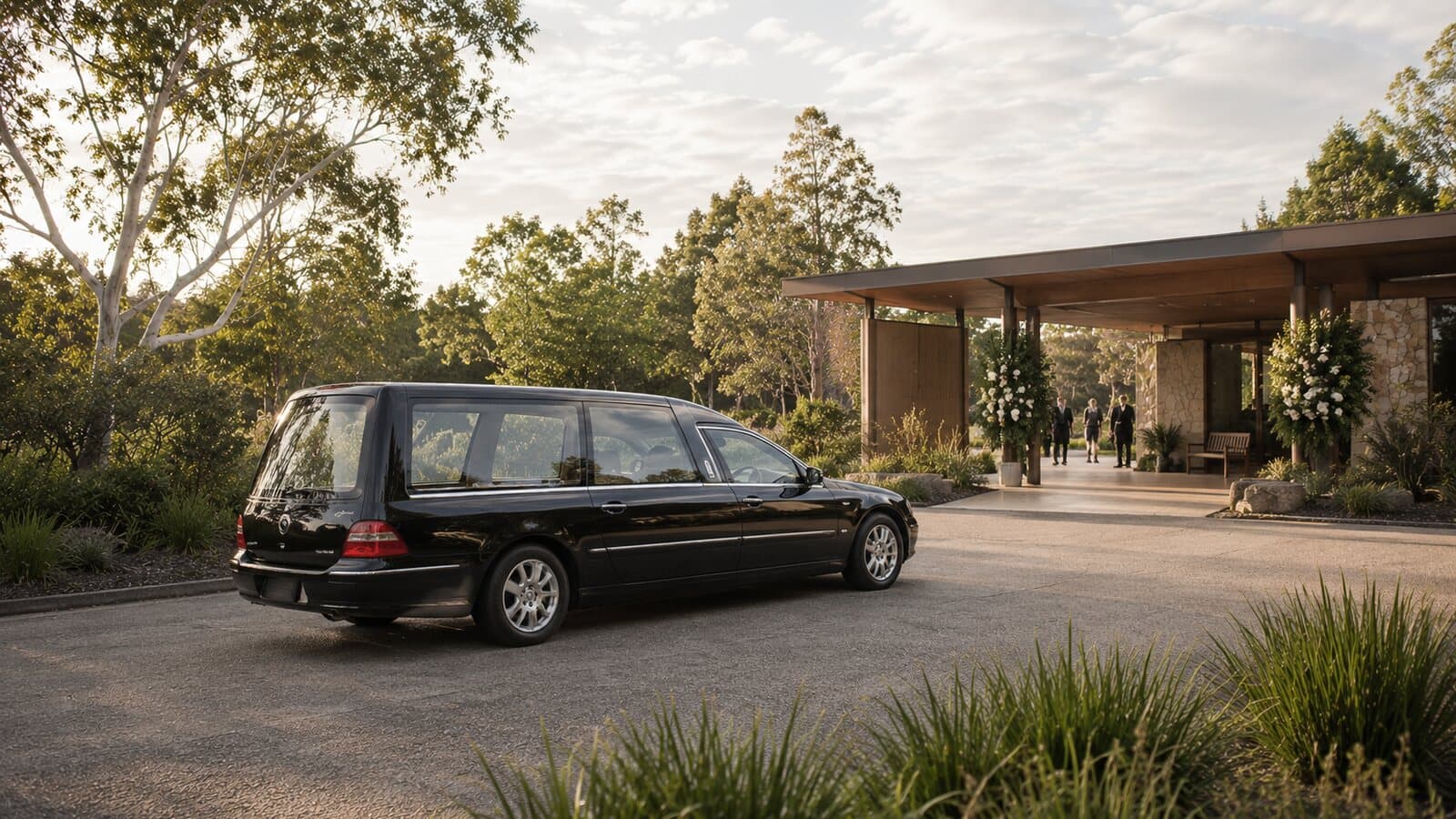
Road transport. The body travels in a specialised hearse or transfer vehicle. Used for shorter distances (within a few hundred kilometres) or where embalming for air transport is not preferred. Long-distance road transport (NSW to WA, for example) is possible but takes several days and costs $4,000 or more. Short-distance road transport within or between adjacent states starts from around $1,000 to $2,000.
The funeral director recommends the right option based on distance, faith requirements, and budget.
What documents are needed
The funeral director handles the paperwork. The required documents typically include:
- Medical certificate of cause of death
- Death registration documents (or a transport permit issued before registration in some states)
- Embalming certificate where embalming was performed
- Coffin certificate confirming the coffin meets airline standards (for air transport)
- Airline waybill (for air transport)
For more on the documents involved in death registration, see our register a death guide.
Cost breakdown
A rough breakdown:
| Cost | Typical range |
|---|---|
| Funeral director coordination fee | $500 to $1,500 |
| Embalming (where required) | Charged separately, ask your director |
| Coffin upgrade for transport (a sealed coffin meeting airline requirements) | $500 to $2,000 |
| Air freight or road transport | $1,500 to $4,000+ |
| Receiving funeral director fee | $500 to $1,500 |
The funeral itself in the destination state is separate. See our funeral costs guide.
The total interstate transport cost on top of the funeral itself is usually $3,000 to $8,000 depending on distance and choices.
Choosing the right funeral director
Two options:
- Use a funeral director with branches in both states. Some larger funeral directors operate in multiple states, which can simplify the coordination. Prices vary between providers of every size, so it is worth comparing a couple of itemised quotes. See our funeral costs hub.
- Use two separate funeral directors, one in each state. The two coordinate directly, which is often more cost-effective.
For listings of funeral directors by state, browse our directory.
When a loved one lived interstate but passed away at home
If your loved one lived in NSW but passed away while visiting family in QLD, the death is registered in QLD (where it happened), not NSW. The certificate is valid nationally. The body can then be transported back to NSW for the funeral if the family chooses.
For more on cross-state registration, see our register a death guide.
Faith and cultural considerations
Many faiths and cultures have specific requirements that affect interstate transport. The funeral director needs to know your tradition from the first call so they can coordinate.
Same-day or next-day burial requirements (Muslim, Jewish, Hindu) make air transport difficult unless the destination is close. In these cases, families often hold the funeral in the state of death, with a memorial later in the home state. For more, see our Australian Funeral Traditions hub.
Frequently asked questions
Can I move a loved one between Australian states?
Is embalming required for interstate transport?
How much does interstate transport cost?
Who organises interstate transport?
How long does interstate transport take?
What documents are needed?
Arranging the funeral at the other end
This guide is general information to help Australian families, editorially reviewed by the Funerals Direct team from publicly available sources. It is not legal or financial advice. Funeral prices change and vary by provider and region, so always ask for an itemised written quote. For prepaid funerals, bonds, or insurance, consider speaking with an independent financial adviser or a free financial counsellor on 1800 007 007.
Ready to find a funeral director?
Compare directors who list the right experience, read reviews from other families, and request a quote. Always free for families.
Find a funeral directorWas this guide helpful?