What is an eco-friendly funeral in Australia?
An eco-friendly funeral in Australia usually means one or more of three things: a natural burial, a biodegradable coffin or shroud, or water cremation where it is offered. Each lowers the impact in a different way.
What makes a funeral more eco-friendly?
Three choices do most of the work. Skipping embalming keeps its chemicals out of the soil, a biodegradable coffin or shroud breaks down cleanly, and choosing a lower-energy option reduces emissions.
What is a natural burial?
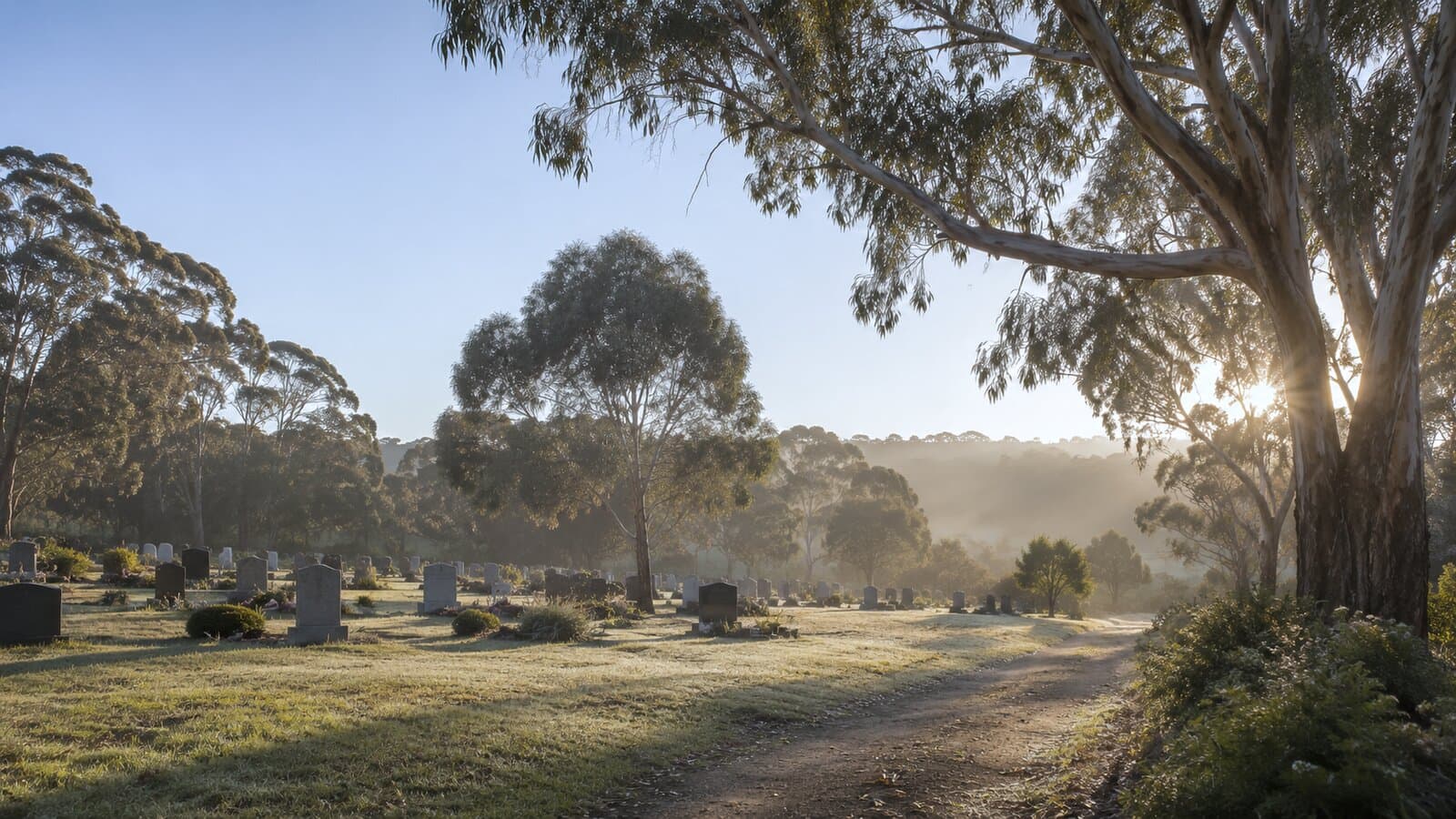
A natural burial has no embalming, the coffin or shroud is biodegradable, and the grave sits in a dedicated natural or bushland section rather than a manicured lawn. Instead of a headstone, the area is left to regenerate as native bush, with each grave recorded and often marked by GPS or a shared memorial.
There are at least 13 dedicated natural burial grounds across New South Wales, Victoria, Queensland, Western Australia, South Australia, the ACT and Tasmania as of 2026, according to Compare Funeral Directors. The cost depends on the burial ground, so ask each one for its fee schedule. Our cremation or burial guide sets the wider options alongside each other.
Which coffins are the greener choice?
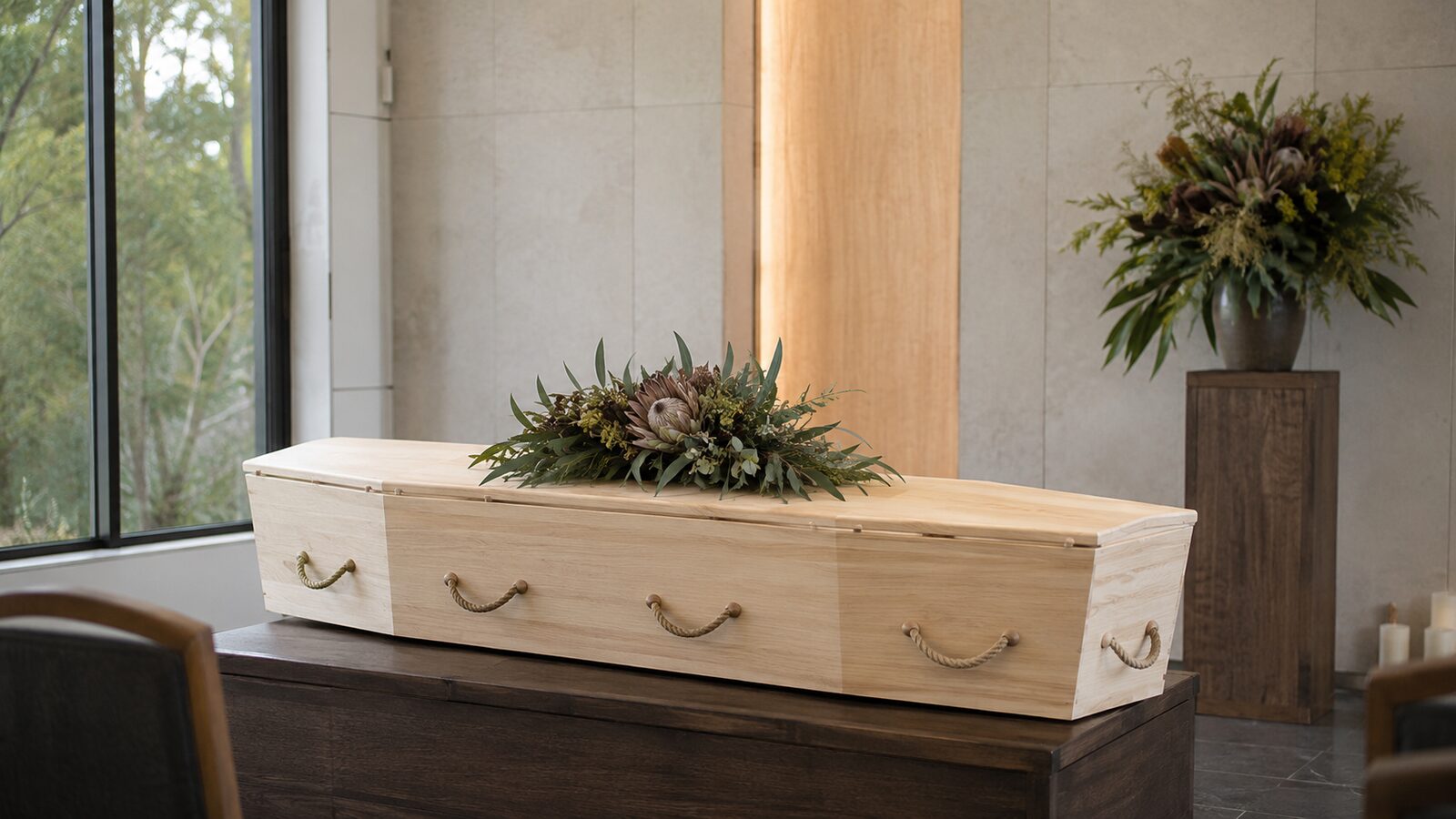
The greener coffins are the biodegradable ones: cardboard, untreated pine, bamboo, willow, or a simple wool or calico shroud. They break down cleanly in a natural burial and burn more efficiently than a heavy lacquered timber coffin in a cremation. Prices vary by maker and funeral director. As one example, Daisybox, an Australian cardboard coffin maker, lists a recommended retail price of up to $395, and some funeral homes include it in a package. Ask your funeral director for the price of each option in writing. For the full picture on coffins, including traditional options, see our coffins and caskets guide.
What is water cremation?
Water cremation, also called aquamation or alkaline hydrolysis, uses heated water and an alkaline solution instead of flame to return the body to ash. Operators say it produces far fewer direct emissions than flame cremation, because it heats water instead of burning gas.
It is offered in some parts of Australia, including Tasmania, where Alluvium Water Cremations lists a direct water cremation at $4,400. Rules and availability differ from state to state, so ask what is offered where you live.
Is cremation or burial better for the environment?
Neither is impact-free. A flame cremation uses energy and releases carbon dioxide, while a conventional burial takes land that needs upkeep for decades, and any embalming chemicals go into the soil. The lower-impact choices are a natural burial without embalming, or water cremation where it is available. Our cremation or burial guide weighs the two in more detail.
Frequently asked questions
What is a natural burial?
Is a green funeral cheaper than a conventional one?
What is water cremation, and is it legal in Australia?
Which coffins are eco-friendly?
Is human composting available in Australia?
Choosing between the greener options
Ask up to three funeral directors at once
Prices vary a lot between directors, so ask for itemised quotes in one go.
- Free
- You choose who
- No obligation
Works for planning ahead too. How we make money
This guide is general information to help Australian families, editorially reviewed by the Funerals Direct team from publicly available sources. It is not legal or financial advice. Every figure here is a working guide rather than a quote, because funeral prices change by provider, suburb, cemetery and crematorium. Before you sign anything, ask for an itemised written quote that separates the funeral director's professional service fee from third-party costs like the crematorium, cemetery, celebrant, flowers, notices and death certificate fees, and ask which of those items are legally required and which are optional. For prepaid funerals, bonds, or insurance, consider speaking with an independent financial adviser or a free financial counsellor on 1800 007 007.
Ready to find a funeral director?
Compare directors who list the right experience, read reviews from other families, and request a quote. Always free for families.
Compare funeral directorsWas this guide helpful?